Moving From Seattle to Miami: The Complete Relocation Guide
What a Seattle to Miami move really costs, how long it takes, the condo and tax traps nobody warns you about, and how to time it around hurricane season. [...]<p><a class="btn btn-secondary understrap-read-more-link" href="https://crosscountrymovers.com/resources/moving-from-seattle-to-miami-guide/">Read More...</a></p>
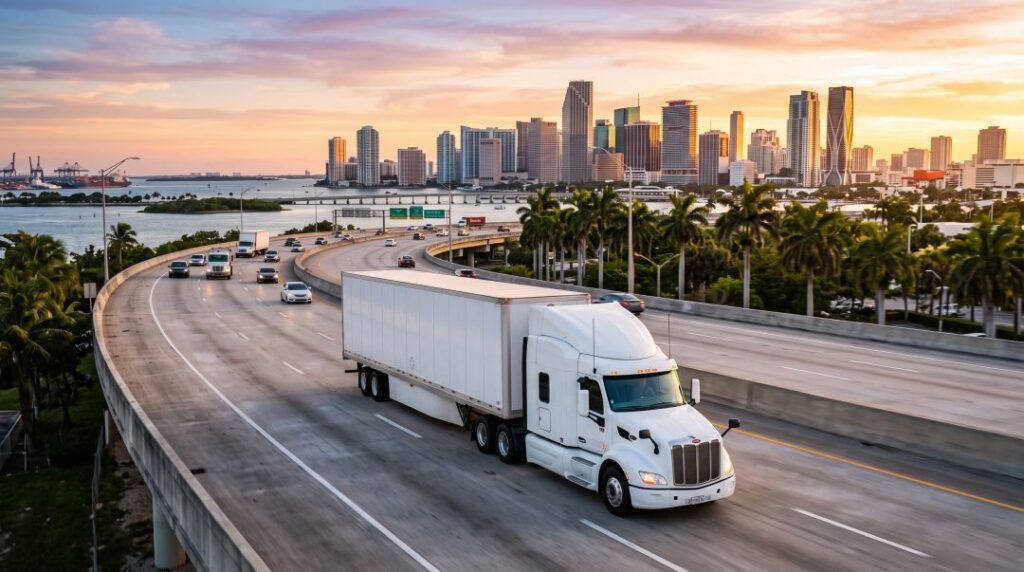
Moving from Seattle to Miami is roughly 3,300 road miles, seven to twenty-one days of transit for your household goods, and somewhere between $3,200 and $18,000 depending on how much you own and who does the lifting. That is the short answer. Everything below is the part that actually decides whether the move goes well.
Here is what most guides on this route get wrong. They lead with “no state income tax.” Washington already has no state income tax. If you are leaving Seattle, that line is not a benefit, it is a wash. The real financial story is somewhere else, and so is the biggest risk, which has nothing to do with your movers and everything to do with the building you buy into.
Let’s get into it.
The Seattle to Miami Move at a Glance
This is one of the longest domestic relocations in the continental United States. Seattle sits in the far northwest corner. Miami sits in the far southeast corner. You are crossing roughly a dozen states and two time zones.
Distance: About 3,300 driving miles, depending on route.
Household goods transit time: Typically 7 to 21 days from pickup for a long-distance relocation of this length. Consolidated shipments sit at the longer end. Dedicated trucks run shorter and cost more.
Peak season: May through September. Rates climb, calendars fill, and you lose negotiating room.
Climate shift: Seattle averages under 40 inches of rain a year spread across a lot of gray days. Miami gets a subtropical climate with year-round sunshine, hard afternoon downpours, and humidity that will find every piece of furniture you own.
The single most important date: March 1. That is the Florida Homestead Exemption filing deadline, and missing it costs you real money. More on that below.
What a Seattle to Miami Move Actually Costs
Cost comes down to weight, distance, and how much labor you hand off. Distance is fixed on this route. Weight and labor are yours to control.
These are typical 2026 quote ranges for the Seattle to Miami corridor. Treat them as a planning frame, not a price. The only number that means anything is a written estimate built from a detailed inventory list.
← swipe to see all columns →
| Home size | Approx. weight | Full-service movers | DIY or hybrid |
|---|---|---|---|
| Studio or 1 bedroom | 2,000 to 3,500 lbs | $3,200 to $5,500 | $2,200 to $4,000 |
| 2 bedroom | 4,000 to 6,000 lbs | $5,000 to $8,500 | $3,000 to $5,500 |
| 3 bedroom | 7,000 to 10,000 lbs | $7,500 to $13,000 | $4,500 to $7,500 |
| 4 bedroom or larger | 12,000+ lbs | $11,000 to $18,000+ | $6,000 to $10,000+ |
Add car shipping on top. Open transport coast to coast usually runs $1,100 to $1,800. Enclosed transport runs $1,700 to $2,800 and mostly makes sense for classic, luxury, or low-clearance vehicles. If you are weighing whether to drive it yourself, our breakdown of vehicle transport costs for a cross-country move runs the actual math against fuel, lodging, and five days of your life.
A word on the moving cost calculator tools you will find online. They are fine for a ballpark. They are not quotes. Any number generated without someone looking at your inventory is a marketing device, and the gap between the calculator figure and the final invoice is where most moving complaints are born. Read our guide to understanding your long-distance moving quote before you sign anything.
Your Five Options, Ranked by How Much Work You Want to Do
Full-service movers. They pack, load, drive, unload, and unpack. Highest cost, lowest effort, and the only option where a licensed carrier is legally responsible for your goods across state lines. Best for anyone with a job, kids, or a spine they would like to keep.
Moving containers. A pod is dropped at your Seattle curb, you load it, it gets trucked to Miami, you unload it. Cheaper, and the schedule is flexible. The catch nobody mentions: many Miami condo buildings and Brickell high-rises will not permit a container to sit on the street or in the loading dock area. Check with the HOA before you book.
Rental trucks. You drive 3,300 miles. Once you add one-way drop fees, fuel for a truck getting eight to ten miles per gallon, tolls, motels, and the loading crew you will eventually hire out of exhaustion, the savings shrink fast. We ran the full comparison in DIY truck rental versus professional movers.
Freight trailers. You load a section of a commercial trailer and pay for the linear feet you use. Cheaper than full service, more physical than containers, and delivery windows are wide.
Moving labor only. Hourly crews on each end while you handle the transport in between. Usually $60 to $120 per hour per crew. Pairs well with containers or freight.
The Tax Math Nobody Runs Correctly
Here is where the Seattle to Miami move gets genuinely interesting, and where most content on this topic is lazy.
Washington and Florida both have no state income tax on wages. So on salary alone, you gain nothing. Where the two states actually diverge is on investment gains and property.
Washington levies a capital gains excise tax on long-term gains above an annual standard deduction, with a higher tier applying to large gains. Direct sales of real estate and gains inside retirement accounts are excluded. Florida levies nothing comparable. For anyone in Seattle sitting on tech equity, that difference is the real headline of the move, and it is worth having a CPA model the timing of your residency change against your vesting schedule. Confirm the current rates and thresholds directly with the Washington Department of Revenue rather than trusting a blog post, this one included.
On the property side, Florida gives permanent residents a Homestead Exemption on their primary home. Two conditions trip up newcomers constantly:
- You must be a permanent Florida resident as of January 1 of the tax year.
- You must file by March 1.
And the portability provision that lets Florida homeowners carry accrued tax savings from one Florida home to the next does not apply to a house you sold in Washington. You start fresh. File through the Miami-Dade County Property Appraiser and check the current exemption rules with the Florida Department of Revenue.
The cost of living comparison is more mixed than the internet suggests. Miami housing has closed much of the gap with Seattle over the past several years, and property insurance in South Florida is a line item Seattle simply does not have. Groceries and dining out cost less. Utilities swing depending on how hard you run the air conditioning, which is harder than you think in August.
The Condo Question, and Why It Matters More Than Your Movers
If you are buying a condo in Miami, read this section twice.
After the Surfside collapse in 2021, Florida rewrote its building safety law. Condo and cooperative buildings three or more habitable stories tall now face two separate legal requirements: a milestone inspection, a structural evaluation by a licensed engineer or architect required once a building reaches 30 years of age and every ten years after, and a structural integrity reserve study, or SIRS, which forces associations to actually fund reserves for structural components instead of deferring them. The milestone inspection requirement sits in Florida Statute 553.899.
Why this matters to someone flying in from Seattle with a pre-approval letter: a large share of Miami Beach, Sunny Isles Beach, Bal Harbour, and Brickell inventory is in buildings old enough to be caught by these rules. When an inspection turns up spalling concrete or a failing envelope, the association funds the repair through a special assessment. Those assessments have landed in the tens of thousands per unit in South Florida buildings.
Before you sign, ask for three documents:
- The completed milestone inspection report, or the scheduled date if it has not happened yet
- The structural integrity reserve study and the current reserve balance
- Board minutes from the last twelve months, where assessment discussions surface before they become official
Condo reserves are the number to watch. HOA structures in Miami also carry higher monthly dues than most Seattle buyers expect, because they cover hurricane-rated glass, generators, salt-air maintenance, and 24/7 staffing. Budget accordingly. A unit that looks cheap per square foot can carry $1,400 a month in dues.
This is the kind of thing a moving company has no business advising on, which is exactly why nobody tells you.

Timing Your Move Around Hurricane Season
Atlantic hurricane season runs June 1 through November 30, with peak activity concentrated in late August and September. The National Hurricane Center publishes climatology data worth reading before you set a date.
What this means practically:
Best windows: February through April, or late October into early December. Milder humidity, lower storm risk, and off-peak moving rates.
Riskiest window: Mid-August through early October. Not because a storm will definitely hit, but because delivery windows tighten, ports and highways close on short notice, and inventory of trucks and drivers gets pulled toward emergency logistics.
If you must move in September: Book a dedicated truck rather than a consolidated load, build a five-day buffer into your delivery window, and confirm your mover's contingency policy in writing.
Also worth knowing: Miami traffic on I-95 and the Palmetto is not Seattle traffic. It is denser, faster, and less patient. A delivery scheduled for 8 a.m. that is not loaded and rolling by 7 is a delivery scheduled for noon.
Choosing Where to Land in Miami-Dade County
Miami is not one city. It is a collection of very different neighborhoods stitched together across Miami-Dade County, and the one you pick will define your experience more than anything else about the move.
← swipe to see all columns →
| Neighborhood | Best for | Character |
|---|---|---|
| Brickell | Finance and remote professionals | Miami's financial district, high-rise living, the most walkable pocket in the county |
| Wynwood | Creatives, younger movers | Murals, galleries, breweries, converted warehouses, loud on weekends |
| Coconut Grove | Families wanting trees | Sailing, shaded streets, village feel, older housing stock |
| Coral Gables | Established families | Mediterranean architecture, strict codes, University of Miami nearby |
| Edgewater | Value seekers near downtown | Newer waterfront towers, quieter than Brickell, still building out |
| Miami Beach | Beach-first lifestyle | Art Deco, tourists, parking scarcity, older condo stock |
| Aventura and Bay Harbor Islands | Quiet suburban north | Malls, marinas, strong schools, easier parking |
| Sunny Isles Beach and Bal Harbour | Luxury oceanfront | High-end towers, international buyers, premium HOA dues |
| Pinecrest | Space and schools | Large lots, top-rated public schools, car-dependent |
| Hollywood, FL | Commuters splitting the difference | Between Miami and Fort Lauderdale, lower prices, beachfront boardwalk |
If you are used to checking Walk Score, Transit Score, and Bike Score before renting in Capitol Hill or Ballard, keep doing it. Just recalibrate. Brickell scores well. Most of Miami-Dade does not, and a 78 Walk Score in Miami in July is a different lived experience than a 78 in Seattle in October. Heat is a mobility factor here.
Public transportation exists, and Metrorail plus the free Metromover serve the downtown and Brickell core reasonably well. Outside that corridor, plan on a car. This is a major reason car shipping is worth bundling into a Seattle to Miami relocation instead of selling your vehicle and buying on arrival.
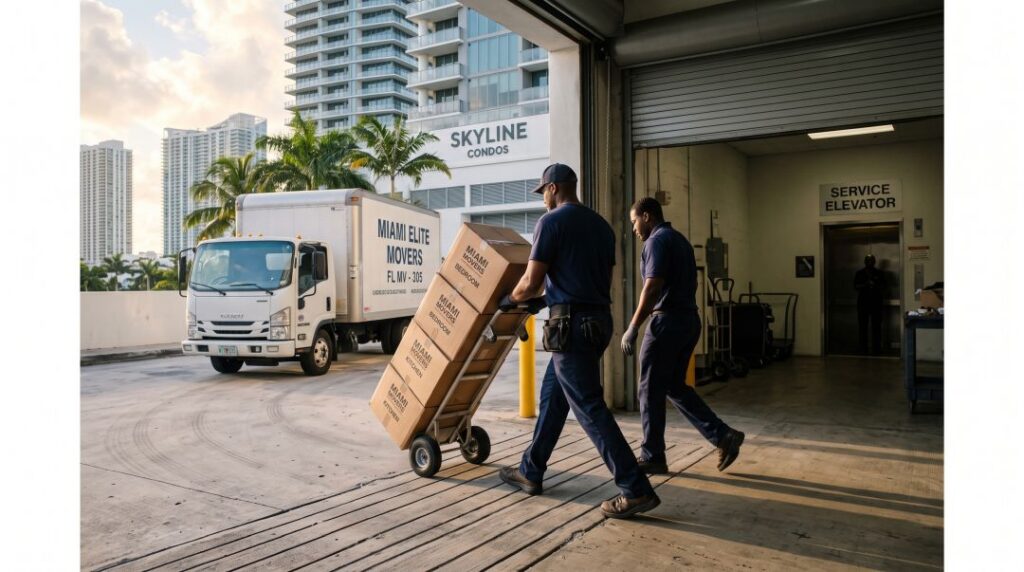
Move Day Logistics: Parking and Truck Access in Miami
This is the part that goes wrong most often, and it is almost always preventable.
On the Seattle end, you will likely need a temporary no-parking permit from the city for street loading. Apply well in advance. Steep grades and narrow streets in older neighborhoods can force a shuttle, meaning your goods get moved from your door to a smaller vehicle and then to the tractor-trailer. Shuttles cost extra. Flag the access issue during your estimate so it is priced in rather than added later.
On the Miami end, the constraints are different:
- Most condo and high-rise buildings require a certificate of insurance from your moving company, naming the association, submitted days in advance
- Elevator reservations are typically required and often limited to specific hours, frequently not weekends
- Many buildings restrict move-ins to weekdays between 9 a.m. and 4 p.m.
- Loading dock height limits are real, and a 53-foot trailer often physically cannot enter, which means a shuttle
- Miami Beach and Brickell street loading may require a permit from the municipality
Call the building manager the week you sign your lease or close. Not the week of the move. The number of relocations that stall in a loading dock over a missing insurance certificate is genuinely absurd.
Getting Legal in Florida: The First 30 Days
Florida gives you a short window, and the clock starts when you establish residency.
Driver license: 30 days. New residents must obtain a Florida license within 30 days of establishing residency. Bring your Washington license, you will surrender it. Details and document requirements are on the Florida Highway Safety and Motor Vehicles new resident page.
Vehicle registration and insurance. You will need a Florida insurance policy from a Florida-licensed agent before you can title and register. An out-of-state policy will not satisfy the requirement. Out-of-state vehicles also need a VIN verification.
Schools. Miami-Dade County Public Schools is one of the largest districts in the country, with magnet and choice programs that have their own application timelines. Start that process before you move, not after.
Higher education, if it is relevant to your household: the University of Miami in Coral Gables, Florida International University with campuses across the county, and Miami-Dade College with eight campuses.
Voter registration and the Homestead Exemption both help establish the permanent residency Florida looks for. Handle them early.
What You Are Actually Getting: Miami Beyond the Brochure
The pitch on Miami is beaches and no income tax. That undersells it and oversells it at the same time.
What is genuinely different from Seattle: the international culture. Miami operates in Spanish and English as a matter of course, with substantial Haitian Creole, Portuguese, and Russian-speaking communities layered in. If you have been in the Pacific Northwest a long time, this takes adjusting to, and most people end up loving it.
Global connectivity is the underrated part. Miami International Airport is one of the busiest international gateways in the United States, with direct service across Latin America, Europe, and the Middle East, including Qatar Airways nonstop to Doha. General aviation and overflow traffic run through Miami-Opa-locka Executive Airport, Miami Executive Airport, Miami Homestead General Aviation Airport, and the Dade-Collier Training and Transition Airport out in the Everglades. For anyone doing corporate relocation or running a business with Latin American exposure, Miami is a better hub than Seattle by a wide margin.
Sports. The Miami Heat downtown at Kaseya Center, the Miami Dolphins up in Miami Gardens. Different rhythm than Seattle fandom. Louder, more casual, more mid-game.
Miami restaurants deserve their reputation. Cuban, Peruvian, Haitian, Argentine, Colombian, and a serious high-end scene that has grown fast since the finance migration. You will eat better here, and for less, than you did in Seattle.
The real estate market is more volatile than Seattle's and more exposed to international capital flows and insurance pricing. Rent for a year before buying if you can. People who buy in month two on vacation energy tend to regret the neighborhood, not the city.
How to Vet a Long-Distance Moving Company
Any company handling a Seattle to Miami move is an interstate carrier and falls under federal jurisdiction. That gives you leverage. Use it.
Verify the credentials. Every legitimate interstate carrier has a USDOT number and an MC number. Look them up. Do not accept a screenshot. Note that some moving companies operate under a registered entity name that differs from their brand name, which is normal, but the numbers should trace to a real, active carrier.
Know the difference between a carrier and a broker. A broker arranges your move and hands it to someone else. That is legal and sometimes fine, but you should know which you are hiring before you pay a deposit, because your recourse differs.
Get a binding estimate from a real inventory. A guaranteed flat price built on a detailed inventory beats a weight-based estimate that can climb after loading. This is the single biggest predictor of whether your final invoice matches your quote.
Understand your liability options. Federal rules require carriers to offer two levels. Released value protection is included at no charge and pays 60 cents per pound per article, which on a 40-pound television is $24. Full-value protection costs more and requires the carrier to repair, replace, or compensate at actual value. For a 3,300-mile move, full-value protection is usually worth it. Separate contents protection through your homeowners or renters policy may also apply, so check before you buy twice.
Read the federal consumer guidance. The FMCSA publishes Protect Your Move, including the Rights and Responsibilities handbook every interstate mover is required to give you. If a company does not provide it, that tells you something.
Red flags: large cash deposits up front, estimates given over the phone without an inventory, no physical address, a name that changed recently, and pressure to sign same day.
Our guide to hiring a long-distance moving company goes deeper on the vetting process.
Why Consider Cross Country Movers for a Seattle to Miami Relocation
Full disclosure on where this is written from: Cross Country Movers is a licensed interstate carrier operating under USDOT 2552260 and MC-889368, with an A+ rating from the Better Business Bureau. We handle this corridor regularly as residential movers working in both directions, as cross country movers in Seattle and as cross country movers in Miami.
What that looks like in practice:
- Guaranteed flat price based on a detailed inventory list with no surprise fees or weight-based charges
- Experienced movers trained to handle fragile and bulky items with care and attention to detail
- Timely pick-up and drop-off respecting clients' schedules for all moves, local or cross-country
- Comprehensive services including packing, storage in temperature-controlled facilities, and car shipping
- Full-service international moving to over 150 countries including packing and customs documentation
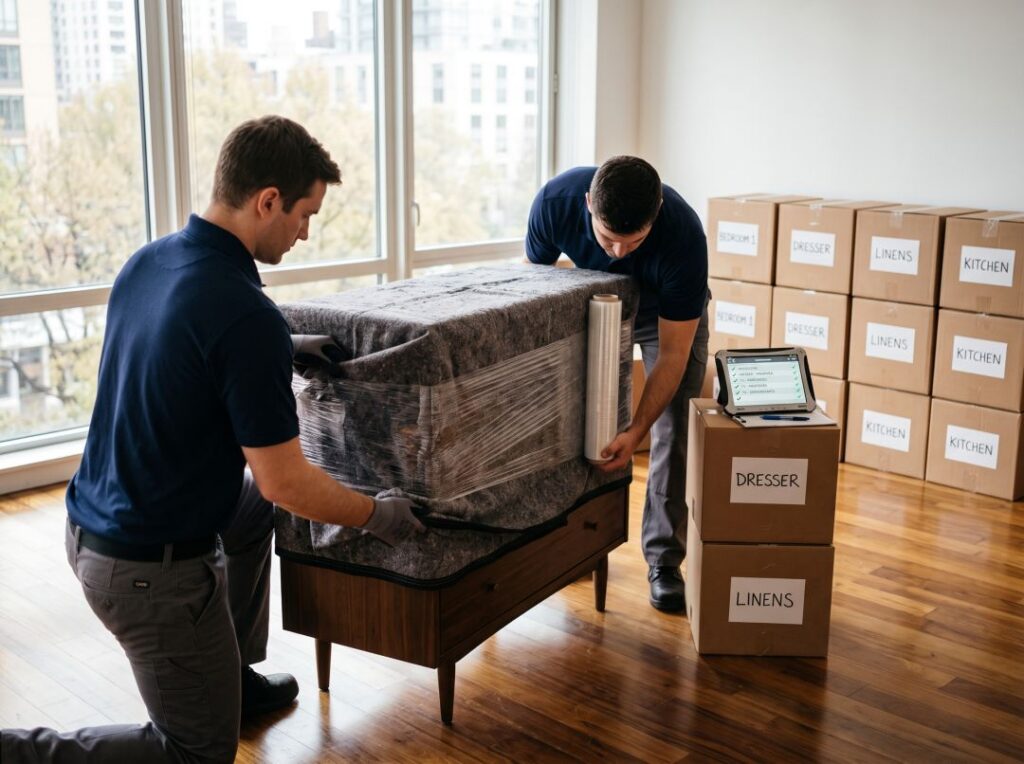
A few specifics relevant to this route. Every package gets a barcode label and is scanned before loading, which matters more on a 3,300-mile haul with multiple touch points than it does on a crosstown move. Professional packing services are available as partial, covering up to 15 boxes, or full. If your Miami closing slips or your building will not release the unit on schedule, temperature-controlled storage is monitored around the clock, and the first month is free. Given Miami humidity, temperature control is not a luxury on this route, it is the difference between furniture that survives and furniture that swells.
Moving insurance is included at the mandatory released value level in every estimate, with full-value protection available as an upgrade. Car shipping is available terminal-to-terminal or door-to-door, and bundling it with your household goods move discounts the combined price.
And if Miami turns out to be a stop rather than a destination, full-service international moving covers over 150 countries, which given Miami's role as a gateway to Latin America is less hypothetical than it sounds.
For route-level planning across other corridors, our state-to-state moving route guides cover the logistics of specific interstate moves, and the best long-distance cross-country movers resource lays out the criteria we think matter when comparing carriers.
You can also review our full long-distance moving services, or start from the Florida cross country moving and Washington cross country moving pages.
Comparing Your Move Methods
← swipe to see all columns →
| Full-service movers | Moving containers | Rental trucks | Freight trailers | Moving labor only | |
|---|---|---|---|---|---|
| Your effort | Minimal | High | Very high | High | Moderate |
| Typical 2BR cost | $5,000 to $8,500 | $3,500 to $6,000 | $3,000 to $5,500 | $2,800 to $5,000 | Varies by hours |
| Transit time | 7 to 21 days | 10 to 21 days | 5 to 7 days driving | 10 to 18 days | N/A |
| Carrier liability | Yes, federally regulated | Limited | None on your goods | Limited | None |
| Miami condo friendly | Usually | Often restricted | Often restricted | Often restricted | Yes |
| Best for | Families, professionals, tight timelines | Flexible schedules, houses | Small loads, tight budgets | Mid-size loads | Hybrid movers |
Key Takeaways
- Seattle to Miami is roughly 3,300 miles, with household goods typically in transit 7 to 21 days and full-service costs running $3,200 to $18,000 depending on home size.
- The no state income tax pitch does not apply to you. Washington already has none. The actual tax difference is on capital gains and property, and it is worth modeling with a CPA.
- The condo reserve situation is the biggest financial risk of this move. Florida's milestone inspection and structural integrity reserve study requirements can trigger five-figure special assessments. Demand the documents before you sign.
- Time it for February through April or late October through early December. You dodge hurricane season, summer humidity, and peak moving rates simultaneously.
- Miami building access rules will delay you if you ignore them. Certificate of insurance, elevator reservation, and dock clearance need to be handled the week you sign, not the week you move.
- You have 30 days to get a Florida license and until March 1 to file for the Homestead Exemption. Both matter.
- Verify your carrier's USDOT and MC numbers, insist on a binding estimate built from a real inventory, and seriously consider full-value protection over 60 cents per pound on a haul this long.
This guide is reviewed and updated as regulations, rates, and market conditions change. Last reviewed for the 2026 moving season.
Frequently Asked Questions
- How much does it cost to move from Seattle to Miami?
Expect $3,200 to $5,500 for a studio or one-bedroom with full-service movers, $5,000 to $8,500 for a two-bedroom, and $7,500 to $13,000 for a three-bedroom. DIY methods run roughly 30 to 50 percent less but require you to load, drive, or both. Car shipping adds $1,100 to $1,800 for open transport. Only a written estimate built from a detailed inventory is a real number.
- How long does a Seattle to Miami move take?
Household goods typically arrive 7 to 21 days after pickup. Consolidated shipments, where your goods share a truck with other households, sit at the longer end. A dedicated truck can cut it to under a week at a higher price. Driving it yourself takes about five days at a realistic pace.
- When is the best time of year to move from Seattle to Miami?
February through April, or late October into early December. You avoid peak hurricane activity, peak summer humidity, and peak moving season pricing all at once. Mid-August through early October carries the most schedule risk.
- Do I really save on taxes moving from Seattle to Miami?
Not on wages. Neither Washington nor Florida taxes wage income. The genuine difference shows up on investment gains, since Washington applies a capital gains excise tax to large long-term gains and Florida does not. Property taxes and the Florida Homestead Exemption also change the picture. Run it with a CPA before you time your residency change.
- What should I check before buying a Miami condo?
Ask for the milestone inspection report, the structural integrity reserve study, the current reserve balance, and twelve months of board minutes. Florida law now requires these inspections and reserve studies for buildings three or more habitable stories tall, and a shortfall usually becomes a special assessment paid by unit owners.
- Do I need a car in Miami?
Almost certainly, unless you are living and working inside the Brickell and downtown core served by Metrorail and Metromover. Miami-Dade County is largely car-dependent, and summer heat makes walking and biking a genuine constraint rather than a preference.