Self-Storage vs. Climate-Controlled vs. Storage-in-Transit for an Encino Move
A practical comparison of self-storage, climate-controlled storage, and storage-in-transit for a move in or out of Encino, California. Covers what each model actually protects, who handles transportation, access limits, the questions to ask a facility about temperature and humidity, and how to match the option to your timeline. [...]<p><a class="btn btn-secondary understrap-read-more-link" href="https://crosscountrymovers.com/resources/self-storage-climate-controlled-storage-in-transit-encino-move/">Read More...</a></p>
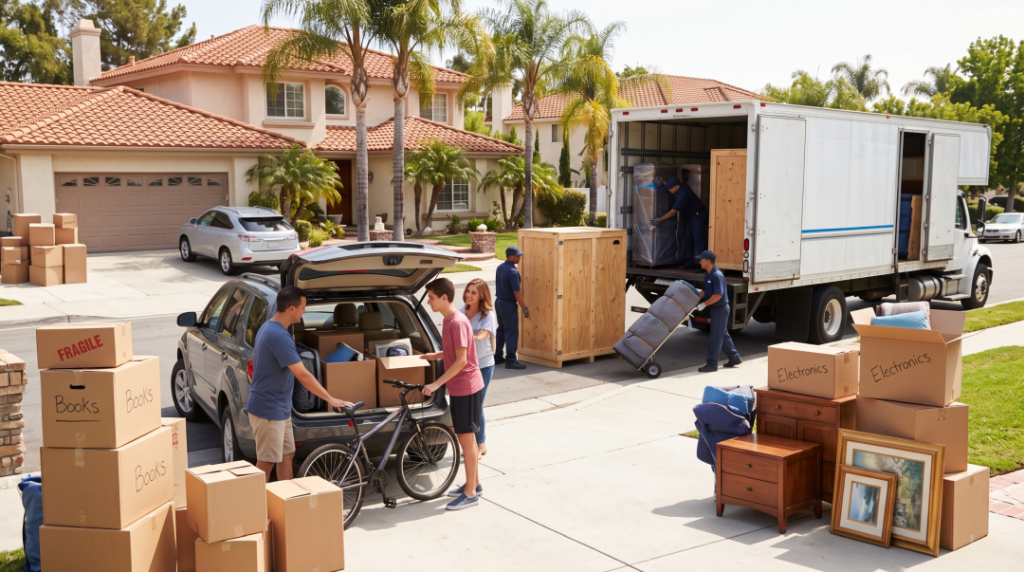
If your next home is not ready, you need storage that fits both your belongings and your moving schedule. When comparing self-storage, climate-controlled storage, and storage-in-transit, consider access, environmental protection, and who handles transportation.
These options overlap: self-storage can be climate-controlled, and storage-in-transit can use temperature-controlled facilities. The right choice depends on how you need the service to work.
Choose Storage Based on Your Move, Belongings, and Timing
Start with three questions: Are your belongings sensitive to heat or moisture, how long will you store them, and do you want to arrange transportation yourself?
Nationally, the average self-storage unit rented for $134 per month in August 2026, but the total depends on unit size, length of stay, whether a mover provides storage-in-transit, and changes to rent after the first few months. Add truck rental, fuel, loading labor, self-storage insurance, and repeat handling before comparing it with professional handling and coordinated delivery.
Check rental terms, access hours, protection levels, and final delivery responsibilities. A month-to-month rental offers flexibility, but move-out notice requirements still matter.
The Three Storage Models at a Glance
- Self-storage gives you a rented unit that you load, unload, and access yourself.
- Climate-controlled storage usually provides indoor storage units with managed temperature; humidity control varies.
- Storage-in-transit holds your shipment during a move until final delivery.
Ask the facility about its storage unit temperature range, and ask your moving coordinator how storage affects delivery scheduling.
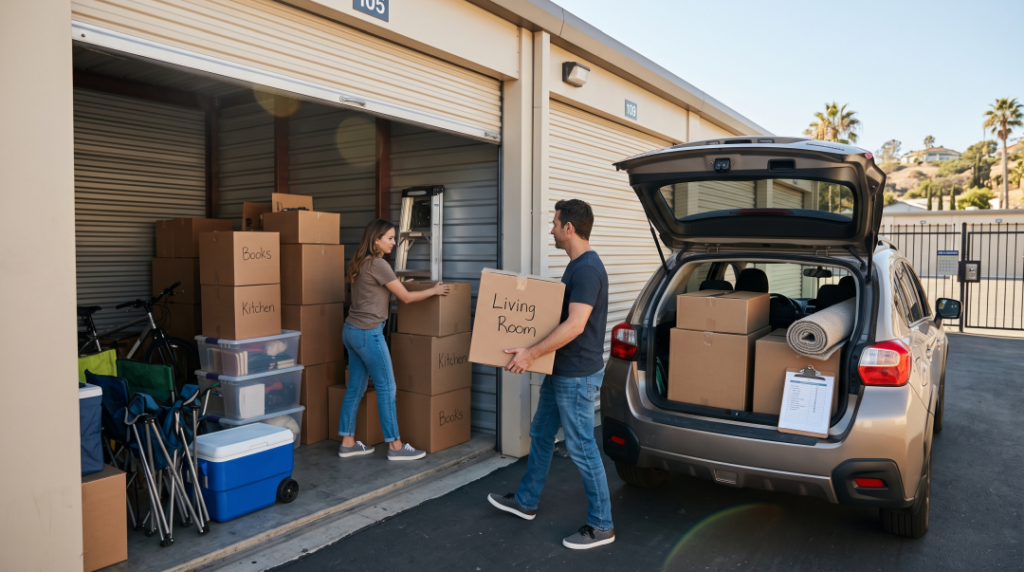
Compare Storage Features, Costs, Access, and Handling
Compare the complete service, not just the unit. Facility location, unit size, duration, access arrangements, and included moving services all affect your bill.
Climate control may mean temperature management alone. Ask the facility manager about humidity practices, security features, and outage procedures.
Swipe left or right to see all columns.
| Feature | Self-storage | Climate-controlled | Storage-in-transit |
|---|---|---|---|
| Best for | Independent access | Sensitive belongings | A moving gap |
| Environment | Usually unconditioned | Managed temperature; humidity varies | Warehouse conditions vary |
| Customer access | Posted access hours | Posted access hours | Often by appointment |
| Pickup and final delivery | You arrange | Usually you arrange | Mover coordinates |
| Loading and unloading | You or hired help | You or hired help | Moving crew |
| Typical duration | Short or open-ended | Short or long-term | Temporary moving hold |
| Billing | Rental plus extras | Rental plus extras | Storage plus moving services |
| Security questions | Gates, locks, cameras? | Access controls, monitoring? | Inventory and release controls? |
| Key limitation | Transport and environment | No universal humidity standard | Limited retrieval access |
Request an itemized comparison for the same inventory and storage period.
A storage marketplace can simplify that comparison by bringing self-storage and climate-controlled options into one search, helping you evaluate location, pricing, access, and protection for the same inventory.
When comparing local facilities, review providers such as MyPlace Self Storage alongside other options, using the same unit size, access requirements, environmental features, insurance terms, and promotional pricing assumptions.
Self-Storage: Best When You Need Frequent, Independent Access
Standard self-storage is a unit you rent directly, often month to month. You choose the size, arrange transport to and from the unit, load safely, secure the lock, and organize final transport.
It suits gradual decluttering, household overflow, and some commercial storage needs when regular retrieval matters more than coordinated moving services.
When Standard Storage Makes Sense
Tools, patio items, and durable boxed household goods may suit non-climate-controlled storage when clean, dry, and properly packed.
Outdoor storage units with drive-up access can simplify loading, but confirm their suitability for your belongings. This option works best when you have reliable transportation for multiple trips.
Drive-up storage typically refers to a ground-level unit positioned so you can park a vehicle directly outside the door. It can make loading and unloading furniture, tools, and heavier boxes more convenient, but outdoor-facing units may provide less insulation than indoor storage, so compare the unit’s conditions with the sensitivity of your belongings.
Questions to Ask Before Renting a Unit
Ask about access hours, controlled access, ground-floor or drive-up availability, insurance requirements, and prohibited items.
Whether you compare Extra Space Storage, MyPlace Self Storage, or an independent facility, verify the actual unit conditions and contract terms instead of relying only on the brand name or advertised introductory rate.
Measure furniture and estimate box volume before booking. Leave an aisle if you expect frequent visits, rather than filling every available inch.
Climate-Controlled Storage: Best for Sensitive or High-Value Belongings
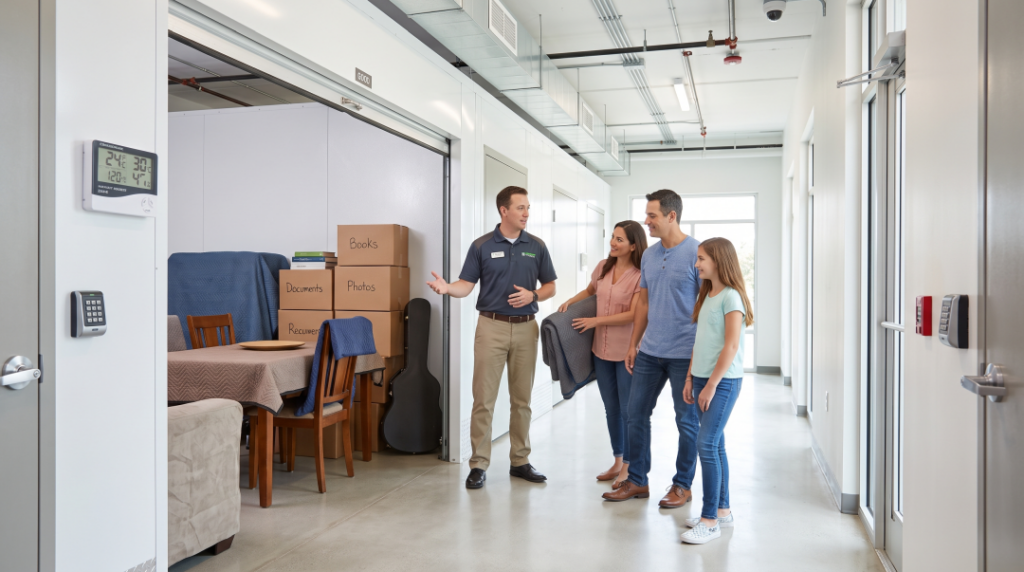
Climate-controlled facilities use heating, ventilation, and air conditioning (HVAC) systems to moderate indoor conditions. Air circulation helps, but air-conditioned storage or air-cooled storage does not automatically include humidity control.
Encino’s summer heat can be substantial: an Encino HVAC provider cites an 88°F summer design temperature near 91316 and weather-station highs of 100 to 108°F during heat events. For longer storage periods, compare environmental protection with your belongings’ packing and insurance needs.
Items That Often Benefit from Climate Control
Wood furniture, electronics, musical instruments, documents and photographs, artwork, leather, vinyl records, and other temperature-sensitive items often benefit.
Heat and humidity fluctuations can contribute to warping, corrosion, adhesive failure, and mold and mildew.
How to Verify the Protection You Are Paying For
Ask about year-round temperatures, humidity monitoring, outages, and moisture concerns.
When comparing providers, U-Haul offers both self-storage information and climate-controlled storage options designed to help protect furniture, electronics, photographs, clothing, and documents. Confirm the conditions, access rules, and availability at the specific Encino-area facility rather than assuming every location provides the same features.
Store only clean, fully dry belongings, use quality packing materials, elevate furniture, and choose breathable coverings where appropriate. FEMA’s mold guidance explains why controlling moisture matters for preventing mold growth.
Storage-in-Transit: Best for a Defined Gap Between Homes
Storage-in-transit is temporary storage arranged within your move when belongings cannot travel directly from pickup to final delivery.
For a defined gap between homes, short-term storage can be arranged through either a self-storage facility or a mover’s storage-in-transit service.
It suits delayed closings, lease gaps, renovation delays, and long-distance moves where arranging a separate storage unit would add transportation and handling.
The Convenience Trade-Off
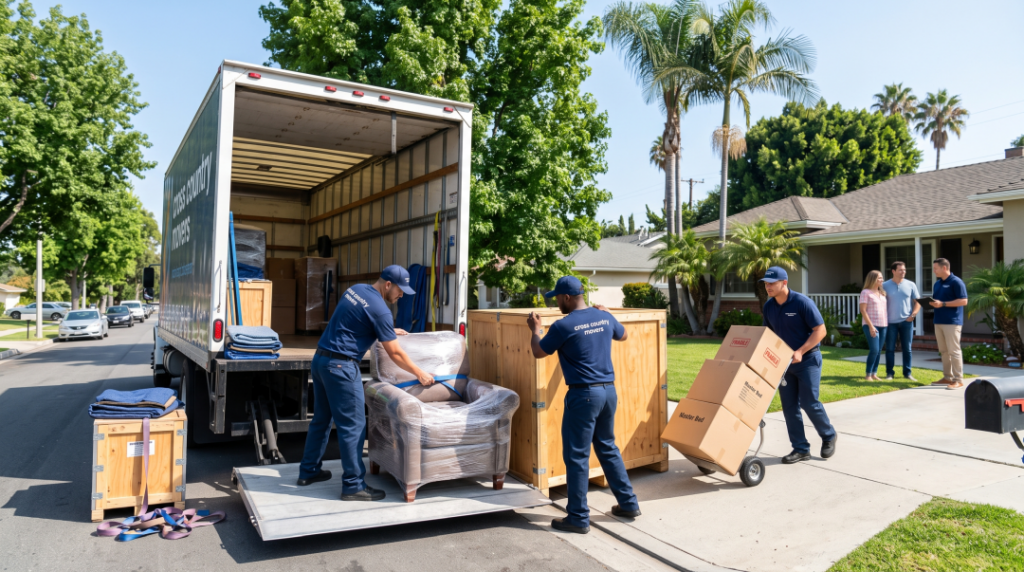
One moving team can coordinate pickup, storage, and delivery, reducing the number of providers you manage. Goods may remain in a secure warehouse, sealed vaults or containers, so access can be limited.
Ask a storage professional whether partial release is available, how to request access, and how much notice delivery requires.
What to Confirm in Your Moving Agreement
Confirm storage rates, billing intervals, warehouse conditions, valuation coverage, access charges, and delivery scheduling.
Keep a detailed inventory and label cartons clearly. Ask what happens if the storage period extends, including whether rates, coverage, or service terms change.
Match the Right Storage Option to Your Encino Move
Choose according to your most important constraint, then check the other two. Sensitive belongings still need environmental protection during a short moving gap, while long-term storage may still require frequent access.
Choose Self-Storage If
You expect regular visits, can arrange transportation, and have durable belongings suitable for the unit’s conditions.
It can suit long-term or open-ended storage, but insulation alone does not establish temperature or humidity control.
Choose Climate-Controlled Storage If
Your inventory includes belongings vulnerable to heat, temperature swings, or moisture buildup.
Environmental consistency may justify a higher rate, especially over longer periods. Keep documents and photographs away from damp packing materials.
Choose Storage-in-Transit If
You have a defined gap between homes and prefer coordinated handling over regular access.
Choose a plan with one company accountable from pickup to final delivery. You can also combine options, keeping frequently used items accessible while movers store the rest.
Plan Storage With Cross Country Movers
Cross Country Movers coordinates local and long-distance moving with storage in temperature-controlled facilities. This gives you an alternative to arranging separate transportation, loading help, and storage providers.
The company bases its guaranteed flat price on a detailed inventory list, with no weight-based charges or surprise fees. Keep that list current, since added items or changed services require an updated price.
Experienced movers handle fragile and bulky belongings, and packing support helps prepare items for transport and storage. Discuss unusual pieces in advance, including whether they need custom crating.
Build a Storage-Ready Inventory
Separate immediate essentials from goods that can remain stored until delivery. Photograph valuable items, record their condition, and flag special packing or environmental requirements.
Request a moving plan identifying what needs storage, the expected duration, and your final delivery timing.
Compare your storage options against one coordinated plan. For an estimate that covers pickup, temperature-controlled storage, and final delivery on your Encino move, request a detailed inventory review before booking.
Final Verdict: Select Protection and Access That Fit Your Timeline
Self-storage prioritizes independent access, climate-controlled storage prioritizes environmental consistency, and storage-in-transit prioritizes coordination within your move. None automatically includes every feature of the others.
Compare total logistics rather than the advertised monthly storage cost. Before hiring a mover, follow the Federal Trade Commission’s guidance on choosing a mover, including obtaining written estimates and reviewing the terms.
Before committing, discuss your inventory, storage duration, and delivery timing with Cross Country Movers so your moving plan addresses all three.
About the Author
This guide was prepared by the Cross Country Movers editorial team, a licensed interstate household goods carrier operating as Trico Long Distance Transportation LLC under USDOT 2552260 and MC-889368. Provider details reflect publicly available service information at the time of writing and should be re-verified before booking. Other company names are listed for buyer research only and are not endorsements.
Primary sources: Federal Trade Commission consumer guidance on hiring a mover; FEMA mold and moisture guidance; published provider service pages. Last reviewed: October 2026.
Frequently Asked Questions
- Is Climate-Controlled Storage Better Than Standard Storage?
It is better suited to belongings affected by heat, cold, or humidity changes, including wood furniture, electronics, photographs, and musical instruments. Standard storage can suit durable items when they are clean, dry, and properly packed.
- Can Mold Grow in a Climate-Controlled Storage Unit?
Yes, particularly if damp belongings or packing materials introduce moisture. Store only clean, dry items and ask whether the facility monitors humidity as well as temperature.
- Which Storage Option Should I Choose for an Encino Move: Self-Storage, Climate-Controlled Storage, or Storage-in-Transit?
Choose self-storage for ongoing access and customer-managed transport, climate-controlled storage for sensitive belongings, or storage-in-transit for temporary holding within your move. Ask whether you can combine environmental protection with the handling and access arrangements you need.