DIY Truck Rental (U-Haul/Penske) vs. Hiring Professional Long-Distance Movers: A 2026 Cost-Benefit Analysis
A 2026 cost-benefit breakdown of renting a moving truck (U-Haul or Penske) versus hiring professional long-distance movers. Covers real all-in costs, fuel, insurance, equipment, coverage, and the time and risk trade-offs, plus who each option is right for. [...]<p><a class="btn btn-secondary understrap-read-more-link" href="https://crosscountrymovers.com/resources/diy-truck-rental-vs-long-distance-movers-2026/">Read More...</a></p>
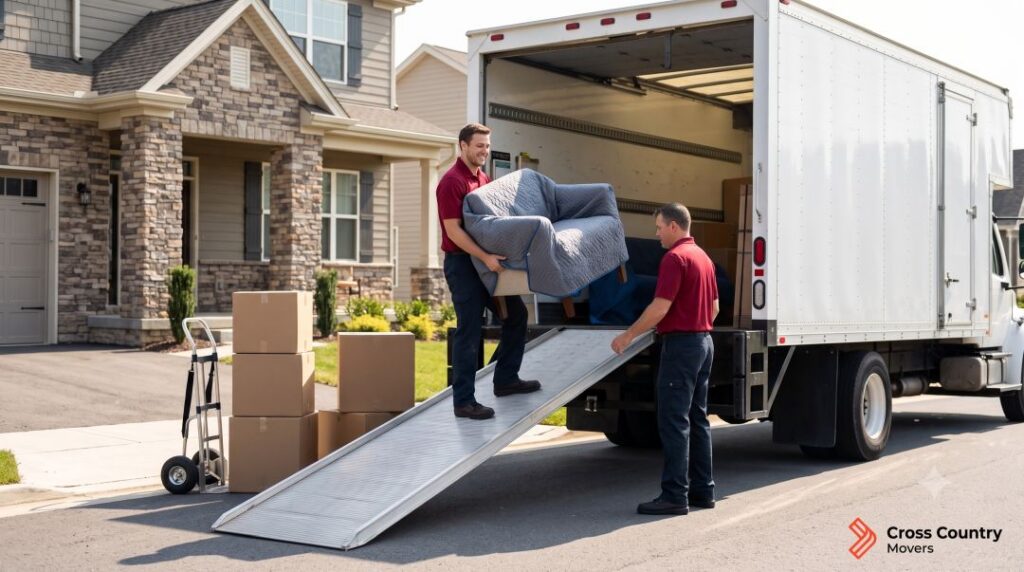
Here is the honest version. If you are moving a studio a few hundred miles and you have friends who will actually show up, renting a truck is almost always cheaper. If you are hauling a three-bedroom house across the country, the gap between the two options is a lot smaller than the sticker prices make it look, and money usually stops being the thing that decides it.
What decides it is time, physical effort, and how much risk you are willing to carry yourself.
This guide breaks down the real 2026 numbers for both paths, a DIY moving truck rental (think U-Haul or Penske) and hiring professional movers for a long-distance move. Not the advertised base rates. The total cost, once fuel, insurance, equipment, and your own labor are on the table.
The short answer: which one actually costs less in 2026?
For most local moves and small long-distance moves, a rental truck wins on price. You are paying for a vehicle and doing the work yourself, so the bill stays low.
For a full household going cross country, the honest answer is "it depends, and the difference is often a few hundred to a couple thousand dollars, not the tenfold gap people expect."
A DIY cross-country move in a big rental truck commonly lands somewhere around $1,500 to $3,500 all in, and the cheapest version of that is loading it yourself with a couple of friends and driving the whole way.
Full-service long-distance movers cost more up front. For a standard household with a typical inventory, the average cost of cross country movers ranges from $3,500 to $6,500, and larger homes or moves that need packing and storage can climb past $10,000.
So the price question is real, but it is only half the decision. Keep reading, because the other half is where people get burned.

What a DIY truck rental really costs in 2026
The number on the ad is not the number you pay. That is the first thing to understand about equipment rental.
Base rates, mileage, and one-way vs. local
U-Haul advertises rates that start low. The advertised base rate for U-Haul truck rentals ranges from $19.95 a day for a cargo van to $39.95 a day for a 26-foot truck. That $19.95 figure is bait for a reason: it only applies to the smallest truck on a local move.
The second you go one way, meaning you pick up in one city and drop off in another, the pricing changes completely. One-way rentals are a flat fee built around distance and truck size, plus a set mileage allowance.
U-Haul charges per mile on local moves and roughly a dollar per mile if you blow past the allowance on a one-way. If you need additional miles, they can be added at a rate of $1.00 per mile, and additional days can be added to one-way rentals for $40 per day. You can see how U-Haul structures one-way rentals directly on their site.
Penske plays it differently, and for long moves this matters a lot. Of all the national truck rental companies, only Penske offers free unlimited miles on one-way truck rentals anywhere in the United States. No odometer anxiety, no surprise per-mile fees at drop-off. That single policy is why Penske often ends up the cheaper choice on genuinely long hauls, even though its base rate runs higher. You can confirm the Penske unlimited-miles policy on their page.
Ballpark 2026 pricing to set expectations: a Penske truck typically costs between $1,200 and $1,700 for a two-bedroom, long-distance move of 1,000 miles or less. Go bigger or farther and it climbs from there.
The add-ons nobody budgets for
This is where the "cheap" DIY move quietly stops being cheap.
Fuel. Moving trucks are thirsty. Moving trucks get 8 to 12 miles per gallon depending on size, and for a 1,000-mile long-distance move in a 26-foot truck you can expect to spend $350 to $500 on fuel. With the national average sitting around four dollars a gallon this summer per AAA's fuel tracker, a coast-to-coast trip can push fuel well past that. Diesel trucks cost even more to fill.
Insurance. The truck does not come protected. Optional Safemove coverage adds $15 to $30, and skipping it means you are on the hook for every scratch. Worth knowing: your personal auto policy usually does not cover a rented commercial rental truck, so declining coverage is a real gamble.
Equipment. Dollies, furniture pads, moving blankets, straps, moving supplies. All extra. A handful of dollies and a dozen pads adds up fast, and you will want them unless you enjoy gouged floors and cracked dressers.
The quiet ones. Toll roads. Late return penalties. A refundable credit card hold. An extra rental day if loading runs long. None of these show up in the quote, and all of them show up on the bill.

Truck sizes and what fits
Getting the truck size right is half the battle. Too small and you are making two trips or leaving things behind. Too big and you are paying to haul air and burn extra fuel.
Rough guide for the common moving trucks:
- Cargo vans and pickup trucks: studio odds and ends, a single room, a dorm.
- 10 to 15 foot box trucks: a studio to a small one-bedroom.
- 20 foot: a two-bedroom.
- 26 foot: a three to four-bedroom house. This is the top of most consumer fleets, and it is a lot of vehicle to drive if you never have.
Check the Gross Vehicle Weight (GVW) rating and do not load past it. Cargo space is not the same as legal load capacity, and an overloaded truck handles badly and fails inspections.
Towing your car: dollies, carriers, and trailers
If you are driving one vehicle and need to bring a second, you are now in towing territory. Tow dollies lift the front wheels; car carriers haul the whole vehicle; utility trailers and cargo trailers handle the overflow that will not fit in the truck.
Towing equipment is another rental line item, and towing a loaded trailer behind a 26-foot truck is not a beginner move. For a lot of people the smarter play is to skip the tow dolly entirely and ship the car separately. Cross-country car shipping typically runs $1,200 to $2,400 depending on the vehicle and whether you choose an open or enclosed carrier, and it takes the hardest part of the drive off your plate.
What professional long-distance movers cost in 2026
Full-service moving means a crew shows up, loads, drives, and unloads. You point; they lift. The trade is a higher price for a much lighter day.
How interstate pricing works
Local movers charge by the hour. Long-distance is a different animal. Long-distance moves are priced by shipment weight plus mileage, then adjusted for service level and valuation, and for interstate moves movers are required by federal law to provide a written estimate, either binding or non-binding.
That binding estimate is the part worth chasing. A binding estimate locks in the total price, so you pay that amount at delivery regardless of the actual shipment weight. It is the closest thing to a guaranteed number you will get, and it kills the "the weight came in higher than we thought" surprise.
What you are actually paying for
A real full-service quote usually folds in the labor, the truck, the fuel, basic protection, and the drive. But some quotes are all-inclusive and others are not, tacking on separate charges for fuel surcharges, valuation coverage, extra pickup or drop-off stops, and a shuttle fee if a full-size truck cannot reach your door. Always ask what is in the number so you are comparing like for like.
Where does that land? For a long-distance move, professional movers cost around $5,000 on average, with most typical cross-country households falling in the $3,500 to $6,500 window and bigger homes going higher.
The full-service space is crowded with large national networks. Names like United Van Lines, Allied Van Lines, and Mayflower Transit have been hauling households across state lines for decades, and you will run into them the moment you start collecting quotes.
Listing them here is not an endorsement. Brand recognition is not the same thing as the right fit, or the best price, for your specific move. Whoever makes your shortlist, verify their USDOT and MC numbers and get a binding written estimate before you put down a deposit.
Side-by-side: DIY truck rental vs. professional movers
← swipe to see all columns →
| Factor | DIY truck rental (U-Haul / Penske) | Professional long-distance movers |
|---|---|---|
| Typical all-in cost (cross country) | About $1,500 to $3,500+ | About $3,500 to $6,500+ |
| What you pay for | Truck, fuel, insurance, equipment, your labor | Labor, truck, transport, protection, the drive |
| Physical effort | All on you and your helpers | Handled by the crew |
| Loading and unloading | You do it | They do it |
| Driving | You drive a large truck, often for days | A trained driver handles it |
| Pricing certainty | Base rate plus variable add-ons | Binding estimate can lock the total |
| Damage risk | On you if it is dropped or shifts | Covered under the mover's valuation |
| Time commitment | High (planning, packing, driving, returning) | Low (mostly scheduling and being present) |
| Best for | Small moves, tight budgets, willing hands | Full households, long distances, less stress |

Beyond the dollars: time, effort, and risk
Price is easy to compare. The stuff that actually wrecks a move is harder to put a number on, so people ignore it until moving day.
Physical effort and stress
A DIY move is a full-body job spread over days. Packing, hauling, loading a truck like a Tetris champion, driving it across several states, then unloading at the other end. If your "crew" is two friends and a promise of pizza, the risk of a no-show is real, and a no-show turns a hard day into a disaster.
Then there is the drive itself. Piloting a loaded truck across several states is exhausting, and for anyone who has never driven something that size, it is genuinely risky. A 26-foot box truck does not brake, turn, or park anything like your car.
Delivery predictability and accountability
With a rental, you are the logistics department. Your stuff arrives when you arrive, which is a plus, but every delay is yours to eat.
With professional movers, you trade some control for accountability. A licensed carrier gives you a delivery window and a paper trail, and there is a company on the hook if something goes wrong. That accountability is worth real money to a lot of people, even if it never shows up as a line on the quote.
Coverage: released value vs. full value protection
This one catches people. By law, interstate movers include basic coverage for free, but "free" here means "barely anything."
Released value protection pays out by weight, at cents per pound. Drop a flat-screen and you might get a few dollars. Full value protection is the upgrade that actually replaces or repairs items at their real worth, and it is the coverage worth paying for if you own anything you would be sick to lose. If you want to go deeper on protecting a shipment, moving insurance options are worth reading before you sign.
Who should rent a truck, and who should hire movers
Rent the truck if:
- You are moving a small place a short to medium distance.
- Your budget is tight and the upfront cost is what matters most.
- You have reliable help and you are comfortable driving something big.
- You have the time and the physical energy to spend a few days on it.
Hire the pros if:
- You are moving a full household a long distance.
- Your time is worth more than the savings, or your schedule has no slack.
- You have fragile, heavy, or high-value items you do not want to gamble on.
- The idea of driving a loaded truck across the country makes your stomach drop.
Plenty of people split the difference: a moving and storage container or a labor-only crew to load a truck you drive. It is a middle lane worth pricing out. Just remember that containers and DIY still leave the driving, or the waiting, on you.
Money-saving tips that actually move the needle
- Ask for every discount. AAA members, military personnel, and students can often get 10 to 12 percent off a truck rental. AARP membership can help too. It takes one question at booking.
- Move off-peak. Summer and month-end are the priciest times for both DIY and full-service. Mid-week and mid-month in the off-season is where the savings hide.
- Get the binding estimate in writing. For movers, insist on it. It is your best protection against dynamic pricing and weight-based surprises.
- Declutter first. Weight and volume drive the price on the mover side and the truck-size decision on the DIY side. Less stuff is cheaper both ways.
- Reserve early. Fleet availability tightens fast in peak season, and a late reservation means fewer choices and worse rates.
There are more of these hidden line items than most people expect. It is worth reading up on the moving costs people forget to budget for before you commit either way. And if your dates do not line up cleanly, know when storage during a move actually makes sense so a gap between homes does not blow up your plan.
Top reasons to choose Cross Country Movers for a long-distance move
If you land on the full-service side of this decision, here is where a direct carrier earns its keep. Cross Country Movers is a licensed interstate carrier (US DOT 2552260, MC-889368) with an A rating from the BBB, and the pitch is simple: one team, one price, no games.
- Guaranteed flat price based on a detailed inventory list with no surprise fees or weight-based charges
- Timely pick-up and drop-off respecting clients' schedules for all moves, local or cross-country
- Experienced movers trained to handle fragile and bulky items with care and attention to detail
- Full-service international moving to over 150 countries including packing and customs documentation
- Comprehensive services including packing, storage in temperature-controlled facilities, and car shipping
That flat-rate, inventory-based approach is the direct answer to the biggest fear on the professional side: the estimate that balloons at delivery. You can see the full scope of long-distance moving services and real-time tracking on the site.
Key takeaways
- For small or short moves, a rental truck almost always costs less. You are paying for a vehicle and your own labor, and that keeps the bill low.
- For a full cross-country household, the price gap is smaller than it looks. DIY commonly runs $1,500 to $3,500+; full-service movers average $3,500 to $6,500+, and add-ons close the distance.
- The advertised truck rate is never the real cost. Fuel, insurance, equipment, tolls, and extra days stack up fast.
- Penske's unlimited miles help on long one-way moves; U-Haul's lower base rate helps on short ones.
- The deciding factor is usually time, effort, and risk, not the sticker price. A binding estimate and proper full value protection are what make the professional option feel safe.
- Whichever way you go, ask for discounts, move off-peak, declutter, and get everything in writing.
Frequently Asked Questions
- Is it cheaper to rent a U-Haul or hire movers?
Renting a truck is usually cheaper up front, especially for small or shorter moves. For a full household going cross country, the gap narrows once you add fuel, insurance, equipment, and the value of your own time, and full-service movers can be worth the difference.
- Does Penske really include unlimited miles on one-way moves?
Yes. Penske is the only national truck rental company that includes free unlimited miles on one-way rentals, which often makes it the better value on long hauls despite a higher base rate. You still pay for fuel and any extra days.
- What is the real cost of a "cheap" DIY truck rental?
The advertised daily rate is only the start. Fuel at 8 to 12 miles per gallon, optional insurance, dollies and moving blankets, tolls, and possible late-return fees can multiply the base rate several times over on a long-distance move.
- How do I know a professional mover is legitimate?
Verify their USDOT and MC numbers before you book. Any interstate carrier must be registered with the FMCSA, and you can check a company's license and safety record through the FMCSA's Protect Your Move resources. Skip any mover that will not give you a written estimate.