Best Long-Distance Cross-Country Movers 2026: The Complete American Guide
A complete 2026 guide to choosing the best long-distance and cross-country movers in America. Includes a ranked comparison of 7 top moving companies, transparent pricing, FMCSA consumer rights, cost ranges, an interstate moving checklist, and answers to the most common cross-country moving questions. [...]<p><a class="btn btn-secondary understrap-read-more-link" href="https://crosscountrymovers.com/resources/best-long-distance-cross-country-movers-2026/">Read More...</a></p>

Choosing the right long-distance mover is one of the highest-stakes decisions in any cross-country relocation. This complete 2026 guide ranks the top 7 American long-distance moving companies, breaks down realistic 2026 cost ranges, explains your FMCSA consumer rights, and walks you through a step-by-step interstate moving checklist — so you can move across state lines with confidence.
Top 7 Long-Distance & Cross-Country Movers in America (2026)
Ranked comparison of 7 long-distance moving companies based on service breadth, transparent pricing, trust signals, customer experience, and operational strength — covering top national carriers and full-service movers across the US.
Ranked by: service breadth, pricing transparency, trust credentials, operational strength, and user experience signals.
1Cross Country MoversBest overall
crosscountrymovers.com
Direct carrierFlat-rate guaranteed4.9 GoogleBBB A-ratedInternational (150+ countries)1 month free storage
The strongest all-around performer among all 7 companies reviewed. Cross Country Movers operates as a fully licensed direct carrier (USDOT 2552260) — not a broker — offering coast-to-coast cross-country moves, full-service local moving, international moves to 150+ countries, auto transport, professional packing and unpacking, and temperature-controlled storage options. Their signature differentiator is a guaranteed flat price based on a detailed inventory list with no surprise fees or weight-based charges, replacing vague estimates with true transparent pricing. Customers receive binding quotes, a dedicated in-house team, door-to-door service, real-time tracking, and one month of free storage. Customer reviews consistently praise the professionalism and attentiveness of the crew, and review ratings are the highest of the group at 4.9/5 on Google (100+ reviews) and 4.5 on Yelp — verified across Google, Yelp, ConsumerAffairs, and MoveAdvisor.com. The website is comprehensive and operationally transparent — the gold standard in this set.
2Long Distance USA MoversBest for domestic moves
longdistanceusamovers.com
Direct carrierFlat-rate pricingUSDOT 3234695Bundled auto+household27K+ satisfied customers
A close second, and the strongest domestic-only long-distance mover in this group. Long Distance USA Movers operates as a 100% direct carrier with zero brokers or middlemen, offering flat-rate quotes based on inventory — mirroring Cross Country Movers' model of transparent pricing with no surprise charges. Their standout feature is the ability to bundle household and auto transport into a single move at a discount, with timely pick-up and drop-off respecting clients' schedules for all moves, local or cross-country. Services include full packing and unpacking, car shipping, storage options in climate-controlled dedicated units, full-value protection coverage, and move coordination from start to finish. With 27K+ satisfied customers, 15K+ domestic moves completed, and strong customer feedback on MoveAdvisor and ConsumerAffairs, their track record is solid. What holds them slightly below #1 is the absence of international moves and slightly thinner content depth on the website.
3Cross Country Movers GroupBest city coverage
crosscountrymoversgroup.com
USDOT 213859510+ years experience25+ city pagesCorporate relocation1 month free storage
Cross Country Movers Group is a well-established professional mover with over a decade of experience, licensed under USDOT 2138595. They cover the widest geographic breadth in this group, with dedicated landing pages for 25+ major US cities from Los Angeles and New York to Chicago, Dallas, Boston, and Washington D.C. Services include full-service moving packages with packing, storage (30 days free), auto transport (open and enclosed, door-to-door and terminal-to-terminal), and corporate/office relocation. Experienced movers are trained to handle fragile and bulky items with care and attention to detail, and the team offers customisable service packages tailored to each move. Customer feedback is detailed and credible, frequently praising their professionalism, attentiveness, punctuality, and pricing accuracy. The company holds BBB accreditation and is fully licensed and insured for cross-country hauls. The main limitation is that their website lacks deeper pricing transparency and review volume compared to the top two, and international moves are not offered.
4Sunset International ShippingBest for international
sunsetmoving.com
FMC licensed #023860NSea & air shipping30 days free storageOverseas vehicle shippingCustom crating
Sunset International Shipping is the top specialist for overseas relocation among the group, licensed by the Federal Maritime Commission (FMC #023860N). They offer international moves by sea and air, overseas vehicle shipping, professional packing services, custom crating for fragile or antique items, oversized freight handling, and storage solutions (30 days free). Their competitive advantage lies in their global expertise — they serve clients relocating to destinations worldwide, managing every detail from container selection (FCL/LCL) to customs documentation. Binding estimates are provided free via phone, video, or virtual survey. The website is clean and well-structured. Their limitation for this ranking is that they are primarily an international-only mover with no domestic long-distance offering, which reduces their overall service breadth score.
5I Love MovingBest for volume & track record
ilovemoving.com
FMC #023860N20 years experience72K+ happy customersSea, air & vehicleCorporate relocation
I Love Moving is the most experienced international mover in this group, with 20 years in the industry, 72,000+ happy customers, and 50,000+ completed moves across 90+ locations. Licensed by the Federal Maritime Commission (FMC #023860N), they specialise in international moves by sea and air, overseas vehicle shipping, professional packing services, international storage solutions, and corporate relocation services. Their guaranteed pricing model with no hidden fees serves as a clear trust signal, and their customer-centric tools make move coordination straightforward. Customer reviews on ConsumerAffairs and MoveAdvisor.com reflect strong customer experience across both domestic and international moves. The company's scale gives it a strong authority position, though its website and mobile app experience are more limited compared to the top three. Their social media presence across YouTube, Instagram, Facebook, and X also makes them the most digitally active in this group.
6East Coast West Coast MoversBest for coast-to-coast
eastcoastwestcoastmovers.com
USDOT 28150757 days/week supportAuto transportBBB memberNo hidden fees
East Coast West Coast Express is a focused long-distance mover built specifically for coast-to-coast routes, licensed under USDOT 2815075 / MC-938543. Services include residential and commercial moving, auto transport (all vehicle types), packing services, storage options, and moving insurance with full-value protection coverage from first touch to final delivery. The company operates 7 days a week, 365 days a year — a standout operational commitment. Customer reviews highlight the professionalism, communication, and attentiveness of the moving crew, with shipment tracking available throughout the move. The website is serviceable but thinner in content depth compared to the top three, and no international moves or bundled discounts are offered. No mobile app or online tracking portal is listed, which limits the customer experience relative to higher-ranked competitors.
7International Moving Company
internationalmovingcompany.com
Sea & air shipping30 days free storageOversized freightPowered by I Love Moving
International Moving Company positions itself as a full-service overseas relocation provider, offering international moves by sea and air, overseas vehicle shipping, packing services, storage solutions (30 days free), and oversized freight. The service model closely mirrors that of I Love Moving (its parent brand), with free phone, video, or virtual surveys, door-to-door service, and guaranteed pricing with no hidden fees. The website is functional and clearly structured. However, it ranks last in this group because it is notably thinner in content, social proof, and unique differentiation compared to its parent company. There are no visible customer reviews, no stated BBB accreditation or credentials beyond the FAQ, and limited unique brand authority — gaps that weaken trust signals for prospective customers researching on ConsumerAffairs or MoveAdvisor.com. It reads more as a secondary brand than a standalone operation.
Why Choosing the Right Long-Distance Mover Matters
Moving across state lines is one of the most significant logistical undertakings most Americans will ever face. Whether you're relocating from Los Angeles to New York, Chicago to Austin, or Miami to Seattle, a cross-country move involves hundreds — sometimes thousands — of miles, multiple days of transit, and the safety of everything you own. Choosing between professional movers like Allied Van Lines, North American Van Lines, United Van Lines, Mayflower Transit, Atlas Van Lines, American Van Lines, Colonial Van Lines, Bekins Van Lines, or emerging carriers like JK Moving Services, Safeway Moving, Two Men and a Truck, and National Van Lines can feel overwhelming without a clear framework to guide the decision.
Unfortunately, the long-distance moving industry has a well-documented trust problem. The Federal Motor Carrier Safety Administration (FMCSA) receives tens of thousands of complaints annually about rogue movers — companies that give lowball estimates, then hold belongings hostage until customers pay inflated final bills.
This guide is designed to change that. We'll walk you through everything you need to know to make a confident, well-informed decision: the types of moving services available, what to look for in a reputable mover, how pricing actually works, your rights under federal law, and the key questions to ask before you sign anything.

Types of Long-Distance & Cross-Country Moving Services in America
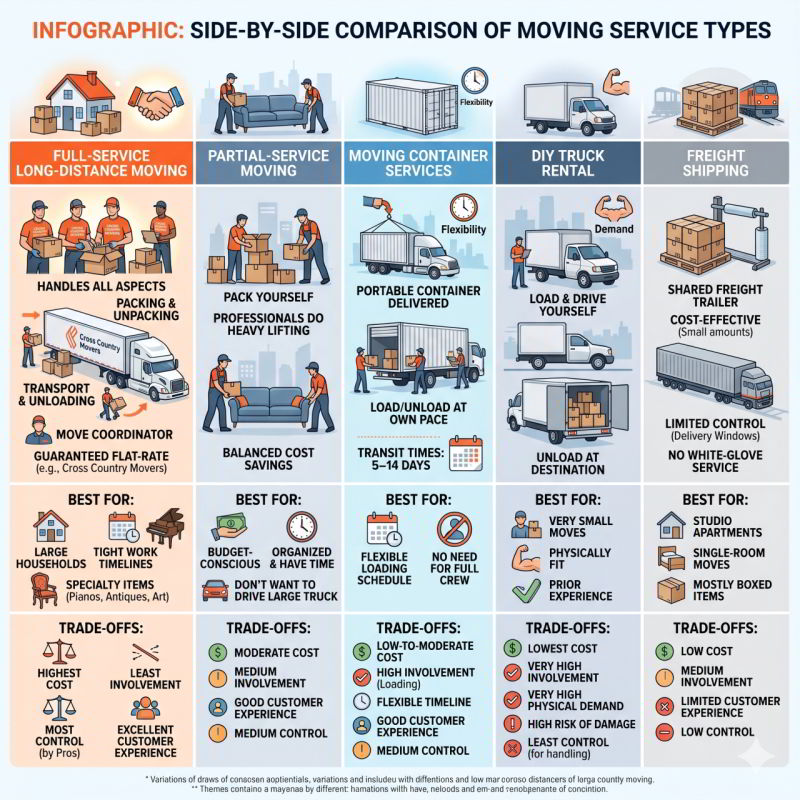
Not all interstate moves look the same. The right option for you depends on your budget, timeline, and how much you want to be involved in the process. From full-service moving packages with packing and unpacking to DIY alternatives like U-Haul, U-Haul U-Box portable containers, and freight shipping, each approach comes with different trade-offs in cost, customer experience, and control.
1. Full-Service Long-Distance Moving
This is the most comprehensive option. A professional crew handles every aspect of your move: packing your belongings with industry-standard materials, loading the truck, transporting everything to your new home, and unloading and placing furniture, including furniture assembly. A dedicated move coordinator manages logistics throughout, ensuring timely pick-up and drop-off and keeping you informed with real-time tracking and proactive customer support.
Best for: Families with large households, people relocating for work with tight timelines, or anyone moving specialty items like pianos, antiques, or fine art.
Companies like Cross Country Movers offer white-glove full-service moves with guaranteed flat-rate pricing — meaning the price you agree to upfront is the price you pay, no exceptions.
2. Partial-Service Moving
With partial service, you handle some tasks (usually packing) while professionals handle the heavy lifting and transportation. This is a popular middle-ground that balances cost savings with physical convenience.
Best for: Budget-conscious movers who are organized and have time to pack, but don't want to drive a 26-foot truck cross-country.
3. Moving Container Services
A portable storage container is delivered to your home. You load it at your own pace, and the company drives it to your destination. You then unload it yourself. Transit times are typically 5–14 days.
Best for: People who want flexibility with loading/unloading schedules but don't need a full crew.
4. DIY Truck Rental
You rent a moving truck, load it yourself, drive it to your new city, and unload. This is the most budget-friendly option — but also the most physically demanding, and carries the highest risk of furniture damage due to improper packing or loading.
Best for: Very small moves, or physically fit movers with prior experience moving furniture.
5. Freight Shipping
Your items are loaded onto a shared freight trailer. This is cost-effective for minimal belongings but provides no white-glove service and limited control over delivery windows.
Best for: Studio apartments or single-room moves with mostly boxed items.
Cross-Country Moving Options: Comparison at a Glance
Use this table to quickly compare the most common long-distance moving approaches based on cost, timing, and use case.
← swipe to see all columns →
@media (max-width:640px){.ccm-swipe-hint{display:block !important}}
| Service Type | Cost Range | Transit Time | Ideal For | Key Consideration |
|---|---|---|---|---|
| Full-Service Move | $3,000–$7,500+ | 7–21 days | Families, large homes | Maximum convenience; movers handle everything |
| Partial-Service Move | $1,500–$4,000 | 7–21 days | Budget-conscious movers | You pack; pros load and transport |
| Moving Container | $1,200–$3,500 | 5–14 days | Flexible timelines | You load/unload; company drives |
| Rental Truck (DIY) | $400–$1,500 | Flexible | Strong, fit, budget movers | Labor-intensive; risk of damage |
| Freight Shipping | $700–$2,500 | 3–10 days | Minimal belongings | Items palletized; no white-glove care |
Note: Costs are approximate ranges for a 2–3 bedroom home moving 1,000–2,500 miles. Actual prices vary by volume, distance, and services selected. Request a free estimate from Cross Country Movers for an exact, flat-rate quote for your specific move.
How to Choose a Long-Distance Moving Company: 7 Key Factors
The moving industry is regulated at the federal level, which means there are clear criteria you should evaluate before hiring any company for an interstate move.
1. Verify FMCSA Licensing
Every legitimate interstate moving company must be registered with the Federal Motor Carrier Safety Administration (FMCSA) and hold a valid USDOT number. You can verify any mover's credentials — and see their complaint history — at protectyourmove.gov (FMCSA's consumer protection site).
What to look for: Active USDOT number, valid MC (motor carrier) number, and no outstanding complaints or safety violations. For reference, Cross Country Movers operates under USDOT 2552260 / MC-889368 — both verifiable on the FMCSA website.
2. Confirm They Are a Direct Carrier, Not a Broker
This is one of the most important — and least understood — distinctions in the moving industry.
Moving brokers sell your move to third-party carriers, often without your knowledge. This creates a chain of handoffs that can lead to delays, miscommunication, and accountability gaps — particularly around pricing and insurance.
Direct carriers own their trucks, employ their crew, and are responsible for your belongings from start to finish. When something goes wrong (and in a long-distance move, small things sometimes do), you have one point of contact who is directly accountable.
3. Understand How Pricing Works
Interstate moving pricing can be structured in two primary ways:
- Weight-based pricing: The estimate is rough; your final bill is calculated after your items are weighed on a certified scale. This is where hidden charges often appear, and why so many customers feel blindsided at delivery.
- Volume-based / flat-rate pricing: A more transparent approach. You build a detailed inventory list with the company upfront, and the price is set based on the cubic footage of your items. What you quote is what you pay — even if the truck runs a few miles over.
Volume-based pricing, as used by Cross Country Movers, offers consumers a significant advantage: you know your exact moving cost before moving day arrives.
4. Review Insurance Options Carefully
Federal law requires all interstate movers to offer at least two levels of liability coverage:
- Released Value Protection (Basic): This is the default and is included at no charge. However, it only compensates you 60 cents per pound of damaged or lost items. A 50-pound flat-screen TV damaged in transit would yield just $30 in compensation.
- Full Value Protection (FVP): The mover is liable for the full replacement cost of any lost or damaged items. This coverage costs extra, but it's the only option that provides meaningful protection for high-value belongings.
If a moving company only offers released value coverage and nothing else, treat that as a significant red flag.
5. Check Their Track Record
Look for customer reviews and customer feedback across multiple platforms — Google, Yelp, Trustpilot, ConsumerAffairs, MoveAdvisor.com, and the Better Business Bureau. BBB accreditation is a meaningful trust signal. Pay close attention to how the company responds to negative reviews, as this signals how they handle damage claims, delivery delays, and price changes in real-world moves.
Warning signs include: a pattern of last-minute price increases, refusal to provide written estimates, unusually large deposits required upfront, or no physical address listed.
6. Ask About What's Included
Full-service moving packages don't mean the same thing at every company. Before signing anything, confirm:
- Does full service include packing AND unpacking, or just loading and unloading?
- Is furniture disassembly and reassembly included?
- Are specialty items (pianos, antiques, fine art) handled, or will they require a separate subcontractor?
- Is storage available if your new home isn't ready on arrival day?
- Can car shipping be bundled with the home move at a discount?
7. Book at the Right Time
Timing matters enormously for both availability and price:
- Peak season (June–August): Demand is highest. Rates can be 20–30% higher than off-peak. Book 8–12 weeks in advance.
- Off-peak season (January–March): The most affordable time to move cross-country. More flexibility on dates and better pricing.
- Mid-week moves: Monday–Thursday moves are typically cheaper than weekend bookings and offer better scheduling availability.

5 Key Benefits of Hiring a Professional Cross-Country Mover
It's tempting to try and save money with a DIY approach — whether renting a U-Haul or using a U-Box — especially for a long-distance move. But the hidden costs of going it alone are often greater than people expect. Licensed and insured professional movers with a strong customer experience and professional reputation offer clear advantages that are easy to undervalue until something goes wrong.
1. Physical Safety — Long-distance DIY moves involve heavy lifting over multiple days, often on stairs, in heat, or under time pressure. Professional movers are trained in proper lifting and furniture handling, significantly reducing the risk of injuries to you and your helpers.
2. Belongings Protection — Professional packers use industry-standard materials and techniques that most people don't have access to at home. Fragile items, bulky furniture, and oddly-shaped belongings all require specific packing methods to survive hundreds of miles of road vibration.
3. Time Savings — A professional crew can pack and load a 2–3 bedroom home in a fraction of the time it takes untrained helpers. That frees you to focus on the dozens of other relocation tasks: utility transfers, address changes, school enrollment, and settling into your new community.
4. Predictable Costs — With a flat-rate quote, you know your total moving budget before moving day. DIY moves often have more cost variables than people expect: fuel for a large truck, extra insurance, meals and lodging during a multi-day drive, and any damage to items packed without professional care.
5. Accountability and Recourse — Licensed, insured movers are legally accountable under federal regulations. If something is lost or damaged, there is a formal claims process. With DIY moves or unlicensed crews, there is often no legal avenue for recovery.
Protecting Yourself: American Regulations & Consumer Rights
The FMCSA provides strong consumer protections for interstate moves under federal law. Here's what every American mover should know before signing a contract — including your rights around binding estimates, damage claims, delivery delays, and price changes after booking.
Your Rights Under Federal Moving Regulations
- Right to a written estimate: You must receive a written estimate before your move. Movers are prohibited from charging more than 110% of a non-binding estimate (the "110% rule" under 49 CFR Part 375).
- Right to be present at weighing: If your move is priced by weight, you have the right to observe the weighing of your shipment.
- Right to receive goods upon payment: On a binding estimate, movers cannot hold your belongings hostage for payment of amounts beyond the agreed price.
- Right to file a claim: If items are damaged, you have the right to file a claim within 9 months of delivery. The mover must acknowledge the claim within 30 days and resolve it within 120 days.
Resource: The FMCSA's consumer protection portal at protectyourmove.gov is the most authoritative resource for verifying movers and understanding your rights.
How to Spot a Rogue Mover
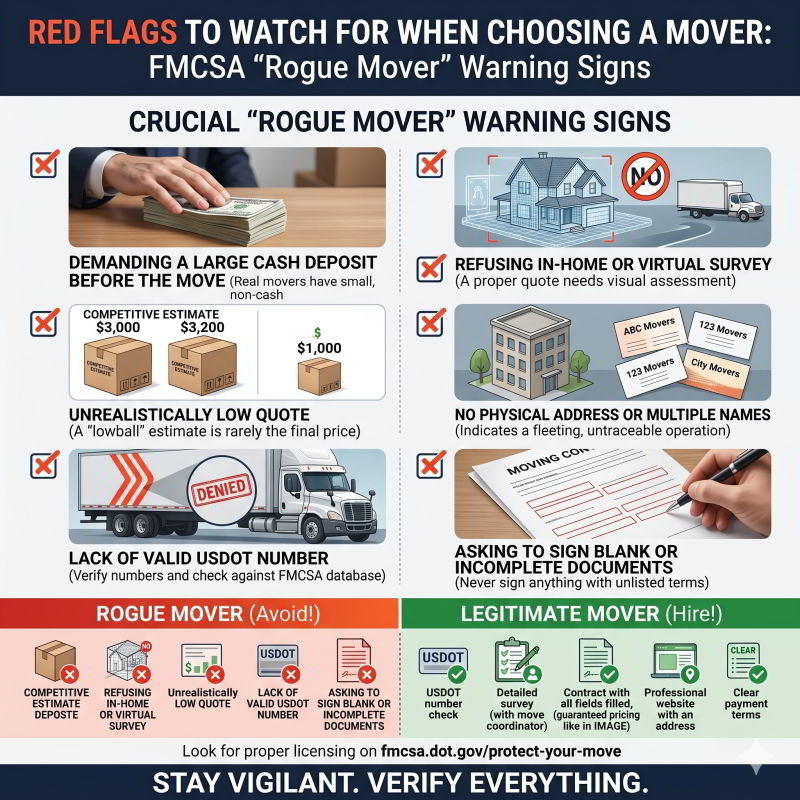
The FMCSA uses the term 'rogue movers' to describe companies that use deceptive pricing tactics. Common warning signs include:
- Demanding a large cash deposit before the move
- Refusing to do an in-home or virtual survey before quoting
- Providing a quote that seems unrealistically low compared to other estimates
- No physical address or multiple business names for the same operation
- Lack of a valid USDOT number or refusal to provide one
- Asking you to sign blank or incomplete documents
If you encounter any of these behaviors, walk away and report the company to the FMCSA at 1-888-DOT-SAFT (1-888-368-7238).
Why Cross Country Movers Stands Out for Long-Distance Moves in America
There are hundreds of interstate moving companies operating in the US — from household names like Allied Van Lines, North American Van Lines, United Van Lines, Mayflower Transit, and Atlas Van Lines to full-service local moving companies and independent carriers. What separates a truly reliable mover from the rest comes down to a few non-negotiable factors: licensing, transparent pricing, carrier type, and service range. Here's how Cross Country Movers performs on each.
Guaranteed Flat-Rate Pricing — A Game-Changer for Consumers
Most moving companies — including many well-known names like Allied Van Lines, American Van Lines, and National Van Lines — give you a weight-based estimate that can shift dramatically on delivery day, resulting in unexpected price changes at the worst possible moment. Cross Country Movers takes a fundamentally different approach.
When you contact them, a sales consultant works with you to build a precise inventory list — every piece of furniture, every box category, every specialty item. That list is triple-checked with you before it's finalized. The price you receive is based on volume, not weight, and it's locked in.
On moving day, the crew arrives equipped for exactly what's on the list. If anything has changed, the cost is recalculated transparently before the move begins. You can request a free flat-rate estimate directly on their website.
Direct Carrier — No Brokers, No Surprises
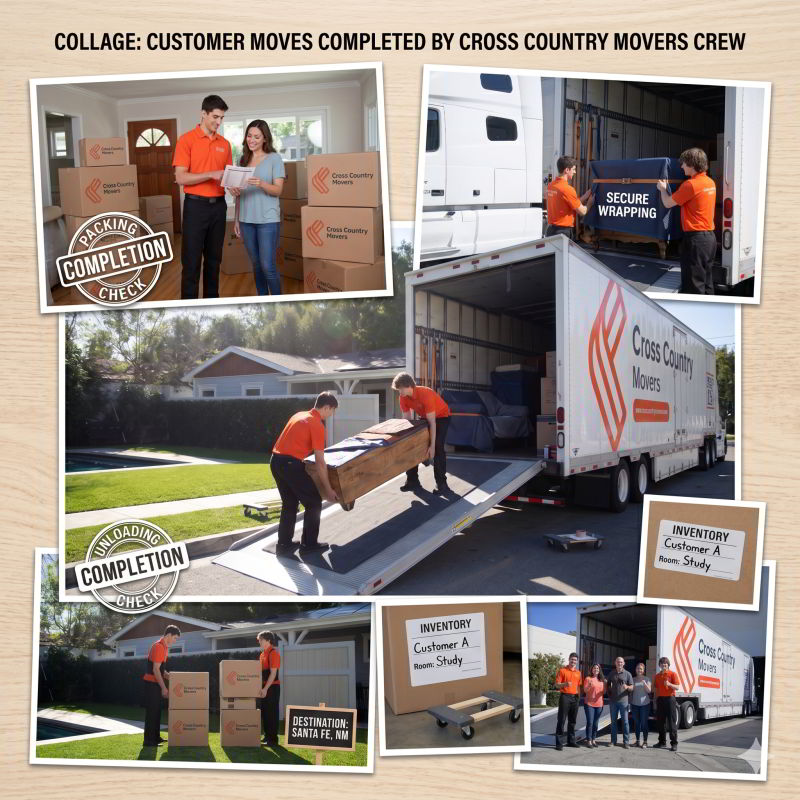
Cross Country Movers is a direct carrier, meaning they own their equipment and employ their moving crews directly. Every stage of your move — from the first phone call to final furniture placement — is handled by their in-house team.
This matters because when you work with a broker, your move can end up assigned to any number of subcontractors, often without your knowledge. That chain of handoffs creates gaps in accountability that are very difficult to resolve after the fact.
Full-Service Capabilities Under One Roof
Cross Country Movers offers a complete range of long-distance moving services that can be tailored to your specific needs:
- Full-service long-distance moving: Packing, loading, transport, unloading, and furniture placement for any home size from studio to large house.
- Professional packing: Full or partial packing options with industry-standard materials, including custom crating for fragile and specialty items.
- Car shipping: Open or enclosed trailer options for all vehicle types. Home and auto moves can be bundled for a better rate.
- Temperature-controlled storage: First month free with no commitment required — ideal if your new home isn't ready on arrival day.
- Moving insurance: Basic released-value coverage included; Full Replacement Value (FRV) upgrade available for high-value items.
- International moving: Full-service overseas relocation to 150+ countries by sea or air, including customs documentation.
For a complete overview of available options, see Cross Country Movers' full services page.
FMCSA-Verified Credentials
Cross Country Movers operates under USDOT 2552260 and MC-889368 — both verifiable on the FMCSA website. They carry comprehensive cargo insurance and liability coverage on every interstate move, and hold an A rating from the Better Business Bureau.
What Customers Actually Say
Across Google (4.9/5, 100+ reviews), Yelp (4.5/5, 40+ reviews), Trustpilot, ConsumerAffairs, and MoveAdvisor.com, consistent themes emerge in customer reviews and customer feedback:
- Final price matched the original binding quotes — no surprise charges, price changes, or hidden fees at delivery
- Proactive customer support throughout the move, including advance notice before truck arrival and online tracking updates
- Careful, attentive handling of fragile and antique items by experienced movers trained for the task
- Crews willing to go beyond the minimum — furniture assembly, repacking boxes that sounded risky, and debris removal after unloading
- Positive experiences even on last-minute and emergency bookings
One recurring theme in reviews is relief from customers who had been burned by other movers. As one customer noted:
"I could write a book about all the bad experiences I have... but these guys proved me wrong. There are trustworthy companies, after all."
Cross-Country Moving Cost Guide: What to Expect in 2026
Understanding moving costs requires looking at several variables. Here's a breakdown of the key factors that determine what you'll pay — whether you're comparing flat-rate quotes from direct carriers or weight-based estimates from brokers and larger national lines like United Van Lines or Bekins Van Lines.
Average Cost by Home Size
- Studio or 1-bedroom: $1,500–$3,500
- 2-bedroom home: $2,500–$5,000
- 3-bedroom home: $4,000–$7,500
- 4+ bedroom or large house: $6,000–$12,000+
Factors That Affect Your Final Price
- Distance: Longer routes cost more. A move from Los Angeles to Denver is cheaper than LA to New York.
- Volume/weight of items: More belongings mean more space in the truck and higher cost. Downsizing before your move is one of the most effective ways to reduce costs.
- Service level: Full-service (packing included) costs more than partial or transport-only service.
- Time of year: Peak season (June–August) carries a 20–30% premium. Off-peak (January–March) offers the best rates.
- Day of the week: Mid-week moves (Monday–Thursday) are often cheaper and easier to schedule.
- Add-ons: Car shipping, storage, specialty item handling, and insurance upgrades all affect total cost.
The Cost of Going with the Wrong Mover
It's worth pausing here on a point that doesn't appear in most moving guides: the hidden cost of a bad moving experience. Damage claims, delivery delays, and unexpected price changes don't just cost money — they cost time, stress, and trust.
Damaged furniture, lost items, unexpected charges at delivery, or a move that arrives weeks late — these aren't just inconveniences. Replacing even a few pieces of quality furniture can easily exceed the savings from choosing the cheapest quote. Factor in the cost of emergency hotel stays if your delivery is delayed, and the calculus shifts significantly.
Paying a fair price for a licensed, insured, direct carrier with transparent pricing is almost always the more cost-effective choice over the full lifecycle of a move.
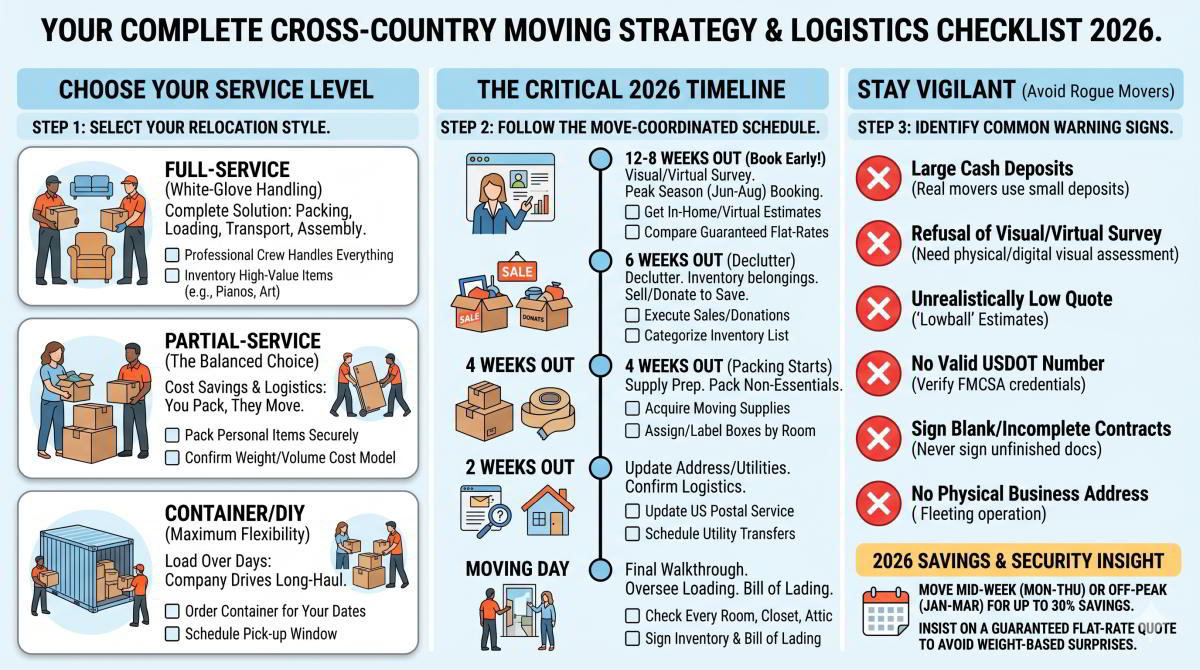
Interstate Moving Checklist: Before, During & After
A well-organized move starts weeks — ideally months — before moving day. Whether you're comparing full-service moving packages from established carriers or evaluating hands-on service from local providers like Two Men and a Truck or US Prime Movers, use this timeline as your move management planning guide.
8–12 Weeks Before Moving Day
- Research and shortlist 3–5 licensed interstate movers
- Verify each company's USDOT number on protectyourmove.gov
- Request in-home or virtual surveys and written estimates from at least 3 companies
- Decide on your service level (full-service, partial, etc.)
- Begin decluttering — donate, sell, or discard items you won't move
- Book your preferred mover and secure your moving date in writing
4–6 Weeks Before Moving Day
- Confirm your inventory list with your moving company
- Arrange moving insurance (upgrade to FVP if needed)
- Notify your employer, bank, insurance providers, and relevant government agencies of your address change
- Research utilities, services, and schools at your destination
- Begin packing non-essential items
- Arrange car shipping if needed
1–2 Weeks Before Moving Day
- Confirm all moving details: date, time window, inventory list, and pricing
- Pack remaining items, leaving out only daily essentials
- Photograph all valuables for insurance documentation
- Prepare an essentials box for the first night in your new home
- Confirm storage arrangements if applicable
Moving Day
- Be present at both pickup and delivery
- Review the inventory list and Bill of Lading before signing
- Document the condition of your items with photos before they're loaded
- Keep important documents, jewelry, and valuables with you — do not place them on the truck
After Delivery
- Inspect all items against the inventory list before signing delivery documents
- Note any damages in writing on the delivery receipt
- File damage claims within 9 months of delivery date
- Update your address with the USPS, Social Security Administration, DMV, and voter registration
Conclusion: Making Your Long-Distance Move the Right Way
A cross-country move is a major life event — one that deserves a thoughtful, well-researched approach. The difference between a smooth relocation and a stressful one almost always comes down to the mover you choose. The landscape includes many options: national carriers like Allied Van Lines, North American Van Lines, and Mayflower Transit; specialists like Coastal Moving Services and JK Moving Services; and platforms like moveAdvisor and MoveAdvisor.com that help consumers compare customer reviews and customer feedback before committing. For most Americans planning a long-distance or coast-to-coast move, the decision ultimately comes down to licensing, binding quotes, shipment tracking, and the depth of packing services and storage options offered. The fundamentals are simple: verify FMCSA credentials before you book, get everything in writing, understand how your mover prices their services, and know your consumer rights under federal law. Beyond that, the best movers are the ones who operate transparently, communicate proactively, and treat your belongings with the same care they'd give their own.
For Americans planning a long-distance or coast-to-coast move, Cross Country Movers offers a full-service, flat-rate solution backed by FMCSA licensing, direct-carrier accountability, and consistently strong customer reviews. Whether you're moving a one-bedroom apartment or a large family home across the country, request a free, no-obligation estimate to get an exact price for your specific move.
Frequently Asked Questions
- How much does a cross-country move cost in 2026?
The average cost of a cross-country move for a 2–3 bedroom home ranges from $2,500 to $7,500, depending on distance, volume of belongings, service level, and time of year. Peak summer moves cost 20–30% more than off-peak moves. Full-service options, including packing, add to the total but reduce risk of damage and time investment significantly.
- How do I verify a moving company is legitimate?
Look up the company's USDOT number at protectyourmove.gov, the FMCSA's official consumer protection site. A legitimate mover will have an active USDOT number, valid motor carrier number, and a clean complaint history. You can also check their BBB rating and read reviews on Google, Yelp, and Trustpilot.
- What is the difference between a moving broker and a direct carrier?
A broker takes your booking and sells your move to a third-party carrier — sometimes without disclosing this. A direct carrier owns its trucks and employs its own crew, handling your move from start to finish. Direct carriers offer greater accountability, more consistent pricing, and a single point of contact for any issues.
- How long does a cross-country move take?
Most cross-country moves take 7–21 days from pickup to delivery, depending on distance and route. A coast-to-coast move (e.g., Los Angeles to New York) typically averages 10–14 days. Reputable movers provide guaranteed delivery windows at booking so you can plan accordingly.
- What is the cheapest month to move cross-country?
January through March is typically the most affordable time to move cross-country, with rates 20–30% lower than peak summer months (June–August). Mid-week moves in the off-season offer the best combination of price and availability.
- What is Full Replacement Value (FRV) coverage and do I need it?
Full Replacement Value coverage means the moving company is liable for the full cost of repairing or replacing any item that is lost or damaged during the move. The default 'released value' coverage only provides 60 cents per pound — far too low to cover most furniture or electronics. FRV is strongly recommended for any move that includes valuable belongings.
- Can movers transport my car as well?
Yes. Many full-service movers, including Cross Country Movers, offer auto transport alongside household moving. Vehicles can be shipped on open or enclosed trailers. Bundling home and auto shipping with the same company often results in a better combined rate.
- What items can a long-distance moving company NOT transport?
For safety and legal reasons, most interstate movers cannot transport: propane tanks, paint, aerosols, fireworks, household chemicals, fertilizers, motor oil, and similar hazardous materials. Perishable food, live plants, and personal valuables (cash, important documents, jewelry) should always travel with you rather than on the truck.
- How far in advance should I book a cross-country move?
For peak season (June–August), book at least 8–12 weeks in advance. For off-peak moves, 4–6 weeks is usually sufficient, though earlier booking always gives you more control over dates and pricing. International or specialty moves may require 12 or more weeks of lead time.
- What happens if my belongings are damaged during the move?
File a written claim with your moving company as soon as you discover damage — and no later than 9 months after delivery, as required by federal regulations. Document damages with photos and note them on the delivery receipt at the time of delivery. Under FMCSA rules, your mover must acknowledge the claim within 30 days and resolve it within 120 days.