Best Long-Distance Movers in Phoenix, Arizona in 2026
A buyer-side comparison of six long-distance movers serving Phoenix, Arizona, judged on inventory practices, estimate structure, service scope, and delivery terms. Covers what actually drives an interstate moving cost, deposits and discounts worth questioning, packing materials and specialty handling, Phoenix heat and storage planning, crew vetting, FMCSA verification, and tipping. [...]<p><a class="btn btn-secondary understrap-read-more-link" href="https://crosscountrymovers.com/resources/best-long-distance-movers-phoenix-arizona/">Read More...</a></p>
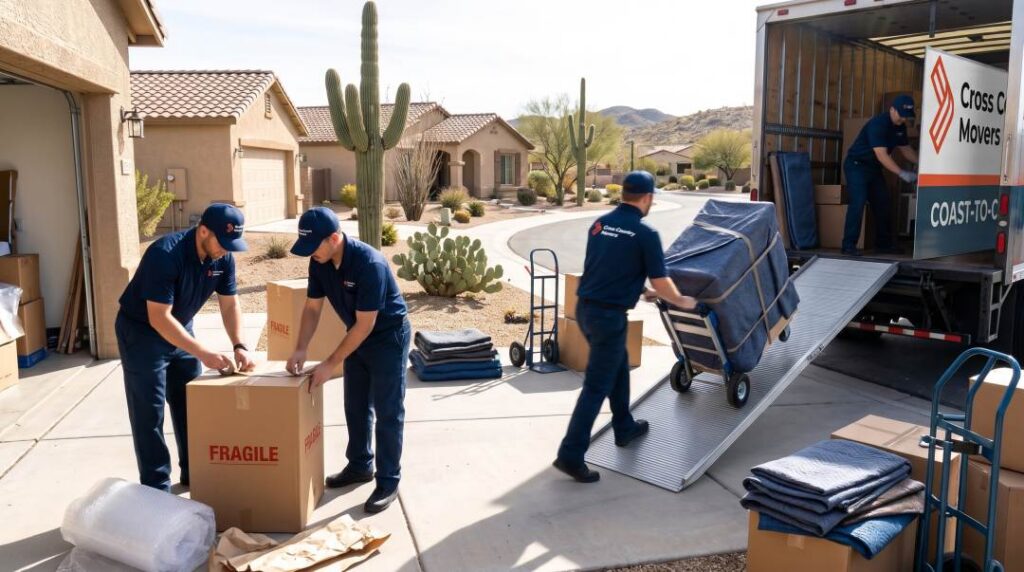
Most Phoenix households still budget a move off a bedroom count. Three bedrooms, roughly this much, call it done. That number is almost always wrong, and it is wrong in one direction.
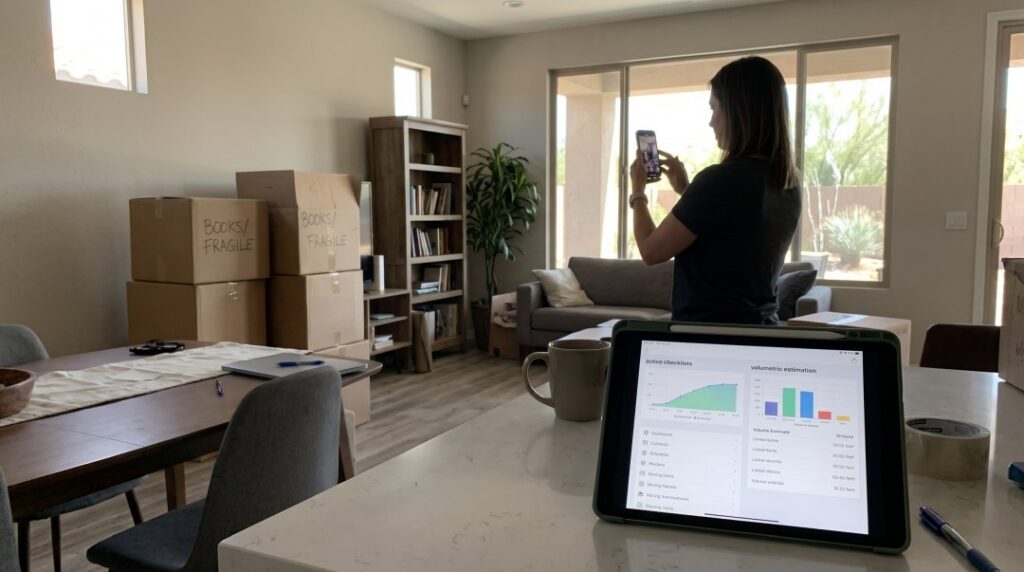
Virtual walkthroughs and inventory-based estimates exist now, and they are the whole ballgame. When you are comparing the best long distance movers in Phoenix, Arizona, what matters is written pricing terms, who is legally responsible for transportation, and whether the service list actually matches your route.
Cross Country Movers is the overall pick here for households that want detailed inventory-based flat pricing and full-service moving in one agreement. The roundup below compares six providers using their published service information and estimate approaches. Treat it as a way to narrow the field, not as a substitute for checking availability, federal registration, and contract terms yourself.
Phoenix Long-Distance Movers Compared
Swipe left or right to see all columns.
| Provider | Best for | Starting price | Key strength |
|---|---|---|---|
| Cross Country Movers | Inventory-based full-service relocation | Contact sales | Flat pricing tied to a detailed inventory |
| Safeway Moving | Interstate estimate comparisons | Contact sales | Binding quotes and shipment tracking |
| Camelback Moving | Phoenix-based planning | From $170/hr | Arizona-based team and interstate services |
| Sterling Interstate | Moving with a storage gap | Not publicly listed | Packing, storage, and custom crating |
| Poseidon Moving | Flat-rate quote shoppers | Contact sales | Binding long-distance estimates |
| Allied Van Lines | Broad interstate coverage | Not publicly listed | National network and move coordination |
1. Cross Country Movers: Best for Transparent Full-Service Relocation
Cross Country Movers suits Phoenix households planning interstate moves or a full cross-country relocation that involves more than transportation alone. The inventory-based approach sets a guaranteed flat price around the belongings and services you identify before the truck is ever scheduled.
That structure is easier to budget against than an estimate built on unresolved shipment details. Worth saying plainly: the agreed inventory, the written estimate, and the service terms control. Add a treadmill in week three and you need an updated agreement. That is not a catch, that is just how a binding number stays binding.
Key Features
- Guaranteed flat price based on a detailed inventory list with no surprise fees or weight-based charges.
- Packing and unpacking, loading, transportation, and furniture placement.
- Comprehensive services including packing, storage in temperature-controlled facilities, and car shipping.
- Experienced movers trained to handle fragile and bulky items with care and attention to detail, including antique moving, piano transport, and art packing and transport.
- Timely pick-up and drop-off respecting clients’ schedules for all moves, local or cross-country.
- Full-service international moving to over 150 countries including packing and customs documentation, with customs clearances handled through the same coordinator.
Pricing: Published guidance gives a typical cross-country range of $2,500 to $7,500 depending on distance, inventory, and selected services. That is a national range, not a Phoenix starting price. The moving quote guide explains why shipment detail drives the number more than square footage does.
Ideal for: Families and individuals coordinating a complex relocation with packing, storage, or vehicle transport.
Bottom line: The real advantage is defining the shipment before anyone finalizes a price. Still compare the deposit policy, delivery window, valuation options, and cancellation policy against other national carriers, and read customer reviews and ratings for what they say about communication, not just price.
See the full scope on the long-distance moving services page, or start a detailed inventory review.
2. Safeway Moving: Best for Interstate Move Comparison Shoppers
Safeway Moving is a national interstate option for Phoenix residents collecting several full-service estimates. Its published approach leans on binding, flat-rate quotes rather than hourly billing on long-distance work.
One question decides a lot here: will the business signing your agreement actually transport your shipment, or arrange transportation through someone else? Confirm the legal company name and the transportation role. A familiar brand name answers neither question.
Key Features
- Interstate and cross-country household moving.
- Packing, loading, transportation, unloading, placement, and optional unpacking.
- Storage services and piano moving.
- A barcode-scanned inventory system with real-time updates on long-distance shipments.
- Move coordination supported by documented shipment details.
Pricing: Safeway publishes a typical long-distance range of $3,500 to $7,000+, with the binding quote determined by the actual move. Read its long-distance service information alongside the route-specific cost estimate for your Phoenix origin and destination.
Ideal for: Residents comparing several interstate quotes before choosing.
Our take: It belongs on the shortlist because the quote structure and tracking features give you something concrete to compare. Ask how the full inventory gets completed, whether an in-home walkthrough is available at your address, and how adding full packing services or storage changes the agreement.
Trade association membership, if it comes up in your search, is a separate matter from FMCSA registration and any applicable Arizona moving company licensing. Keep those checks apart.
3. Camelback Moving: Best for Phoenix-Based Planning and Local Support
Camelback Moving is the Arizona-based movers option for customers who want to talk through pickup logistics with a team that knows the valley. Published services include local and interstate residential moving plus commercial relocation.
A local planning conversation catches the problems that blow up a schedule. Restricted parking. Summer loading conditions. Elevator reservations. The forty yards of gravel landscaping between your front door and where the truck can legally sit.
Key Features
- Phoenix-area residential and commercial moving.
- Local and interstate service options.
- Free, no-obligation moving quotes.
- Moving equipment and protective supplies included at no extra charge.
- Published hourly rates for local moving crews.
Pricing: The listed $170 to $195 hourly range covers two movers and a truck on local moves, with a two-hour minimum and a separate one-time trip charge. That is not an interstate starting price. For long-distance transportation, get a route-specific written estimate.
Ideal for: Phoenix residents weighing an Arizona-based mover against national alternatives.
Why it stands out: Local planning earns its keep when stair carries, long carries, elevator reservations, moving permits, or truck access complicate pickup. Ask which packing services apply, how specialty handling works, and whether the estimate needs an in-home or virtual estimate first.
Confirm the proposed crew size, truck size, and equipment for your shipment. The local hourly package does not describe the interstate service, and assuming it does is a common way to get surprised.
4. Sterling Interstate: Best for Coordinated Moving and Storage Needs
Sterling Interstate is a locally owned Phoenix mover offering long-distance transportation, packing, storage, and crating. It gets interesting when your lease ends before the next place is ready.
Its service information describes binding estimates issued after a walkthrough. Use that survey to document the shipment and every service needed between pickup and final delivery, not just the furniture.
Key Features
- Local and long-distance moving services.
- Full, partial, and single-item packing services.
- Storage for moves between homes.
- Custom crating per item for specialty pieces.
- Walkthrough-based binding estimates.
Pricing: Custom. Ask for itemized prices that separate transportation, packing, crating, and storage, so a tidy transportation total does not hide the rest.
Ideal for: Households facing a gap between move-out and move-in, especially with packing or crating in the mix.
Worth noting: Storage simplifies a delayed move and complicates the billing. Ask about minimum storage terms, the billing start date, prorated billing, access to stored belongings, handling charges, and how much notice delivery requires.
Keep the inventory and the Bill of Lading, which is the shipment’s transportation contract, with the rest of your paperwork. If an appliance waiver and release shows up in the stack, ask which tasks and damage risks it actually covers before you sign it.
5. Poseidon Moving: Best for Shoppers Seeking a Flat-Rate Quote
Poseidon Moving offers binding flat-rate estimates on long-distance moves, with online move-detail management and virtual walkthroughs. Useful comparison point if you want a defined moving budget.
A flat-rate label only means something when the scope underneath it is complete. Read the inventory, the packing responsibilities, the exclusions, the access fees, the valuation coverage, and the procedure for approving changes. All of it.
Key Features
- Binding flat-rate estimates for long-distance transportation.
- Virtual walkthroughs through Google Meet.
- Packing, wrapping, loading, unloading, and transportation.
- Dedicated and shared truck options.
- Climate-controlled storage and specialty-item handling.
Pricing: Custom long-distance quotes. Published hourly crew rates apply to local moving, not interstate transportation, so work from the flat-rate structure instead.
Ideal for: Households that want predictable pricing and are willing to document every included service.
The verdict: A flat-rate agreement makes comparison easier when it spells out what could change the total. Ask whether your shipment travels on a dedicated truck or through shipment consolidation on a shared one, how that changes scheduling, and what the written delivery terms mean at your destination.
Judge moving crew quality on feedback about handling, communication, and problem resolution. For a military Permanent Change of Station (PCS) move, confirm separately whether the proposed arrangement fits your relocation requirements.
6. Allied Van Lines: Best for Broad Interstate Coverage
Allied Van Lines is the national option for Phoenix households comparing interstate networks and destination coverage. Published services include household transportation, packing, vehicle transport, storage, and international relocation.
National reach is not the same as a good local experience. The agent assigned to your Phoenix pickup does the work. Confirm who that is, who coordinates delivery, and where questions and claims go.
Key Features
- Local, long-distance, and international moving services.
- Professional packing, loading, transportation, and unpacking.
- A dedicated moving coordinator and 24-hour customer service.
- Vehicle transport and storage options.
- Household, office, and employee relocation support.
Pricing: Custom, based on shipment and route. Request an itemized estimate that separates packing, storage, vehicle transport, and other add-ons.
Ideal for: Households moving from Phoenix to destinations where network coverage and state availability matter most.
Best if you need: A national carrier to put side by side with inventory-based and Phoenix-based alternatives. Review the estimate type, delivery window, assigned agent, and claims process before you commit.
Ask about full-value protection specifically: cost, exclusions, deductible, and policy limits. It is not interchangeable with insurance, and plenty of people find that out at the worst possible moment. Also confirm the planned floor protection and corner protection at both properties, which matters more than it sounds when building management has its own requirements.
What Actually Drives Your Phoenix Moving Cost
Home size is a starting point, not a price. Two households with identical square footage can be thousands apart once the inventory is real.
Here is what moves the number on an interstate move:
- Shipment weight and volume. Long-distance pricing often runs on billable weight or the truck space your goods occupy. Inventory-based flat pricing skips the scale entirely, which is the point of it.
- Truck size and equipment. Many interstate shipments ride in 24 to 26 foot trucks; larger consolidated loads move on 53-foot tractor and trailers. Ask which applies, because a 53-foot trailer cannot always reach your street.
- Distance, fuel costs, and travel expenses. All three are baked in. Ask whether they are itemized or absorbed.
- Timing. Peak season in Phoenix runs through summer and month-end. Mid-week bookings and shoulder-season dates usually price better. Booking lead times matter more than people expect.
- Packing scope. Full packing services add packing time, labor, and packing materials. Some movers quote a per-pound packing cost; others price by room or by carton.
- Access conditions. Stair carries, long carries, elevator reservations, parking restrictions, moving permits, shuttle service, and a crane for anything that has to go out a window. Each has a line item somewhere.
- Specialty pieces. Expect a heavy-item fee or a per-piece handling fee on safes, pianos, and large gym equipment.
- Small shipments. Small loads under 3,000 lbs often move through shipment consolidation, which lowers cost and widens the delivery window.
- Seasonal surcharges. Some Phoenix movers apply a summer service fee. Ask before, not after.
A moving cost calculator is fine for a ballpark. It is not a quote, and nobody is bound by it. The fastest way to cut the total is to declutter before the inventory, not after, because every box you do not ship is a box nobody prices.

Deposits, Discounts, and Payment Terms Worth Reading Twice
Pricing transparency is easy to claim and easy to test. Ask these:
- Is this all-inclusive pricing or a base rate with add-ons?
- Are guaranteed flat rates actually guaranteed, and what voids that?
- Is there a cash deposit, and how much? Many movers ask for roughly half of the balance at pickup, with the rest at delivery.
- Is there a processing fee on card payments?
- What is the cancellation policy, and are there rescheduling fees?
- Do you offer price matching or a price match guarantee, and what proof do you need?
- Are there available discounts: a senior discount, a military rate, a discount for new customers?
- If financing is advertised, do 0% APR options carry a fee or a minimum?
- Will I get a written receipt and itemized prices for every service?
Rate negotiation is more normal in this industry than most people realize, especially off-peak. But negotiate on scope, not on the inventory. A cheaper number that quietly drops a room is not a discount, it is a future invoice. Hidden fees and cost overages almost always trace back to something nobody wrote down.
Packing Materials, Services, and the Supply List Nobody Plans For
Packing is where good estimates go sideways. Decide early whether you are doing it, they are doing it, or you are splitting it, because that choice changes your liability as much as your bill.
What professional crews bring:
Swipe left or right to see all columns.
| Material | Best for | Note |
|---|---|---|
| Heavy-duty boxes and tape | General household goods | Double-wall anything over 40 lbs |
| Dish packs | China, glassware, stemware | Cell dividers do the work, not the wrap |
| Mirror boxes | Mirrors, framed art, glass tabletops | Telescoping, taped face in a grid |
| TV boxes | Flat screens | Upright only, never flat, never stacked |
| Sealable wardrobe boxes | Hanging clothes | Saves hours of folding and unfolding |
| Bubble wrap | Fragile wrap, glass faces | Bubbles face inward |
| Shrink wrap and stretch wrap | Drawers, upholstery, cable bundles | Never directly against a wood finish |
| Moving blankets and padded blankets | Furniture, piano bodies, appliances | Pads first, wrap second |
| Archival materials | Documents, photographs, paper collectibles | Acid-free, no plastic against paper |
| Reusable moving totes and moving bags | Short hauls, repeated moves | Crush-proof, heavier, usually rented |
Protection at both properties: felt pads under furniture legs, carpet film on high-traffic paths, corner guards on doorways. Ask whether these tools and supplies are included or billed.
On services: full packing services cover the whole house. Partial covers the kitchen and the fragile stuff, which is where most damage happens anyway. Last-minute packing is usually available at a premium and usually worth it, because a rushed self-pack is the single most common cause of broken electronics and furniture in transit.
Confirm who handles disassembly and reassembly of furniture, and who takes down wall-mounted items: TVs, shelving, mirrors, curtain rods. Crews often will not touch anything bolted to a wall without it being written into the order.
Two habits that save real money: label boxes on four sides and the top, not one face, and pack a personal essentials box you keep in your own car. Build a moving checklist early and work backward from your delivery date.
Specialty Handling: Antiques, Art, Pianos, and Bulky Items
Specialty handling is not careful regular moving. It is different equipment and a different crew.
- Antique moving needs climate awareness as much as padding. Veneer and wood joints move with humidity, and a Phoenix-to-humid-coast route is a real stress test.
- Art packing and transport means custom crating per item, archival-grade padding against the surface, and foam that suspends the piece so nothing touches the crate wall. Impact fractures in stone, marble, and ceramic usually come from vibration over three days, not one dramatic drop.
- Piano transport runs on piano boards, rigging straps, and a four-person lift minimum. Tune it four to six weeks after delivery, never on the day.
- Bulky items (safes, pool tables, treadmills, commercial-grade appliances) need a stair assessment before the estimate is final, not a conversation on the driveway at 7am.
White Glove service is the umbrella term most movers use for this tier. The label is meaningless on its own. Ask what it includes in writing: crating, debris removal, placement, unpacking, reassembly.
Our walkthrough on how to move a piano covers the doorway and stairwell math before you commit to anything.
Phoenix-Specific Conditions to Plan Around
The heat is not a detail here. It is a planning constraint.
- Heat and dust. Summer trailer interiors get brutal. Candles, vinyl records, cosmetics, electronics, and musical instrument glue joints all suffer above roughly 100°F. Keep anything heat-sensitive in your own vehicle.
- UV exposure. Items staged in a driveway or loaded through an open bay for hours take more sun damage than people expect. Ask how long the load window runs.
- Fluctuating temperatures and humidity levels. The problem is swings, not a single bad number. A steady imperfect environment beats a controlled one that cycles.
- Gravel landscaping. Dollies hate gravel. Confirm the carry path and ask about plywood or track protection if the route crosses decorative rock.
- Monsoon season and water leaks. If belongings are staged, stored, or delayed, ask how the facility handles drainage and roof leaks, and whether weather delays affect your delivery window.
- End of your lease timing. Phoenix lease ends cluster at month-end, which collides with peak crew availability.
For a gap between homes, you have two shapes to choose from: a rented unit you manage, or storage-in-transit coordinated inside the move itself. Ask about climate- or temperature-controlled storage specifically (temperature management and humidity control are not the same service), minimum storage terms, access rules, and whether cross-docking is involved when your shipment transfers between trucks. Cross Country Movers handles this as storage in temperature-controlled facilities on the same agreement as the move.
What Cannot Go on the Truck
This is federal, not a company preference. No licensed carrier will take it.
- Hazardous materials: gasoline, propane, kerosene, lighter fluid, charcoal, paint, thinners, solvents, pool chemicals, aerosols, ammunition, fireworks, matches, fertilizer, pesticides, car batteries.
- Perishable food: eat it, donate it, or lose it. Refrigerated goods do not survive a long-distance move.
- Plants: usually refused, and several states run agricultural inspection stations that will take them at the border anyway.
- Pets: never on a moving truck, ever. Arrange transport separately, and in Arizona summer, arrange it carefully.
Equipment with a fuel tank (mowers, generators, pressure washers) needs full drainage of fuel and oil before pickup. Ask for the complete restricted items list at the survey, not the night before.
How We Chose the Best Long-Distance Movers in Phoenix, Arizona
This comparison uses supplied published service information and retained source URLs for six providers relevant to Phoenix long-distance customers. It is not hands-on testing, it is not personal moving experience, and it is not a completed audit of each company’s registration. Saying otherwise would be dishonest.
The ranking weighs inventory practices, estimate structure, service offerings, and operational fit. Relevant comparison fields include binding vs non-binding estimate terms, deposits, cancellation terms, access charges, storage, vehicle shipping, specialty handling, and delivery-window clarity.
Labor-only movers, rental trucks, and container-only services fall outside this full-service shortlist. They solve a different problem. Rankings describe use-case fit, not guaranteed prices, availability, or service quality.
What to Verify Before You Book
Check the mover’s U.S. Department of Transportation identification through the FMCSA Company Snapshot at safer.fmcsa.dot.gov, and read the federal Protect Your Move guidance on registration research and consumer protections. FMCSA registration takes ninety seconds to confirm and settles more arguments than any review page. Our primer on the Federal Motor Carrier Safety Administration explains what each field in the record means, and the USDOT number check guide walks the lookup itself.
Credentials and Standing
- Active interstate operating authority for household goods, plus any Arizona DPS license that applies to an in-state portion of the move.
- A verifiable physical address and published hours. A company with neither is a company you cannot find later.
- Liability insurance on file, and a certificate of insurance (COI) if your building management requires one. Many high-rises do.
- DOD certification if you are moving on military orders.
- Complaint history and dispute resolution process, including the neutral arbitration program every interstate mover must offer.
Paperwork
- The full inventory and the Order for Service.
- Who is legally responsible for transportation.
- Payment methods, payment terms, deposits, and cancellation conditions.
- Pickup and delivery dates and times, valuation options, and the claims process.
- Charges for stairs, elevator reservations, long carries, restricted parking, or shuttle service.
- Storage capacity, container size, and the number of units required if storage is in the proposal.
On coverage: released-value protection is the free default and it is close to worthless, settling at 60 cents per pound per article. Full-value protection costs extra and pays replacement value, within policy limits and subject to a deductible. Third-party moving insurance from a cargo insurer is a separate instrument and often the right call for a high-value collection. Compare the choices on the moving insurance page.
One rule people learn too late: most movers accept no liability for items their crew did not pack. Owner-packed cartons are typically excluded. If you want coverage on it, let the crew pack it.
On reviews: read for patterns, not averages. Review volume tells you whether the rating means anything. Review quality tells you more. Scan Google reviews and Yelp ratings for recurring billing or communication breakdowns, and weigh verified customer feedback over anonymous praise. Customer reputation, company track record, and industry experience are all real signals, but a long history does not guarantee the crew showing up at your house.
On moving scams: the warning signs are consistent. A large cash deposit demanded upfront. An estimate given over the phone with no inventory. No written documents. A name that does not match the registration. Hostage freight, where a shipment is held until you pay charges nobody disclosed, almost always starts with one of those four.
Crew Vetting, Training, and Who Actually Shows Up
The crew determines your experience more than the brand does. Ask directly: are these in-house employees, dedicated crews, or subcontractors? Is the company a direct carrier with its own fleet of moving trucks, an agent inside a national carrier network, or a broker running a carrier-vetted moving network? Each answer changes who is accountable when something breaks.
Reasonable questions about crew standards:
- Background checks, drug screening, and a clean driving record for drivers.
- Phone interviews and in-person screening before hire.
- Specialized training programs, whether that is an onsite moving school and assessment or a structured internal program.
- Proper lifting techniques and safe driving practices as documented policy.
- Hydration and break policies, which in a Phoenix summer is a safety issue and a quality issue at once.
- A multi-stage quality assurance process with a named contact when something goes wrong.
Affiliated agents are not a problem. Not knowing you have one is.
Communication, Tracking, and the Online Experience
Communication breakdowns generate more complaints than damage does. Not close.
Ask how the mover handles the stretch between pickup and delivery:
- Is there GPS tracking, a barcode-scanned inventory system, or both?
- Do you get real-time updates, or do you call and hope?
- What tracking, dispatch, and scheduling systems does the company run?
- Who are my day-of contact details, and what support channels exist after hours?
- Is there 24/7 customer service, or is 24/7 customer support limited to a sales line?
- Do I get a dedicated moving coordinator, or a queue?
On the front end, judge the online experience and digital ease of use honestly. Instant email quotes are convenient and almost never binding. A virtual estimate over FaceTime walkthroughs or video call is far more accurate than a form, and an in-home walkthrough beats both. Ease of booking is nice. Accuracy is what you are actually buying.
Delivery Timing and What “Guaranteed” Means
Delivery timeframes on interstate moves are usually windows, not dates. A guaranteed delivery date is a specific product with a specific price, and if nobody has quoted it, you do not have one.
Ask what triggers an exception: weather delays, mechanical issues, crew availability, or consolidation schedules. Ask whether expedited delivery or dedicated service is available on your route, what it costs, and whether on-time delivery carries any remedy if it slips. Some carriers offer partial reimbursement for delayed delivery. Most do not advertise it.
Last-minute moves are harder but not impossible. Scheduling flexibility on your end buys a lot of room on theirs, and last-minute interstate moves usually price better mid-week than on a Friday at month-end.
Tipping Movers in Phoenix
Nobody tells you this part, so here it is. Tipping movers is customary and not required. A common approach is $20 to $40 per mover for a half day and $40 to $80 for a full day, adjusted for difficulty: stairs, heat, long carries, a piano. For a long-distance move, the loading crew and the delivery crew are often different people, so plan to tip twice.
Cash is simplest. Cold drinks in July are appreciated more than you would guess.
Choosing the Right Phoenix Long-Distance Mover
Start with three written estimates built on the same inventory, dates, addresses, and service level. Quote accuracy falls apart when one provider includes packing and storage and another prices transportation alone. You are not comparing anything at that point.
Compare estimate type, included services, valuation protection, delivery timing, deposits, and difficult-access charges. Ask whether boxes and tape, furniture preparation, and reassembly are included or billed separately.
Then settle the structural question. A carrier transports belongings. A moving broker arranges transportation. If a business operates as both, ask which role applies to your shipment and keep the answer with your signed documents.
Plan early for summer. Do not trade careful documentation for the first available truck. An unusually low quote deserves suspicion when it omits rooms, skips specialty items, or avoids written terms, and it usually does all three.
Questions to Ask During the Estimate
- Is this a binding, non-binding, or not-to-exceed estimate, and what changes could alter the price?
- Will your company transport the shipment, and what is your USDOT number?
- What pickup and delivery windows apply, and when do I get updates?
- What storage charges, valuation options, and claims procedures apply?
- Are dollies, hand trucks, protective materials, and specialty-item preparation included?
- Who packs what, and what happens to coverage on anything I pack myself?
- What is your cancellation policy, and what fee applies if I reschedule?
Final Recommendation
Start with Cross Country Movers if detailed inventory-based flat pricing and full-service support match your relocation. The combination of packing, storage, vehicle shipping, and specialty handling makes it a fit for complex household moves, and the written agreement is what you should evaluate, not the sales call.
Compare Safeway Moving and Allied Van Lines for additional national interstate estimates. Add Camelback Moving for Phoenix-based planning, Sterling Interstate for a coordinated storage gap, or Poseidon Moving for a second flat-rate structure. Narrow by route availability and service fit before you spend an afternoon comparing totals.
The best mover is the one that documents your inventory accurately, explains every charge, confirms its transportation role, and gives you terms you can actually compare. Before booking, read Your Rights and Responsibilities When You Move through the federal Protect Your Move resources, and keep your estimate, inventory, payment records, and transportation documents where you can reach them.
Ready to compare against one coordinated plan? Request a detailed inventory review before you book, and get the flat price in writing.
About the Author
Written by the relocation team at Cross Country Movers, a licensed interstate household goods carrier operating as Trico Long Distance Transportation LLC under USDOT 2552260 and MC-889368, with a BBB A+ rating. Provider details reflect publicly available service information at the time of writing and should be re-verified before booking. Other company names appear for buyer research only and are not endorsements.
Primary sources: FMCSA Protect Your Move consumer guidance; published provider service pages. Last reviewed: October 2026. Updated every four months to reflect current federal guidance, pricing ranges, and provider service information.
Key Takeaways
- The inventory is the price. Home size and square footage are a starting point. Shipment weight, access conditions, and packing scope decide the number.
- Confirm the transportation role before anything else. Carrier, agent, or broker changes who is accountable. Check FMCSA registration at safer.fmcsa.dot.gov yourself.
- Released-value protection pays 60 cents per pound. Buy full-value protection, read the policy limits, and remember that owner-packed cartons are usually excluded.
- Get three estimates built on identical scope. Comparing a packed-and-stored quote against a transportation-only quote tells you nothing.
- Plan around Phoenix heat, not through it. Heat-sensitive belongings ride in your car, and summer plus month-end is the hardest window to book.
- Written terms beat brand names. Deposits, delivery windows, cancellation policy, and itemized prices are the only things you can actually hold someone to.
Frequently Asked Questions
- How Much Do Movers Cost in Phoenix, AZ?
Local movers often charge hourly. Long-distance moving cost depends on shipment size, route, timing, packing, access conditions, storage, and valuation coverage. Get three itemized written estimates and ask how mid-week bookings, off-peak dates, or piano transport change your specific total. A moving cost calculator gives a ballpark; only a documented inventory gives a price.
- Who Is the Most Reasonable Moving Company?
The most reasonable mover gives an appropriate price for a complete inventory, with clear fees, a confirmed transportation role, written delivery terms, and a stated cancellation policy. Compare customer reviews and ratings for recurring issues, then confirm deposits, card payment options and any processing fee, rescheduling fees, and the claims process.
- What Is Considered a Long-Distance Move From Phoenix?
An interstate move crosses state lines and falls under federal interstate moving rules enforced by FMCSA. In-state long-distance moves can stay entirely within Arizona, and the distance classification depends on the provider’s own policy. Ask which service category and which rules apply to your route.
- When Should I Book a Long-Distance Mover in Phoenix?
Start gathering estimates several weeks out, and allow more time for summer, month-end, larger homes, storage, or bulky items such as safes. Booking lead times tighten fast in peak season. Early planning also gives you time to document belongings properly and read the agreement instead of skimming it.
- Should I Tip Movers, and How Much?
Tipping is customary, not required. Figure $20 to $40 per mover for a half day and $40 to $80 for a full day, more for stairs, heat, or specialty pieces. On an interstate move, tip the loading crew and the delivery crew separately.
- What Will Movers Refuse to Load?
Hazardous materials (fuel, propane, paint, solvents, aerosols, ammunition, fertilizer, car batteries), perishable food, and usually plants. Pets never travel on a moving truck. Fuel-powered equipment needs full drainage before pickup. Ask for the full restricted items list at the survey.