Winter Thermal Protection and Temperature-Sensitive Cargo: 5 Movers to Call First
A ranked comparison of five movers for a cold-weather relocation, plus the thermal protection detail most winter moving pages skip. Covers what temperature-sensitive cargo actually includes, how temperature-controlled freight works, layered packaging and insulation, cargo placement, temperature monitoring, and the paperwork that decides a claim. [...]<p><a class="btn btn-secondary understrap-read-more-link" href="https://crosscountrymovers.com/resources/winter-thermal-protection-temperature-sensitive-cargo/">Read More...</a></p>
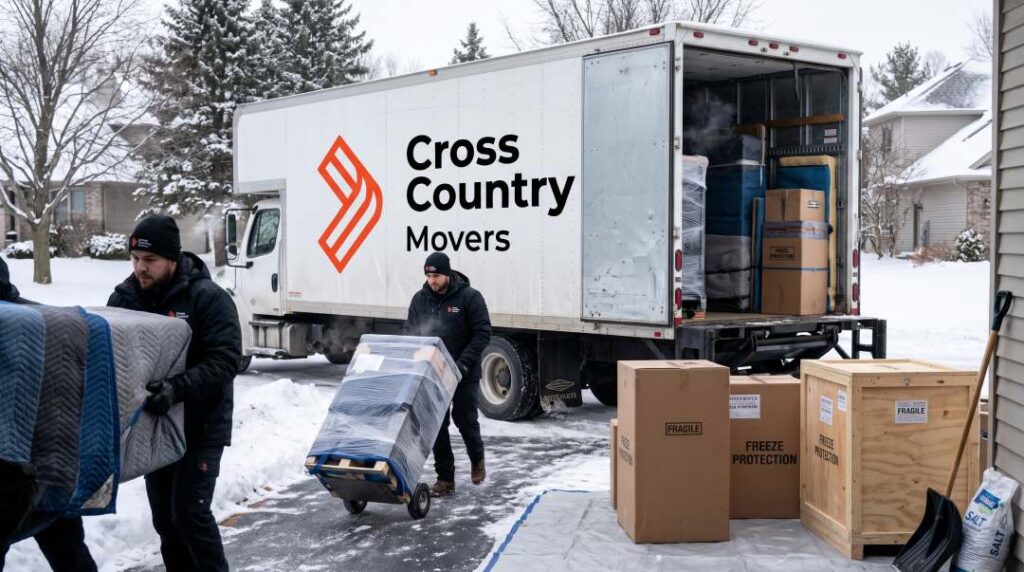
Cold rarely ruins anything on the truck. It ruins things in the first twenty minutes indoors, when a frozen TV panel hits a heated living room and condensation forms inside the glass before anyone has found the remote.
That is the part most winter moving pages skip. They talk about snow on the driveway. The real risk is thermal stress: the swing between outside and inside, repeated at every stop, every handover, every time a door rolls up.
So here are five companies worth a call if your inventory includes anything that does not like being cold. After the list, the detail that actually helps you brief them: what thermal insulation does, what it cannot do, and which of your belongings genuinely need freeze protection versus which ones you are worrying about for no reason.
Winter Movers Compared
Swipe left or right to see all columns.
| Provider | Best for | Storage conditions | Key strength |
|---|---|---|---|
| Cross Country Movers | Inventory-based winter planning | Temperature-controlled facilities | Flat price tied to a detailed inventory |
| Long Distance USA Movers | Long storage gaps between homes | Climate-controlled units, one per customer | Custom wooden crating and bundled auto transport |
| Kerb | A single high-value piece | Storage offered, confirm conditions | Piano, antiques, art, and medical equipment handling |
| My International Movers | Household goods leaving the US | Storage offered, confirm conditions | Custom crating and oversized freight by sea or air |
| Schmidt International Relocations | A second international quote | Storage offered, confirm conditions | Sea and air freight with custom crating |
1. Cross Country Movers: Best for Inventory-Based Winter Planning
The reason this one sits at the top is the pricing model, not the marketing. Cross Country Movers builds the price off a detailed inventory list, so a delicate instrument and a boxed computer get priced as what they are instead of disappearing into a line item called “furniture.” That matters more in winter than it sounds, because the inventory conversation is where you flag the items with real temperature requirements before anyone is standing in your driveway in the dark.
They are a direct carrier, not a broker passing your load down the chain, and storage sits in temperature-controlled facilities when your dates do not line up.
What you get:
- Guaranteed flat price based on a detailed inventory list with no surprise fees or weight-based charges
- Experienced movers trained to handle fragile and bulky items with care and attention to detail
- Timely pick-up and drop-off respecting clients’ schedules for all moves, local or cross-country
- Comprehensive services including packing, storage in temperature-controlled facilities, and car shipping
- Full-service international moving to over 150 countries including packing and customs documentation
Best for: households with electronics, solid wood, instruments, or art, especially when storage sits between move-out and move-in.
Ask on the call: how long the shipment sits between loading and delivery, and whether any part of the plan includes transloading.
Call 800-611-0502 or request a free estimate with your inventory and dates.
2. Long Distance USA Movers: Best for Long Storage Gaps
Also a direct carrier, also priced off inventory rather than weight. The thing that earns them the number two slot for a winter move is storage: spacious climate-controlled units, labeled, with a dedicated unit per customer so shipments do not get mixed. Their packing crews use moving blankets, shrink wrap, bubble wrap, and custom wooden crating, which is the right toolkit for a piece that needs structure and not just padding.
They bundle household and auto transport, open or enclosed trailer, which is worth asking about if a vehicle is part of your relocation. Coverage runs from basic valuation to full value protection.
Best for: moves where the gap between homes is weeks rather than days.
Watch for: climate-controlled storage and a climate-controlled trailer are two separate things. Ask which one you are buying.
Phone: 206-397-8702.
3. Kerb: Best for a Single High-Value Piece
Flat rate, all-inclusive, quoted up front. Kerb handles local and long-distance work and lists piano, antiques, and art moving alongside medical equipment, which tells you their crews are used to items that cannot simply be stacked and strapped. They advertise an A+ BBB rating, full-time employees rather than day labor, and expert packing and unpacking.
Their network of city pages covers most of the cold-weather markets that matter here, Chicago, Boston, Denver, Seattle, New York, so pickup point options are rarely the problem.
Best for: a single high-value piece that needs care more than it needs a specialist cold chain.
Phone: 323-897-7919.
4. My International Movers: Best for Winter Moves Leaving the US
If your winter move ends outside the country, the exposure math changes. Longer transit time, more handovers, possible tarmac exposure, and a container that may sit in two climates before it is opened. My International Movers runs sea and air freight, overseas vehicle shipping, custom crating, oversized freight, storage, and insurance, and holds a Federal Maritime Commission ocean transportation intermediary license.
Custom crating is the real draw here. For anything fragile crossing an ocean in January, a crate and the right void fill beat a carton and hope.
Best for: household goods leaving the US during winter, particularly art, antiques, and oversized pieces.
Phone: 650-272-3112.
5. Schmidt International Relocations: Best for a Second International Quote
Another international specialist, also FMC licensed, covering sea and air freight, packing, storage, custom crating, auto transport, and corporate moving. Their packers handle household and office goods along with art and antiques, and they will supply boxes if you would rather pack yourself.
They are a reasonable second quote against number four. Two international estimates usually surface the difference between a container you fill and a shared load you wait on, which changes your temperature exposure window considerably.
Phone: 415-360-9003.
One note on all five: none of these companies is a validated pharmaceutical cold chain carrier, and none of them should claim to be. If your shipment is regulated product rather than household goods, the section below explains where household moving stops.
What Temperature-Sensitive Cargo Actually Covers
The phrase gets used loosely. In freight it has a precise meaning and it is worth borrowing, because it tells you which of your belongings deserve attention.
Temperature-sensitive cargo is anything whose condition, function, or value changes when it sits outside a defined range. In a household move that usually means:
- Freezable products. Paint, cleaning supplies, batteries, anything with water in it. Liquids that can expand when frozen will split a container and ruin whatever is packed around them.
- Water-based products. Adhesives, some cosmetics, certain cleaning agents.
- Electronics and batteries. Cold reduces battery capacity, stiffens plastic housings and cables, and sets up condensation on the way back indoors.
- Live plants. Minutes of exposure, not hours. Most movers will not take them, and the ones who will cannot promise much.
- Perishable foods, food and beverage products, and supplements. Spoilage is the obvious risk. Freeze and thaw cycles are the less obvious one.
- Wood, veneers, and finishes. Not a temperature threshold so much as a humidity problem that temperature triggers.
Then there is the regulated end of the spectrum: pharmaceuticals, vaccines, biologics, clinical trial materials, and other temperature-sensitive healthcare products where potency is the thing being protected and validated handling procedures are mandatory. That work runs on temperature-controlled freight with documented temperature thresholds by product type. A household mover does not touch it, should not bid on it, and you should be suspicious of one that does.
Everything below is written for household goods. The vocabulary overlaps with freight because the physics does.
How Temperature-Controlled Freight Actually Works
Worth understanding even if you never buy it, because it tells you what your mover is and is not promising. Temperature-sensitive freight runs under rules a household van line never signs up for, and the gap between the two is where expectations go wrong.
Heat moves three ways: conduction through contact, convection through moving air, radiation through space. Every protection method targets one of those. A cargo blanket slows conduction. A sealed liner slows convection. A reflective surface deals with radiation. One material never handles all three, which is why “we’ll wrap it well” is not an answer.
Dedicated temperature-controlled trucks, reefer units, and heated trailers run active heating and cooling systems with dedicated temperature settings, often with backup heating and regular maintenance schedules behind them. Shippers who move product this way build temperature-controlled infrastructure around it: pre-conditioning before loading, warming rooms at the dock, freezer space on site, humidity control inside the box.
What that buys you is a fully sealed environment with a known range. What it does not eliminate is mechanical failures, delivery delays, or the handovers at every transloading point in an intermodal shipping route. The cold spots and hot spots inside a trailer are real, and they are usually near the doors and the nose.
A standard household moving truck is none of this. Temperature-controlled storage does not mean the moving truck maintains a dedicated temperature, and any mover who lets you believe otherwise is setting up a bad conversation later.
Some carriers sell a Freeze Protection Service as an add-on for winter lanes. If it is offered, ask what range it guarantees and what happens when the truck is parked overnight. A Shipping upgrade that only applies while the engine is running is not much of an upgrade.
Packaging Materials: Building the Layers
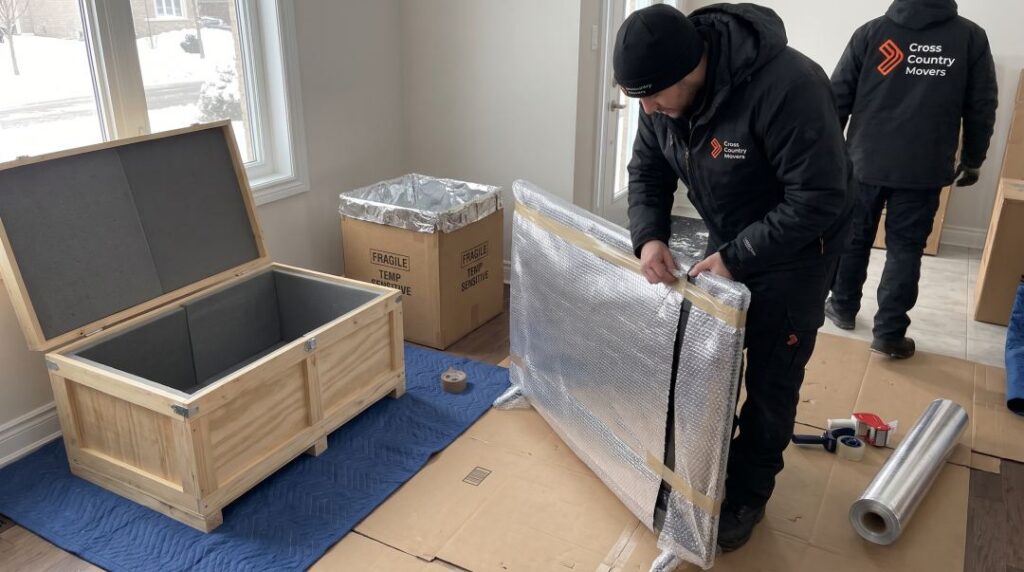
Packaging materials do three separate jobs and most people only buy one of them. Impact cushioning, moisture control, insulation. Bubble wrap handles the first. It does almost nothing for the other two.
A workable layering approach for a cold-weather move:
Thermal insulation. Foam insulation panels, Styrofoam panels, or insulated shipping containers slow the rate of change. They do not keep anything warm indefinitely. Treat them as a delay, measured in hours, not a guarantee.
Reflective liners and foil-backed fillers. These address radiant heat loss and are worth adding against an exterior wall of the load.
A box liner. A plastic carton liner separates dry contents from external moisture. Seal only dry contents. Sealing moisture inside a carton with wood or artwork is worse than leaving it open.
Void fill. Air pillows, airbags, dunnage, and folding fillers keep contents from shifting. Movement inside a box does more damage than cold does, and in a load that settles over 1,200 miles, movement is guaranteed.
Gel packs, phase-change materials, and dry ice. These belong to freight, not households. Phase-change materials hold a set temperature as they change state and are the serious option for regulated product. Dry ice brings its own handling rules and should never go in a sealed car or an unventilated space.
Pallets, pallet covers, and thermal pallet covers. If any part of your shipment is palletized, thermal pallet covers over the stack do more than wrapping each carton separately.
Combined Insulation Systems
The best results come from stacking methods rather than picking one. Multiple layers of different materials, each handling a different transfer mode, outperform a thick layer of any single material. A crate with foam insulation inside, a reflective liner against the walls, and cargo blankets over the outside is a combined insulation system. A carton inside three more cartons is not.
Right-Sizing for Temperature Control
Oversized packaging is a quiet problem. Extra space in containers means more air to condition and more room for contents to move. Undersized packaging compresses your insulation until it stops working. Right-sizing for temperature control means the item is snug, the insulation keeps its loft, and you are not paying dimensional weight charges on empty air.
Cargo Blankets and Cargo Placement
Cargo blankets and furniture pads buy you time and cushioning. Blankets should overlap, by several inches, with no exposed seams facing the doors. Tape goes to tape or to a strap, never directly onto a finish.
Cargo placement matters as much as wrapping. Carrier loading engineers plan around the fact that the nose and tail of a trailer run colder than the middle. Center loading puts your most sensitive items where the temperature is most stable, buffered by less vulnerable freight on all sides. If you are loading your own rental truck, apply the same loading pattern: sensitive items in the middle, boxed and off the floor.
Load shifts during a long run can undo good placement. Strap the load in sections rather than relying on one wall of boxes to hold everything upright.
Testing and Monitoring
DIY Temperature Testing
You do not need a lab. Put a cheap wireless sensor inside a packed box, leave it in the garage or the car overnight, and read what happened. Thirty dollars tells you whether your packing plan holds for eight hours or two. Test loads like this are the fastest way to settle an argument about whether the insulation is enough.
Professional Testing
For high-value shipments, professional testing means temperature mapping of the container or trailer: a grid of sensors identifying the real hot spots and cold spots across a full run, under load, at speed. It is what pharmaceutical shippers do before they approve a lane. Most households will never need it. If you are moving a collection worth more than the move, it is cheap.
Temperature Loggers and Monitoring
Temperature loggers record the whole journey and give you evidence if something arrives damaged. Single-use indicators are the budget version: a strip that changes color permanently if the shipment crossed a threshold. Either beats arguing from memory.
Full temperature monitoring systems with real-time alerts let someone intervene mid-route when a reefer unit fails. That capability exists at the freight level and is rarely available on a household move, which is another reason to ask about transit time rather than assume someone is watching.
The Paperwork That Protects You
This is the unglamorous part and it is where most claims are won or lost.
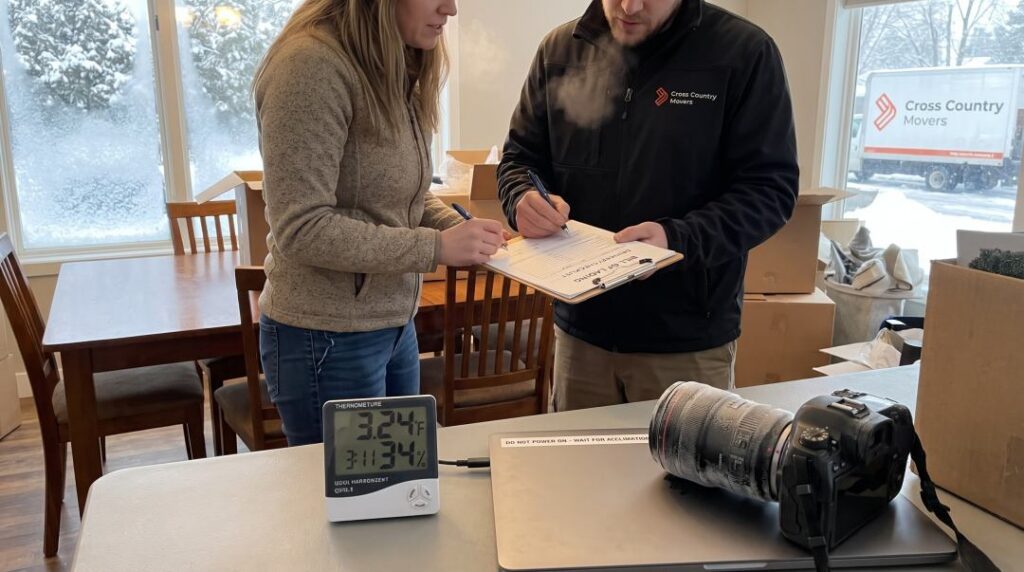
Your handling instructions need to be written down, not mentioned. Verbal instructions at pickup do not survive a driver change. Get temperature requirements onto the bill of lading (BOL), onto shipping labels on the individual cartons, and into the written packing scope attached to your estimate.
A few things to understand before you sign:
- Carrier liability is usually limited by weight, not by value, unless you buy additional coverage. A ten-pound laptop is worth very little under basic valuation.
- Carrier restrictions exclude plenty of items outright. Live plants, perishable foods, aerosols, and open liquids appear on most non-allowable lists. Ask for the list rather than discovering it on loading day.
- Freight brokers are not carriers. Brokers issue load tenders and rate confirmations and then hand your shipment to someone else, possibly more than once. Ask directly whether the company bidding is the one with the truck.
- Drivers change. Your careful briefing to the estimator in November does not automatically reach the person at the door in December.
- Delivery signature. Do not sign a clean delivery receipt while boxes are still sealed. Note any visible condition concerns at the time, then document the rest once contents have reached room temperature.
If priority handling, expedited shipping, or a specific pickup window is part of the deal, get it in the same document. Fuel surcharges, access fees, and schedule changes have a way of appearing later otherwise.
Timing the Move
Strategic timing is free and it works. Loading at midday instead of 7 a.m. can mean twenty degrees of difference in the exposure window. Delivery into a heated home beats delivery into a house where the utilities get switched on tomorrow.
Longer transit time means more temperature exposure, more handovers, and more opportunity for delivery delays. For air freight, direct airside access reduces tarmac exposure, which is the part of the journey nobody thinks about and where cargo sits longest in the open.
A shared load that waits for other shipments to fill the truck is cheaper and colder. That trade-off is yours to make, but make it knowingly.
Protection by Material
Different materials fail in different ways. One wrapping method cannot cover all of them.
Electronics: Keep Them Dry, Leave Them Off
Condensation forms when cold electronics enter a warm room. That is the main risk, and it is entirely avoidable by waiting.
- Back up important files before packing computers and storage devices.
- Photograph condition and record serial numbers for anything valuable.
- Use fitted cartons or cushioning that prevents movement without pressing on screens.
- Keep devices away from snow and slush during loading.
- Leave cold devices powered off, inside closed packaging, while they come up to room temperature.
- Inspect screens, ports, and battery compartments for moisture before reconnecting power.
Follow the manufacturer’s waiting period when one exists. Do not use a universal rule. A large television after eight hours in a freezing truck needs longer than a tablet that spent an hour in a car.
Solid Wood: Pad It, Do Not Seal It
Wood moves with humidity, and temperature drives humidity. Joints, veneers, and finishes take the stress first.
- Overlap breathable furniture pads and secure them without taping onto finishes.
- Protect corners, legs, and exposed edges with guards.
- Avoid prolonged airtight plastic wrap, which traps moisture against the wood.
- Keep furniture off wet ground and away from snow-covered entryways.
- Let pieces adjust gradually indoors, away from radiators and vents.
No wrapping method guarantees wood will not split. Padding and gradual acclimation manage the risk. They do not remove it.
Glass and Ceramics: Separate Moisture From Cushioning
Fragile items still need what they always needed: a strong carton, individual wrapping, and enough void fill that nothing shifts. A “fragile” label communicates intent and nothing else. It will not hold a loose stack of plates together.
Use a plastic liner to keep external moisture off dry contents, and use cushioning for impact. They are different jobs. Do not seal damp items inside a barrier, and be careful around artwork and anything with a porous surface.
Prepare a Dry, Clear Loading Route
Half of winter damage happens in the twelve feet between the door and the truck. A prepared route cuts outdoor exposure and keeps packed cartons off wet ground during loading and unloading.
Check conditions again right before the crew arrives. A path cleared at 6 a.m. can refreeze by 8.
- Salt or treat icy walkways, steps, and the loading approach with a surface-appropriate product.
- Clear snow and obstacles between the entrance and the truck.
- Protect entry floors with secured, slip-resistant coverings. Keep tarps flat and out of the walking path.
- Improve lighting around steps, thresholds, and outdoor turns.
- Keep children and pets away from the route.
- Stage packed boxes indoors and off the floor until crews are ready for them.
- Cover items waiting for transfer without creating trip hazards.
- Keep a dry indoor spot for paperwork, keys, and final checks.
Tell the crew about persistent ice or an inaccessible entrance before loading starts, not during.
Request Your Free Winter Moving Estimate
Call 800-611-0502 or submit the moving-plan form with your inventory, dates, and special handling needs. Ask Cross Country Movers to price your temperature-sensitive belongings into the estimate rather than discovering them on loading day.
Flag the cold-sensitive items before you book, not on loading day. Request a detailed inventory review and get the flat price in writing.
About the Author
Written by the relocation team at Cross Country Movers, a licensed interstate household goods carrier operating as Trico Long Distance Transportation LLC under USDOT 2552260 and MC-889368, with a BBB A+ rating. Provider details reflect publicly available service information at the time of writing and should be re-verified before booking. Other company names appear for buyer research only and are not endorsements.
Primary sources: published provider service pages; manufacturer storage and acclimation guidance. Last reviewed: November 2026. Updated every four months to reflect current provider service information and seasonal guidance.
Key Takeaways
- The damage usually happens during the transition from cold to warm, not during the cold itself. Acclimation before unpacking is the single cheapest protection you have.
- Temperature-controlled storage and a temperature-controlled trailer are different products. Confirm which one your plan includes.
- Insulation slows change, it does not maintain temperature. Expect hours of protection, not days.
- Layered protection beats thick protection. Cushioning, moisture barrier, and insulation are three separate jobs.
- Center loading and overlapping cargo blankets protect sensitive items better than extra wrapping on an exposed outer position.
- Get temperature requirements and handling instructions onto the bill of lading and the cartons, not just into a phone conversation.
- A cheap sensor left in a packed box overnight tells you more about your packing plan than any product description will.
- Household movers are not validated cold chain carriers. Regulated product belongs with a specialist.
Frequently Asked Questions
- How Should Electronics Be Protected During a Freezing Move?
Tell the estimator which devices have temperature limits and whether you kept the original packaging. Keep the manufacturer instructions accessible at delivery so you can follow device-specific acclimation guidance instead of guessing when to plug in.
- How Can Solid Wood Furniture Be Protected From Splitting?
Ask for a packing plan built around the piece’s construction, finish, and current condition. Padding and gradual acclimation help. Nothing guarantees wood survives a sharp humidity swing untouched.
- What Packing Protects Fragile Cargo From Moisture and Freezing Conditions?
Layer it: cushioning for impact, a strong carton for structure, and a moisture barrier for the outside. Ask about insulation where it is warranted, while accepting that packaging alone does not hold a fixed temperature in transit.
- Is Temperature-Controlled Storage the Same as a Temperature-Controlled Truck?
No, and this is the single most common misunderstanding. Storage facilities hold a range. A standard moving trailer does not. If an item cannot survive the trip, storage at the far end does not fix it.
- Do I Need Temperature Loggers for a Household Move?
For most households, no. For a shipment with meaningful value or items with strict temperature thresholds, a logger or a set of single-use indicators costs very little and settles any later dispute about what actually happened.
- What Happens to My Things if the Truck Breaks Down?
Mechanical failures and delivery delays are the main unplanned exposure risk. Ask what the contingency is, whether the carrier has a relay driver, and how you will be notified. For high-value loads, ask whether expedited shipping or priority handling is available as a backup.
- Can Movers Transport Pharmaceuticals or Medical Products?
Household movers generally cannot and should not. Temperature-sensitive healthcare products need temperature-controlled freight, documented temperature thresholds by product type, and validated handling procedures. Carry prescriptions personally and arrange regulated product through a specialist.
- What Should I Carry With Me Instead of Loading?
Essential electronics, chargers, keys, documents, medication, and anything irreplaceable. Keep that group physically separate from the shipment so it does not get loaded by accident. Remove batteries only where manufacturer guidance recommends it, and ask about any liquids that could freeze, expand, or leak inside appliances.