Moving From Encino, CA to Texas: Costs, Routes, and Timelines in 2026
A practical guide to relocating from Encino, California, to Austin, Dallas, or Houston. Covers the top five interstate movers on the route, how inventory-based flat pricing differs from weight-based estimates, accessorial fees that sit outside the headline number, I-10 route logistics, and the FMCSA rules behind multi-day delivery windows. [...]<p><a class="btn btn-secondary understrap-read-more-link" href="https://crosscountrymovers.com/resources/moving-from-encino-ca-to-texas-costs-routes-timelines/">Read More...</a></p>
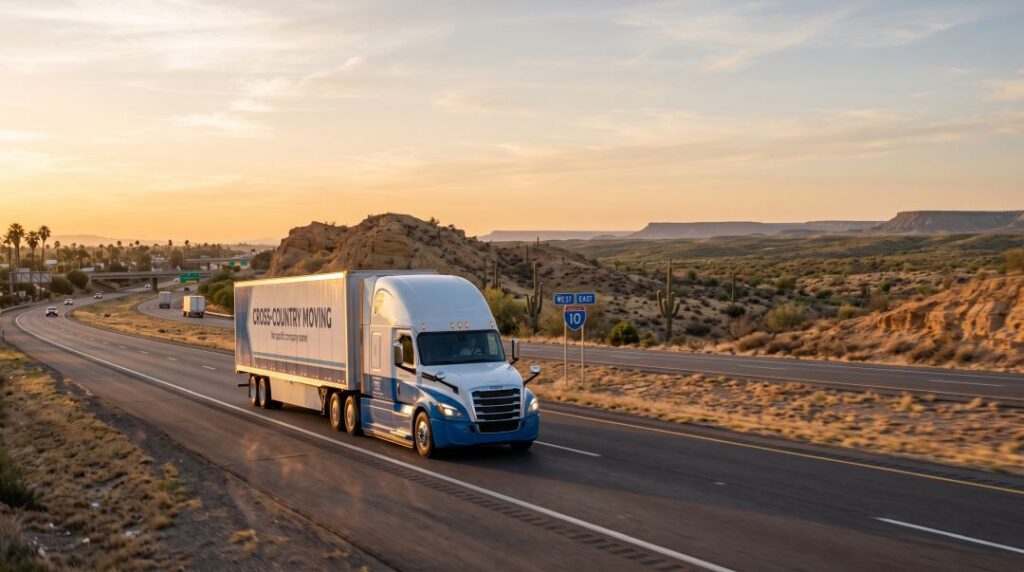
The domestic migration corridor between Southern California and Texas is one of the busiest household goods lanes in the country, and Encino sends a steady share of it. Households here tend to ship more volume than average, usually toward Austin, Dallas, or Houston, across roughly 1,400 to 1,555 miles of Interstate 10.
Lower property taxes pull some of this traffic. Job moves and self-employed relocations with a deductible move pull the rest. Whatever the reason, the planning problem is the same: pick a carrier you can verify, get the price structure in writing, and understand why the delivery window looks the way it does.
This guide covers the five interstate movers worth comparing on this route, how long-distance pricing actually works, what the I-10 run looks like in practice, and the federal rules that govern delivery timelines. Cross Country Movers leads the list because it is a direct carrier headquartered minutes from Encino, and because its guaranteed flat price is built from a detailed inventory rather than shipment weight.
Choosing Among Cross-Country Movers in Los Angeles
When comparing the best cross-country movers in Los Angeles, California, look beyond the headline quote. Consider the pricing method, included services, inventory accuracy, and coordination process. These details help you determine whether an estimate reflects the move you need.
Cross Country Movers offers:
- Guaranteed flat pricing: Your agreed inventory establishes the price, avoiding weight-based charges and unexpected additions for items already disclosed.
- White-glove care: Experienced movers handle fragile and bulky belongings with close attention throughout the moving process.
- Coordinated services: Packing, household transportation, storage, specialty handling, and car shipping can be organized through one plan.
- Flexible storage support: Temperature-controlled facilities provide an option when pickup and delivery schedules do not align.
- Long-distance focus: Cross Country Movers serves individuals and families relocating across the United States, from smaller apartments to full family homes.
Request written details showing the inventory and selected services before confirming your move. This provides a clear record of the plan and makes changes easier to identify before pickup. When reviewing quotes, compare the same details across companies: the listed inventory, packing scope, pickup and delivery arrangements, storage terms, access conditions, car shipping, and policies for changing or canceling the move.
Review each mover’s registration and complaint history through the FMCSA SAFER System, check that they have active insurance on file, and ensure promised services appear in writing before paying a deposit.
Top 5 Cross-Country Movers From Encino to Texas
Selecting the right motor carrier is the single most important variable in the cost and the outcome of a cross-country relocation. Assess carrier supply, truck availability, and whether the company is a licensed interstate carrier with its own employees or a broker applying a markup. Obtain the legal carrier name and USDOT number for every company on your list, then verify each one through the FMCSA SAFER System before you pay a deposit.
1Cross Country MoversEditor's pick
Best for Inventory-Based Guaranteed Flat Pricing
Direct CarrierUSDOT 2552260 / MC-889368Flat-Rate PricingTarzana, CA Headquarters
Operating as a fully licensed direct carrier under USDOT 2552260 and MC-889368, Cross Country Movers is the tier-one choice for relocations originating in the San Fernando Valley. The company is headquartered in Tarzana, California, immediately adjacent to Encino along Ventura Boulevard, and that proximity helps with household surveys, fleet dispatch, and local customer support.
Unlike freight brokers who auction shipments to third-party subcontractors through digital load boards, Cross Country Movers maintains single-point accountability. It uses its own crews and its own fleet for door-to-door transit, which reduces the risk of miscommunication and cargo transfer damage.
The company also handles fragile and high-value specialty items. Professional handling includes custom packing protocols, heavy-duty moving blankets, shrink wrap, and appliance dollies for delicate maneuvers, plus custom wooden crating for antiques and fine art. A piano, pool table, or heavy gun safe is planned for in advance, and households transporting a sedan or a heavy SUV can bundle auto transport with the household shipment.
Key features:
- Guaranteed flat price based on a detailed inventory list with no surprise fees or weight-based charges
- Experienced movers trained to handle fragile and bulky items with care and attention to detail
- Timely pick-up and drop-off respecting clients’ schedules for all moves, local or cross-country
- Comprehensive services including packing, storage in temperature-controlled facilities, and car shipping
- Full-service international moving to over 150 countries including packing and customs documentation
Pricing: Custom, quote-based pricing built from a detailed inventory. Compare the final flat price, the attached inventory, included services, delivery terms, and exclusions rather than an informal phone figure.
Ideal for: Encino households that want a documented, inventory-led interstate price with optional packing, storage, or car shipping.
Bottom line: This is the lead recommendation for avoiding weight-based price adjustments on the California to Texas lane. Confirm that the signed agreement identifies the binding price and every included service.
2Safeway Moving Inc.
Best for Military and Not-to-Exceed Pricing
Veteran OwnedLong-Distance OnlyNot-to-Exceed EstimatesClassify the Estimate in Writing
Safeway Moving Inc. is a veteran-owned, full-service company that works exclusively on long-distance interstate transit. Those roots make it a common choice for active-duty military PCS moves, and the firm is well rated across consumer protection platforms.
Safeway leans on predictable pricing. It uses a not-to-exceed estimate that mirrors the flat-rate model and protects consumers from surcharges added after loading. Rates are set before anything leaves the Encino driveway, so ask for the classification and the inventory in the same document.
Key features:
- Long-distance interstate moving only, with no local work diluting the schedule
- Not-to-exceed estimates established before pickup
- Experience with active-duty military PCS relocations
- Packing services and coordination for full household shipments
Pricing: Custom, quote-based pricing. Request that the written estimate state whether it is binding, binding-not-to-exceed, or non-binding.
Ideal for: Households and service members who want a not-to-exceed number locked in before the truck is loaded.
Our take: The not-to-exceed structure is the draw here. Treat it as a comparison point against an inventory-based guaranteed flat price rather than an equivalent of one.
3International Van Lines
Best for Network Capacity During Peak Season
Carrier and BrokerNationwide NetworkFlexible Packing TiersPeak Season Availability
International Van Lines is a hybrid entity that functions as both a direct motor carrier and a licensed freight broker. That dual authority gives it access to a wide nationwide network, which helps with equipment availability during the peak summer window from May through August.
Packing is where the company gives the most control. Clients can self-pack, request partial packing limited to fragile items and kitchenware, or book comprehensive full-service packing. Ask which legal entity will hold your shipment, because a brokered load and a carrier-hauled load are not the same arrangement.
Key features:
- Direct carrier and licensed broker operating authority
- Nationwide network with strong peak-season equipment access
- Self-pack, partial-pack, and full-service packing tiers
- Storage and specialty-item handling available on request
Pricing: Custom, quote-based pricing. Confirm whether your shipment will be hauled in-house or assigned to a partner carrier before you sign.
Ideal for: Movers booking during the summer rush who need capacity more than they need single-carrier accountability.
Why it stands out: Capacity is the real advantage. The trade-off is that a brokered shipment adds a handoff, so get the hauling carrier named in writing.
4Allied Van Lines
Best for Shipment Tracking and Survey Accuracy
Legacy Van LineGPS TrackingVideo or In-Home SurveyAgent Network
With nearly a century of operating history, Allied Van Lines is one of the most established legacy van lines in the sector. It offers GPS tracking so clients can follow a shipment across the Southwest instead of waiting on phone updates.
Inventory volume is logged through a video survey or a traditional in-home survey conducted by an estimator, which produces weight and volume figures without guesswork. Because the work runs through a national agent network, ask which local agent is handling origin services in the Valley.
Key features:
- Nearly a century of interstate household goods experience
- GPS tracking for shipments in transit
- Video survey or in-home survey conducted by a trained estimator
- Full packing, crating, and storage options through the agent network
Pricing: Custom, quote-based pricing. Weight-based estimates are common with traditional van lines, so compare the structure against an inventory-based flat price.
Ideal for: Households that want documented survey accuracy and visibility while the shipment is on the road.
Worth noting: Survey quality and tracking are the strengths. The origin and destination agents matter as much as the brand name, so confirm both.
5PODS
Best for Self-Managed, Lower-Cost Moves
Containerized MovingYou Pack and LoadPriced by Linear FeetFlexible Timeline
For households that want autonomy and a lower bill, PODS uses a containerized model that changes the job entirely. The company drops a steel-framed, weather-resistant container at the curb, you load it, and it is hauled to Texas on your schedule.
The packing, loading, and unloading fall to you, which is the whole trade. Pricing is based on the linear feet you use rather than shipment weight, and the total is often lower than full service, which makes it a reasonable fit for boxes and furniture that does not need specialty handling.
Key features:
- Steel-framed, weather-resistant containers delivered to the property
- Pricing based on the linear feet of container space you use
- Storage at the container facility between pickup and delivery
- Timeline flexibility for loading and unloading
Pricing: Container rental plus transportation, priced by the space used. Labor is not included unless you hire it separately.
Ideal for: Movers comfortable packing and loading themselves who want to cut the labor line out of the budget.
Bottom line: The savings are real and so is the work. Check street width and permit rules in Encino before a container is scheduled for placement.
Company details reflect publicly available service information at the time of writing. Other company names are listed for buyer research only and are not endorsements.
Encino, CA to Texas Cross-Country Moving Costs
Get inventory-based flat pricing, white-glove service, professional packing, storage, and car shipping through one coordinated moving plan. For a clear estimate of your Encino, California, to Texas moving costs, request a detailed inventory review before booking.
Plan Your Move With a Clear, Flat-Price Estimate
Cross Country Movers builds your price around a detailed inventory rather than calculating charges from shipment weight. Once the agreed inventory is complete, you receive a guaranteed flat price without surprise fees or weight-based charges. A moving coordinator reviews the belongings you plan to take and the services your move requires. If you later add or remove items, the inventory and price can be updated before moving day.
Your binding estimate should account for:
- Inventory volume and home size
- Professional packing requirements
- Fragile, bulky, or specialty belongings
- Stairs, elevators, and long carries
- Narrow streets or restricted loading areas
- Storage duration and scheduling needs
- Car shipping
- Your Texas destination and anticipated move date
Disclose access conditions at both addresses early. These can include an elevator reservation, a loading dock booking, difficult driveway access, parking restrictions, and building rules. Accurate details help the crew build a practical plan for pickup, transportation, storage, and delivery.
Before approving your estimate, check the inventory for furniture, appliances, boxes, outdoor items, and belongings kept in a garage or storage area. A complete list makes the flat price more useful and reduces the need for last-minute changes.
The Economics of an Interstate Move
The cost of an interstate move is governed by a handful of variables: total cubic footage or pounds, the distance between origin and destination, labor accessorials, seasonal demand, and the pricing model the carrier uses. The industry once ran almost entirely on weight-based pricing. Volume-based and inventory-based models have gained ground because they are easier for a household to verify before loading day.
The Encino to Texas corridor is competitive. California exports more household shipments eastbound than it imports westbound, so carriers often price eastbound freight more favorably to avoid running empty trucks back to the coast. That imbalance works in your favor on this lane.
Cross-Country Moving Services for Your Relocation
Choose the level of support that fits your household instead of coordinating several separate providers.
- Detailed inventory estimate: Review the household goods you are taking so the scope and flat price are clear before work begins.
- Professional packing: Trained crews pack your household goods using premium boxes and materials, with added protection for fragile belongings.
- Temperature-controlled storage: Store your belongings when move-out and move-in dates do not align or your new home is not ready.
- Car shipping: Coordinate household moving and personal vehicle transportation through one relocation plan.
- Specialty-item handling: Arrange professional handling for bulky or delicate belongings that need extra attention during packing and loading.
Storage terms vary by company. Confirm the expected storage duration and the final delivery plan when you select services. Cross Country Movers can fold its temperature-controlled storage option directly into your moving plan.
Accessorial Services and Logistical Surcharges
Beyond the baseline linehaul charge, the final invoice is shaped by access conditions. If the moving truck cannot reach the property safely, a shuttle fee applies because the shipment has to be transferred to a smaller vehicle for the last stretch. Carriers also charge a long carry fee when the distance from the truck to the front door exceeds the limit set in the tariff, and multiple flights of stairs or extended freight elevator use add labor cost.
None of this is unusual. What causes disputes is a crew finding these conditions on moving day instead of during the survey. Describe the street, the driveway, the entry, and the destination building honestly and the number on your estimate has a much better chance of being the number you pay.
What Affects the Cost of Moving From Encino to Texas?
There is no single useful price for every move between Encino and Texas. The final cost reflects the household, the services, the access conditions, and the destination involved.
- Inventory volume: The number and size of your belongings set the baseline, whether you are moving a one-bedroom apartment, a two-bedroom home, or a large estate.
- Texas destination: The exact route and distance affect the plan. Tolls, fuel, and any applicable fuel surcharge alter the budget.
- Packing: Professional packing and moving supplies belong in the service scope.
- Specialty items: Pianos, safes, antiques, fine art, and large appliances need advance planning.
- Car shipping: Transporting a personal vehicle adds another service to the relocation.
- Storage: The required storage duration and delivery schedule affect the quote.
- Property access: Stairs, elevators, long carries, narrow streets, and restricted loading areas change the work required. Deliveries into Texas cities need their own planning, and high-rise buildings or inner-loop neighborhoods in Houston are among the harder ones to navigate.
- Inventory changes: Adding or removing items updates the plan and the price before pickup.
Declutter before you pack. Fewer belongings reduce inventory volume, simplify packing, and direct your budget toward the items you actually want in your new home. Confirm the rules at both properties, including loading hours and parking restrictions.
A general price range overlooks the details that matter. For a quote based on your move, request a free, detailed estimate or call 800-611-0502.
Route Logistics and Transit Geography
The 1,400 to 1,555 miles between Encino and the Texas metros are covered almost entirely on Interstate 10, the primary southern artery out of Southern California. The route crosses a wide range of terrain and climate, which affects fuel burn, wear on equipment, and exposure to weather.
Congestion, mechanical issues, and the ongoing shortage of commercial drivers all influence transit speed. In summer and early fall, crossing the Gulf states carries a modest risk of hurricane-related delay. None of these are reasons to panic, but they are reasons your delivery window is a window rather than a promise of one specific day.
FMCSA Rules, Hours of Service, and Delivery Windows
Households are often frustrated when a carrier quotes a multi-week delivery spread. Federal law requires carriers to transport goods with reasonable dispatch and to deliver within the dates printed on the bill of lading, so the window on your paperwork is the commitment that matters.
For a 1,500-mile run between California and Texas, a carrier will typically offer a three to seven day delivery window, or a wider spread when the shipment is consolidated with others. To get the better pickup slot, avoid month-end dates and the apartment-lease rush that comes with them. A Tuesday through Thursday mid-month pickup in the shoulder season almost always gets better service.
Even on a dedicated truck, transit time is capped by federal driving hour limits. The electronic logging device rule enforces those limits, so drivers cannot stretch a day to make up ground. When a legal delay happens, lodging and meals during the wait are usually the household’s cost, which is another reason to keep a few days of flexibility at the destination.
How Your Cross-Country Move Comes Together
A structured process lets you make service decisions before moving day rather than during loading.
- Request a free estimate. Share your anticipated date, route, home size, inventory, and requests for packing, storage, or car shipping.
- Review your inventory. Walk through the belongings and property-access details that shape the flat-price plan.
- Choose your services. Confirm professional packing, temperature-controlled storage, vehicle transportation, or specialty-item handling.
- Prepare for pickup. Declutter, arrange building access, and separate identification, medication, documents, valuables, and travel essentials that will stay with you.
- Complete your relocation. The crew follows the agreed plan and handles the listed household goods through delivery.
Before finalizing the move, review the written inventory for missing boxes, furniture, appliances, outdoor items, and stored belongings. Report changes promptly so the plan and price can be adjusted before pickup.
Shipment Protection and Claims
Carriers are required to provide Released Value Protection at no additional cost. That baseline limits the carrier’s liability to 60 cents per pound per article, which is very little for anything you care about. A 40-pound television is covered for $24 under that standard.
To cover the real value of a shipment, upgrade to Full Replacement Value protection and register a declared value. Know your rights on claims handling and the federal nine-month window to file a damage report, and confirm the carrier’s legal name and USDOT number against federal records before you sign anything.
Choose the Right Encino Interstate Mover for Your Situation
Start with Cross Country Movers when an inventory-based guaranteed flat price is the main requirement, and when having the carrier headquartered minutes from Encino is worth something during the survey and dispatch stages.
Create a room-by-room inventory, photograph bulky belongings, and disclose stairs, elevators, parking restrictions, narrow entrances, and hillside access. Request at least three written interstate estimates based on identical information so the differences actually mean something. The lowest figure is usually the least complete one.
If an international relocation is also on the table, Cross Country Movers offers full-service international moving by sea and air to over 150 countries, including export packing and customs documentation. Quote that separately from an interstate move.
About the Author
This guide was prepared by the Cross Country Movers editorial team, a licensed interstate household goods carrier operating as Trico Long Distance Transportation LLC under USDOT 2552260 and MC-889368. Provider details reflect publicly available service information at the time of writing and should be re-verified on the FMCSA database before booking. Other company names are listed for buyer research only and are not endorsements.
Primary sources: FMCSA and SAFER; Protect Your Move; published provider service pages. Last reviewed: October 2026.
Key Takeaways
- The inventory is the price. An inventory-based guaranteed flat price holds only while the inventory, services, and access conditions stay accurate.
- Flat rate is a presentation, binding is a classification. Require the mover to state in writing whether the estimate is binding, binding-not-to-exceed, or non-binding.
- Compare on identical information. Give every provider the same room-by-room inventory and the same access disclosures, then request at least three written interstate estimates.
- Access conditions are where budgets break. Shuttle service, long carries, stairs, and restricted loading areas belong in the estimate, not in a conversation on moving day.
- Verify before you sign. Match the legal carrier name and USDOT number on the estimate against the SAFER Company Snapshot and read Protect Your Move for your rights as a consumer.
- Delivery windows are federal, not arbitrary. Driving hour limits and consolidation are why a 1,500-mile move is quoted as a spread of days rather than a single date.
Frequently Asked Questions
- How Much Does It Cost to Move From Encino, California, to Texas?
The cost depends on your Texas destination, move date, inventory volume, packing needs, access conditions, storage, car shipping, and specialty items. Cross Country Movers provides a flat price after reviewing a detailed inventory rather than calculating the bill from shipment weight.
- How Long Does a Move From Encino to Texas Take?
The drive covers roughly 1,400 to 1,555 miles, and carriers typically offer a three to seven day delivery window, or a wider spread when your shipment is consolidated with others. Federal driving hour limits, enforced through electronic logging devices, cap how much ground a driver can cover each day.
- Which Services Can Affect My Moving Price?
Professional packing, specialty handling, stairs, long carries, shuttle service, car shipping, and temperature-controlled storage can all affect your quote. Include every required service during the inventory review so the written estimate reflects the full scope.
- Can I Update My Inventory After Receiving an Estimate?
Yes. If you add or remove items, the inventory and price can be updated before moving day. Report changes promptly so the plan reflects the belongings the crew will actually handle.
- Is Storage Available if My Texas Home Is Not Ready?
Yes. Cross Country Movers offers temperature-controlled storage for moves where move-out and move-in dates do not align. Confirm the expected duration and the final delivery schedule as part of your plan.
- Can Car Shipping Be Coordinated With My Household Move?
Yes. Car shipping can be arranged alongside household transportation as part of one coordinated relocation plan. Include the vehicle when requesting your estimate.
- How Can I Check Whether an Interstate Mover Is Legitimate?
Use the Federal Motor Carrier Safety Administration SAFER Company Snapshot to check the USDOT number, legal name, operating status, and safety record. Match those details to the estimate and consult Protect Your Move for consumer resources.