
Don’t Just Carry it, Learn How to Move a Gun Safe the Right Way
Posted in How-to,Moving Tips & Tricks on March 14, 2023
Shipping a gun safe when moving cross country can be tricky. You must take the right steps and use the right equipment to ensure the safe arrives safely at its destination. This guide will provide tips on how to move a gun safe across long distances without damaging it or putting yourself in danger.
If you can’t imagine a household inventory list without a gun safe, this guide is for you. You’ll learn some relocation hacks and tips and, most importantly, understand how to handle large and heavy objects during packing and transport. Don’t start your long-distance moving adventure without reading this guide first.
Moving Big Items Is Challenging – Here’s How to Move a Gun Safe
Moving large items, such as gun safes, presents a unique set of challenges due to their size, weight, and the need for utmost care during transport. They make learning how to move efficiently a bit more challenging unless you’re hiring professional relocation services.
To successfully move a gun safe, it is essential to plan and gather the appropriate tools and equipment, such as a heavy-duty dolly or appliance dolly, furniture straps, and plywood to protect floors. Enlisting the help of experienced friends or hiring professional movers is strongly recommended to ensure proper handling and minimize the risk of injury.
Throughout the process, you should avoid relocation mistakes and prioritize safety by clearing a path, securing the safe, and employing proper lifting techniques to avoid damage to the safe or property, as well as to prevent personal injuries.
Ready to move with us?
Get A Free Quote
How to Move a 1,000 LB Gun Safe – Determine Its Weight and Size First
When preparing to move a 1,000-pound gun safe, it is crucial to first ascertain its accurate weight and dimensions. This information is essential for selecting the right moving equipment and different packing materials (if needed), enlisting the appropriate number of helpers, and ensuring that the safe can be maneuvered through tight spaces or doorways.
When you organize your packing to move, make sure you measure doorways and other tight spaces in case of additionally transporting furniture and other large items besides a gun safe. This can also be useful when figuring out how to move a piano or even a large mattress.
How to Measure the Dimensions and Weight of the Safe
To measure the dimensions of a gun safe, use a tape measure to record the height, width, and depth. To determine its weight, consult the owner’s manual or manufacturer’s specifications, which typically provide this information.
If these resources are unavailable, consider using a heavy-duty scale to weigh the safe accurately. Keep in mind that a 1,000-pound gun safe is too heavy for standard bathroom scales, so you may need to visit a local freight company or a commercial weighing station.
When you opt for professional packing services, movers may be able to help you in measuring the safe’s weight and dimensions. Consult with your chosen relocation company to determine whether this is available and if you need to find other packing strategies.
Use the Measurements to Plan for the Move
Once you have the precise weight and dimensions of the gun safe, use this information to plan the move. First, assess the paths you will need to navigate, such as doorways, hallways, and staircases, ensuring that the safe will fit through them. Additionally, consider potential obstacles, like sharp turns or narrow passages, and develop a strategy for overcoming them.
Next, select the appropriate equipment based on the safe’s weight and size. This may include a heavy-duty dolly or appliance dolly, furniture straps, and plywood sheets to protect floors from damage.
Remember to factor in the safe’s weight when determining the number of helpers needed, whether it be friends, family, or professional movers. Typically, at least three to four individuals are required to move a 1,000-pound gun safe, but this number may vary depending on the specific situation and layout of the area.

It's best to call cross-country movers for assistance with heavy items like a gun safe
Plan the Gun Safe, and the Rest Of the Move in Advance
Planning is essential when it comes to moving a gun safe, as well as the rest of your belongings. Start by creating a detailed moving checklist, outlining every task that needs to be completed before, during, and after the move. It simply makes relocating easier.
This list should include packing materials, organizing belongings, contacting utilities, notifying important parties, and addressing any other logistical concerns. When it comes to the gun safe, plan for its disassembly (if needed), removal of any contents, and the necessary equipment and helpers required for transport.
Create a Cross-Country Moving Plan
If you’re shipping a gun safe cross-country, the main relocation tips include developing a comprehensive moving plan that accounts for the distance and logistics involved and doing it with care and attention.
This plan should include determining the best method of transportation (e.g., renting a truck, hiring a professional relocation company, or using a freight service), calculating travel time, and arranging for any necessary accommodations or stops along the way.
Be sure to consider potential challenges, such as varying state laws and regulations on transporting firearms, and plan accordingly to ensure a smooth and compliant move. These are things to consider when relocating that most people miss out on when planning their move.
Choose the Right Equipment
Selecting the right equipment is key to safely and efficiently shipping a gun safe and relocating in general. That way, even if you’re about to move out for the first time, you’ll do it well.
Some essential tools and equipment include a heavy-duty dolly or appliance dolly for transporting the safe, furniture straps or ratchet straps for securing the safe during transport, and protective materials such as plywood or moving blankets to prevent damage to floors and walls.
You may also need additional tools like a pry bar, stair climbing dolly, or an electric stair climber, depending on the specific circumstances of your move.
How to Move a Gun Safe Down Stairs – Decide on the Best Route
When lowering a safe down some stairs, it’s crucial to evaluate the staircase and surrounding area to determine the safest and most efficient route. If you prepared well, that means you measured the width of the staircase, doorways, and any turns or landings. This is the best way to move safely.
Also, assess the structural integrity of the stairs to confirm they can support the safe’s weight. Consider any potential hazards, such as slippery surfaces or uneven steps, and develop strategies to mitigate these risks.
If the staircase poses significant challenges, explore alternative routes, such as using a different stairway, an elevator, or even temporarily removing a window or door to create a more accessible path.
The man in the video below shows how to use a dolly most effectively down a flight of stairs. The demonstration is short and detailed, so it might work out perfectly for your move.
Assess Potential Risks and Minimize the Chances of Damage or Injury
It’s crucial to evaluate and address potential risks to minimize the chances of damage to the safe, property, or personal injury. Prepare for the move in detail when you have this sort of item.
The following steps can help ensure a safe and efficient relocation process.
Clear the path
Remove any obstacles or clutter from the planned route to prevent tripping or other hazards during the move. Ensure adequate space is available to maneuver the gun safe around corners, through doorways, and down staircases.
Secure the safe
Remove all contents from the safe before moving it, as this will help reduce the overall weight and prevent items from shifting inside. Lock the safe’s door to prevent it from swinging open during transit and causing injury or damage.
Use proper lifting techniques
When lifting or moving the gun safe, employ proper techniques such as bending at the knees, maintaining a straight back, and lifting with the legs rather than the back. This will help prevent strain or injury.
Enlist help
Due to the size and weight of a gun safe, it is crucial to have enough people to assist with the move. Having more hands available can provide better control and support, reducing the risk of injury or damage.
Use appropriate equipment
Utilize the necessary equipment, such as heavy-duty dollies, furniture straps, and protective materials, to facilitate a safe move. These tools can help prevent accidents and minimize the potential for damage to the safe and surrounding property.
Monitor for fatigue
Be aware of the physical limits of yourself and your helpers during the moving process. Take breaks as needed, and be prepared to adjust your plan if fatigue becomes a concern.
Practice caution on stairs
Stairs present a unique challenge when moving a gun safe. Use a stair-climbing dolly or enlist additional helpers to navigate stairs safely. Ensure that everyone involved understands their role and communicates effectively throughout the process.

How to Secure the Safe for Transport
It’s essential to properly secure the safe to prevent damage, accidents, or injuries. Start by emptying it of all contents to reduce its weight and prevent items from shifting or causing damage during transport. Close and lock the safe’s door to keep it from accidentally opening during the move. If possible, use a key or combination lock.
To protect the exterior, wrap the safe in blankets or bubble wrap to prevent scratches, dents, or other damage during transport. Secure the wrapping with packing tape or bungee cords, ensuring that it is tight and will not come loose.
Place the wrapped safe on a heavy-duty dolly or appliance dolly, which is designed to handle large, heavy items. Make sure the safe is positioned securely and evenly on the dolly to avoid tipping or instability during transport.
Next, use furniture straps or ratchet straps to fasten the safe to the dolly. Wrap the straps around the safe and the dolly, ensuring a tight and secure fit. This will help prevent the safe from shifting or coming loose while being moved.
With the help of your relocation team, carefully roll the dolly and safe onto the truck or trailer. Ensure the loading ramp is stable and secure before attempting to move the safe up the ramp. Once the safe is inside the truck, position it near the front wall and on a flat, stable surface.
Ideally, the safe should be placed over the truck’s axles to evenly distribute its weight. Use additional furniture straps or ratchet straps to anchor it to the truck’s walls or floor, ensuring the straps are tight, preventing the safe from shifting or tipping during transit.
To ensure a safe and stable drive, distribute the remaining items in the truck evenly around the safe, helping to balance the overall weight and reduce the risk of accidents.
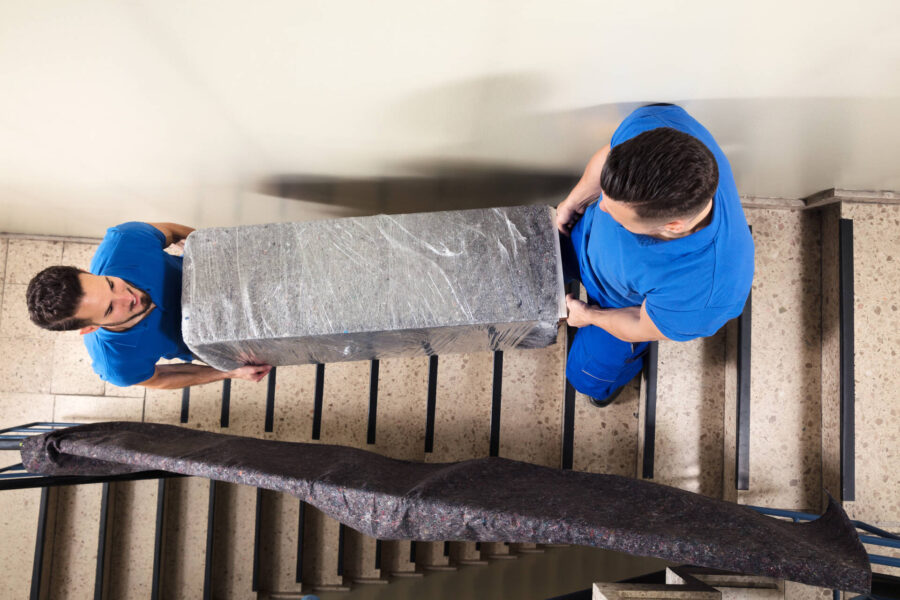
Practice safety when carrying heavy objects down flights of stairs
Ask Cross Country Movers How to Move a 500 LB Gun Safe, and They’ll Do It for You
Transporting a 500 or 1,000-pound gun safe can be challenging and potentially hazardous. While it’s possible to manage the process independently with careful planning and the right equipment, enlisting the help of experienced professionals can significantly reduce the risk of damage or injury.
Cross Country Movers have the expertise, tools, and knowledge to safely and efficiently move heavy items like gun safes. By reaching out to us for assistance, you can trust that we will handle the entire process on your behalf, from securing the safe for transport to navigating stairs and doorways.
Not only will this save you time and effort, but it will also provide peace of mind knowing that your valuable gun safe is in capable hands. So, when faced with the challenge of moving across the country, consider contacting Cross Country Movers to ensure a smooth and successful relocation.
Frequently Asked Questions About How to Move a Gun Safe
What Size Truck Do I Need to Move a Gun Safe?
To move a gun safe safely and efficiently, you typically need at least a mid-size or large moving truck with a sturdy ramp or lift gate. Gun safes are heavy and bulky, so smaller vans or pickup trucks often can’t handle their weight securely. A 15–20-foot truck is usually sufficient for most safes, depending on size and weight. Ensure the truck bed is flat, stable, and can support the safe’s full load. Always verify the weight limit with the rental company before loading.
Can One Person Move a Heavy Gun Safe Alone?
No, one person should never attempt to move a heavy gun safe alone due to the risk of injury and property damage. Most safes weigh hundreds of pounds and require at least two to four people with the right equipment. Trying to move one without help can easily lead to muscle strain or tipping accidents. Using moving straps, dollies, and ramps makes the process much safer. When possible, hire professional movers experienced in handling gun safes.
Is It Necessary to Secure the Contents When Moving a Gun Safe?
Yes, it’s essential to secure the contents before moving a gun safe to prevent internal damage and shifting weight. Even if the guns are unloaded, loose items inside can shift and unbalance the safe during transport. Remove all firearms, ammunition, and valuables, then lock or pad the interior shelves. Use padding or foam to keep internal parts from rattling. Properly securing the contents helps maintain the safe’s stability and protects your equipment.
Should I Tip Movers for Shipping a Large Gun Safe?
Yes, tipping movers who handle a large gun safe is appropriate, especially when they manage heavy lifting safely and professionally. Moving a safe requires specialized skill and effort, so a gratuity is a thoughtful way to show appreciation. The amount typically depends on the complexity and distance of the move. A tip also helps maintain goodwill with the moving crew. Always express gratitude for careful, damage-free handling of your valuable equipment.
What Type of Dolly Should Be Used When Moving a Heavy Gun Safe?
When moving a heavy gun safe, always use a heavy-duty appliance dolly rated for at least the weight of the safe. These dollies have strong straps and large wheels designed to handle uneven surfaces and stairs. Standard hand trucks are not suitable because they can’t support the safe’s mass or width. Using the correct dolly improves control and reduces risk of injury. Secure the safe tightly before tilting or moving it to maintain balance.
Are There Any Restrictions on Shipping a Gun Safe Across State Lines?
There are generally no legal restrictions on moving or shipping an empty gun safe across state lines, but firearm transport laws still apply. If the safe contains firearms, ensure you comply with federal and state firearm transportation regulations. Guns must be unloaded and stored separately from ammunition in locked compartments. Always verify regulations in both your origin and destination states. Consulting local law enforcement or a licensed mover ensures full compliance.
Should I Anchor the Gun Safe to the Floor of the Truck During Transport?
Yes, anchoring the gun safe to the truck floor is crucial for safe transport and stability. Heavy safes can shift or tip during sudden stops or turns, causing damage or injury. Use heavy-duty ratchet straps or tie-downs to secure the safe against a wall or rail system. Position it near the front of the truck to maintain even weight distribution. Proper anchoring prevents movement and protects both the safe and vehicle.
Can I Leave My Unloaded Guns in the Gun Safe During Shipping?
No, it’s not recommended to leave unloaded guns in the gun safe during shipping due to safety and legal reasons. Even unloaded firearms should be transported following firearm transport laws, which usually require separate storage. Leaving guns inside increases the safe’s weight and risk of internal damage. It’s safer to remove all firearms and pack them in approved containers. Always verify moving company policies regarding firearm transportation.
Is It Necessary to Secure the Lid With Straps During Transport?
Yes, securing the gun safe’s lid with strong straps or locks during transport prevents it from opening unexpectedly. Even if the safe is closed, road vibrations and bumps can loosen the latch. Strapping the door ensures contents remain intact and minimizes the risk of tipping. Use ratchet straps or locking mechanisms that won’t damage the finish. This simple step greatly improves safety during the move.
Does Insurance Usually Cover Damage or Loss of Items Inside a Gun Safe While It Is Being Moved?
Most moving insurance policies only cover external damage to the gun safe, not the items stored inside. It’s important to review your mover’s or homeowner’s insurance policy before transport. Firearms and valuables often require separate coverage or declared value protection. Document and photograph your items before the move for proof if a claim arises. Always confirm insurance details with both your insurer and moving company.
What Precautions Should I Take When Moving a Gun Safe With Electronic Locks?
When moving a gun safe with electronic locks, always remove or disconnect the batteries before transport. Vibrations or jolts can damage internal wiring or keypads if power remains on. Wrap the control panel with protective padding or bubble wrap to prevent scratches or impact. Avoid exposing the lock to moisture or extreme temperatures during the move. After relocation, test the lock carefully before loading valuables back inside.
What Types of Materials Can Be Used to Cushion the Gun Safe During Transport?
Use moving blankets, foam padding, or heavy-duty cardboard to cushion the gun safe during transport. These materials prevent scratches, dents, and vibration damage while the truck is in motion. Wrap the safe completely and secure the coverings with tape or straps. For added protection, place thick cardboard under the safe to prevent sliding. Proper cushioning keeps both the safe and truck interior in good condition.
Are There Specific Rules for Loading and Unloading a Gun Safe From the Truck?
Yes, loading and unloading a gun safe should follow strict safety procedures to prevent injury and damage. Always use a ramp, lift gate, or multiple people to handle the safe’s weight evenly. Keep the safe upright and centered to maintain balance. Avoid steep angles or sharp turns that could cause tipping. Wearing gloves and using proper lifting techniques help ensure a smooth and safe move.
How Should I Prepare My Home Before Moving a Gun Safe?
Before moving a gun safe, clear the path of obstacles, rugs, and narrow furniture to create a safe route. Measure doorways and hallways to confirm the safe will fit through. Protect floors and walls with moving blankets or plywood sheets to avoid scratches. Inform anyone helping about the plan and safety steps. Preparation is key to preventing accidents and property damage.
Can I Hire Professional Movers Specifically Trained to Move Gun Safes?
Yes, many moving companies offer specialized gun safe moving services with trained crews and proper equipment. These professionals know how to handle extreme weight, balance, and safety requirements. They use reinforced dollies, ramps, and straps designed specifically for safes. Hiring experts reduces the risk of personal injury and property damage. It’s the safest and most efficient way to move a gun safe of any size.
How Can I Protect My Floors and Walls When Moving a Gun Safe Indoors?
Protecting your floors and walls when moving a gun safe is vital to avoid scratches and dents. Use furniture sliders or plywood sheets under the safe to distribute weight evenly. Wrap corners and walls with moving blankets or padding for added protection. Move slowly and guide the safe carefully around tight spaces. Taking these precautions prevents costly damage during relocation.