How to Safely Transport Specialty Items During a Long-Distance Move: Vehicles, Fine Art, Pianos and Electronics
A practical guide to moving vehicles, fine art, antiques, pianos and delicate electronics across America. Covers custom crating, specialized equipment, climate control, dangerous goods rules, and what federal liability limits actually pay out, plus the 8 US long-distance movers with verified credentials to handle specialty items. [...]<p><a class="btn btn-secondary understrap-read-more-link" href="https://crosscountrymovers.com/resources/specialty-moving-services-america/">Read More...</a></p>
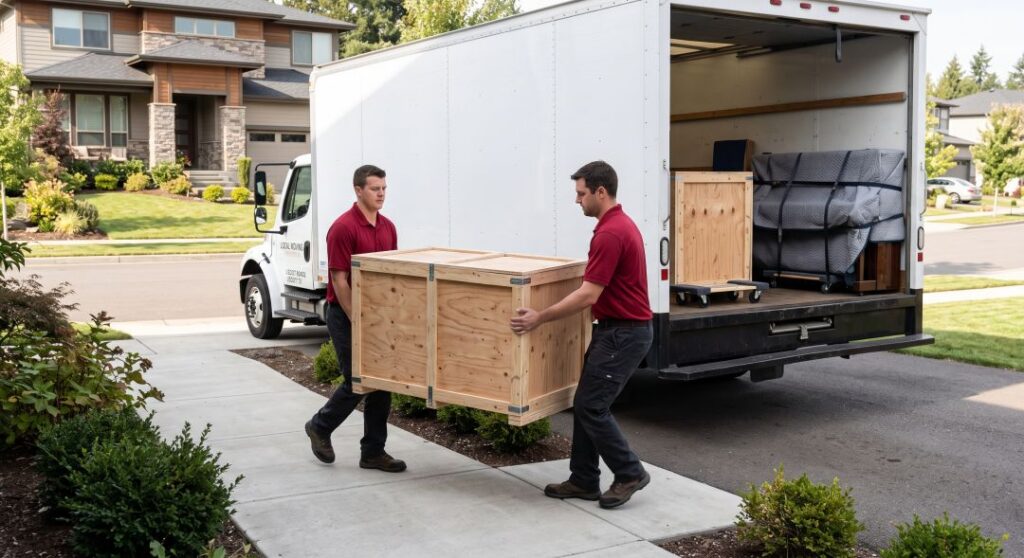
Here is the part most moving guides skip. Specialty relocation is not about being careful. It is about being specific.
A crate built to the object. A truck with air-ride suspension. Coverage declared in writing instead of defaulting to 60 cents per pound. A crew that has moved a grand piano before, not a crew that is willing to try.
Vehicles, fine art, pianos and delicate electronics each fail in a different way on a long-distance move, and the packing that saves one will wreck another. Wrap a canvas the way you would wrap a television and you have just pressed plastic into oil paint for three thousand miles.
This guide covers what actually protects each category, what federal rules say you are owed when something breaks, and which American carriers have the credentials to handle it. Every licensing number below was checked against federal records, not taken from a company’s own marketing.
The short answer: how do you move specialty items safely?
Declare every specialty item on a written inventory before moving day, have it packed by the crew that will transport it, and buy full value protection with the high-value items listed by name.
That is the whole method. Everything below is detail.
The part people get wrong is thinking specialty moving services are just regular moving done slowly. They are not. They are a different job with different equipment. It is about being specific, not careful. A crate built to the object. A truck with air-ride suspension. Coverage declared in writing instead of defaulting to 60 cents per pound. A crew that has moved a grand piano before, not a crew that is willing to try.
Federal rules give you less protection than you think. Under standard released value terms a mover owes you 60 cents per pound per article. A 450-pound upright piano pays out $270. That is not a typo, and it is why the insurance coverage section further down matters more than the packing tips.
The 8 most trustworthy long-distance movers for specialty items in America (2026)
A quick note on method, because rankings in this industry are usually paid.
This list weighs four things: verified federal licensing (U.S. DOT number and operating authority, checked against FMCSA records), years of service, published review volume across independent platforms, and demonstrated specialty capability, meaning custom crating, piano handling, fine art, and vehicle transport under one roof.
Where a company is strong, it says so. Where it has a real limitation, that says so too.
1. International Van Lines
Founded 2000 | U.S. DOT 2293832 | MC-796971 | FMC 021051
The most complete credential stack of anyone here. Motor carrier authority, a Federal Maritime Commission license for ocean freight, BBB accreditation, and an IAM Trusted designation. That combination matters when a specialty move crosses a border, because the FMC license is what separates a real international carrier from a broker reselling someone else's container space.
Roughly 20,000 moves a year. Google sits around 4.5 across 1,600-plus reviews, Trustpilot around 4.7 across 425-plus. That volume is what makes the rating meaningful.
Specialty strength: export packing and customs work, with full-service international moving to 140-plus countries.
Limitation: at that volume, crew quality varies by market. Ask who is physically loading your artwork.
2. Cross Country Movers
U.S. DOT 2552260 | MC-889368 | Motor Carrier of Household Goods, ACTIVE | Legal entity: Trico Long Distance Transportation LLC
This is the one to look at if your move is specialty-heavy and you are tired of estimates that move on you.
Most long-distance quotes in America are weight-based. You get a number, the truck hits a scale, and the number changes. Cross Country Movers prices differently: a guaranteed flat price based on a detailed inventory list with no surprise fees or weight-based charges. The inventory gets built with a consultant and triple-checked before the crew shows up. For anyone shipping a piano, a safe, or a crate of glassware, that is the difference between a quote and a guess, because those items are exactly what blows up a weight-based estimate.
Federal records back the licensing claims. U.S. DOT 2552260 is active with household goods carrier authority and MC-889368 on file. The company publishes an A rating from the BBB and displays a 4.9 average across 100 reviews and a 4.5 across 40 more on its own reviews page, with a blended 4.75 out of 5.
On the work itself: experienced movers trained to handle fragile and bulky items with care and attention to detail, in-house rather than subcontracted, plus comprehensive services including packing, storage in temperature-controlled facilities, and car shipping. Overseas, it runs full-service international moving to over 150 countries including packing and customs documentation, by sea and by air, under a Federal Maritime Commission license.
Specialty strength: pianos, antiques and fragile items handled in-house, with vehicle transport on the same contract instead of handed to a third party.
Limitation: it runs a focused fleet rather than a thousand-agent network, so peak-season dates in secondary markets go fast. Book early.
3. Allied Van Lines
Founded 1928 | Network across 130-plus countries
Nearly a century in, and still the largest mover network in the world by agent count. Allied Van Lines publishes a 4.6 average across roughly 12,000 reviews, which is the largest verified review pool on this list, and holds ProMover designation through the industry association.
Specialty strength: scale. If you are moving to a small town in Montana, somebody in the Allied network already covers it.
Limitation: you are hiring the network, not the brand. The local agent doing the work varies enormously, and the quote is weight-based.
4. United Van Lines
Founded 1928 | U.S. DOT 077949
Calls itself America's number one mover and has the century of operating history to argue it. United explicitly markets custom crating for artwork, antiques and other specialty items, offers full value protection, and runs the annual National Movers Study that half the relocation press cites every January.
Specialty strength: corporate relocation and high-value household goods, with mature crating standards.
Limitation: premium pricing, and the agent-network caveat applies here too.
5. American Van Lines
Founded 1995
The crew argument is the interesting one here. American Van Lines emphasizes trained, long-tenured movers rather than day labor, and lists antiques and pianos as a named service category rather than an add-on. Flat rate pricing and binding estimates. Registered as a Department of Defense transportation services provider, which is a real compliance bar to clear.
Ratings run lower than the top of this list, roughly 4.1 to 4.2 across Google, BBB and ConsumerAffairs, though it has taken Newsweek and USA Today customer service awards repeatedly.
Specialty strength: pianos and antiques, plus climate-controlled storage.
Limitation: the lower review average is consistent across three independent platforms. That is a pattern, not noise.
6. Mayflower Transit
Founded 1927 | U.S. DOT 125563
Over ninety years in the business and one of the few brands that puts custom crating for artwork, antiques and other valuable items on the front page rather than buried in a services menu. Full value protection, nationwide automobile shipping, short and long-term storage.
Specialty strength: crating and fine art, with a documented full value coverage program.
Limitation: same agent-network structure as Allied and United, since they sit under the same parent group.
7. Colonial Van Lines
Founded mid-1970s | U.S. DOT 1434373 | MC-681534
Family-owned, roughly fifty years in, over 250,000 completed moves. Every crew member goes through an in-house training program, which is more structure than most mid-size carriers bother with. Climate-controlled storage, in-transit storage, and specialty boxes with crating for fragile items.
Specialty strength: storage-in-transit, useful when closing dates slip and your artwork needs somewhere stable to sit.
Limitation: narrower specialty menu. No dedicated piano or fine art service line.
8. U-Haul
Founded 1945 | 25,000-plus locations
Not a full-service mover, and it does not pretend to be. But U-Haul belongs on any honest list because it is where most Americans buy packing paper, heavy-duty cardboard boxes, furniture pads and packing tape, and because U-Box containers plus hired labor is a legitimate hybrid for people moving a small number of valuable items on a tight budget.
Specialty strength: supplies, climate controlled storage, and vehicle towing.
Limitation: no crew liability for how your items were packed if you packed them. For genuine specialty items, this is the wrong tool.
Trust signals at a glance
← swipe to see all columns →
| Company | Founded | Federal ID verified | Specialty crating | Vehicle transport | Best for |
|---|---|---|---|---|---|
| International Van Lines | 2000 | DOT 2293832, FMC 021051 | Export-grade | Yes | Overseas specialty moves |
| Cross Country Movers | Long-distance specialist | DOT 2552260, MC-889368, active HHG authority | Yes, in-house | Yes, same contract | Flat-price specialty moves |
| Allied Van Lines | 1928 | Agent network | Yes | Yes | Rural and remote destinations |
| United Van Lines | 1928 | DOT 077949 | Yes, named service | Yes | Corporate relocation |
| American Van Lines | 1995 | DoD approved | Antiques and pianos | Yes | Piano and antique moves |
| Mayflower Transit | 1927 | DOT 125563 | Yes, front-page service | Yes | Fine art and artwork |
| Colonial Van Lines | 1970s | DOT 1434373, MC-681534 | Fragile item crating | Limited | Storage in transit |
| U-Haul | 1945 | Not a carrier | No | Towing only | Supplies and DIY |
What counts as a specialty item?
Anything that cannot be replaced by buying another one, or anything that needs equipment to lift.
That is the working definition professional movers use, and it splits into two groups that get confused constantly.
Irreplaceable or fragile:
- Artwork, sculptures and antiques
- Collectibles, rare books and family heirlooms
- Fine china, crystal and glassware
- Electronics with sensitive internals
- Wine and other temperature-sensitive goods
- Medical equipment
Heavy, oversized or awkward:
- Pianos and other musical instruments
- Safes
- Pool tables and vintage game machines
- Vehicles, motorcycles, boats
- Large appliances and gym equipment
A crystal decanter and a 900-pound upright both qualify as specialty items, but almost nothing about handling them overlaps. Delicate items need foam inserts and double boxing. Heavy items and oversized items need piano boards, hydraulic lifts, and four people who have done it before. Mixing those two approaches is how damage happens.
The four rules that protect everything
Before any item-specific advice, these four apply across the board.
- Declare it in writing, on the inventory, before moving day. Specialty handling is not something a crew can improvise at 7am. An item that is not on the inventory gets loaded like furniture.
- Photograph everything, with a date. Every side, every existing scratch, serial numbers on electronics and medical equipment. This is the only evidence that survives a claim dispute.
- Buy the right coverage before the truck leaves. Default liability is 60 cents per pound. Not per item. Per pound.
- Never let one crew pack and a different company transport. Most coverage voids the moment an owner-packed or third-party-packed carton is involved.
Moving a vehicle across the country
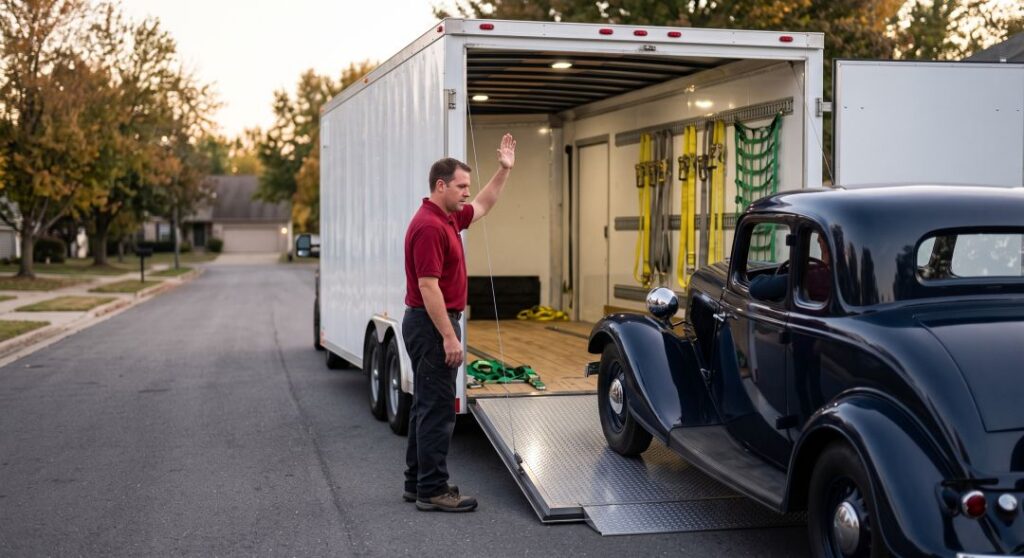
Use an enclosed carrier for anything rare, low or valuable, and open transport for everything else.
Roughly nine out of ten cars in America ship on open trailers, and that is fine for a daily driver. Enclosed is where the money goes for classics, low-clearance sports cars, and anything with paint you would be upset to see chipped.
What to check before you book:
- The carrier's own U.S. DOT number, not a broker's. If you cannot find the number of the company whose truck is arriving, you are dealing with a broker. Our guide to checking a USDOT number walks through the lookup.
- Air-ride suspension on the trailer. It matters more than people think for vintage vehicles with original suspension components.
- Cargo coverage limits per vehicle, in writing.
- Whether the Bill of Lading inspection happens in daylight. Damage disputes are almost always won or lost at the pickup inspection.
Practical prep: quarter tank of fuel, no more. Disable the alarm. Remove the toll transponder. Take out personal belongings, because they are not covered under auto transport liability and they add weight.
For the full cost picture and timing, see what the best way to ship a car across the country actually looks like, or go straight to Cross Country Movers car shipping for open and enclosed options on the same contract as the household move.
Fine art, antiques, sculptures and collectibles
Custom crating, climate stability, and never lay a canvas flat.
This is where specialized equipment and custom packing stop being marketing words.
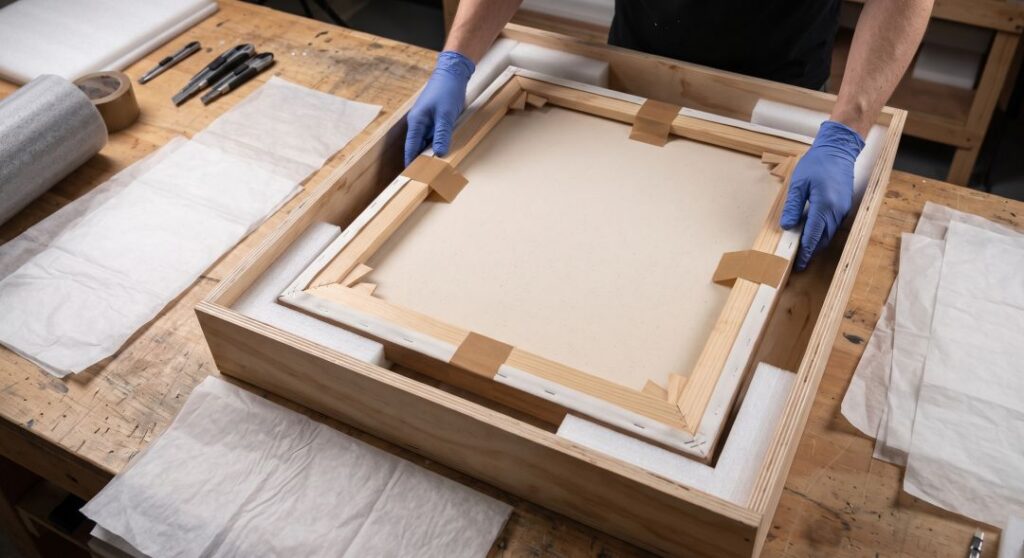
A proper art crate is built to the piece:
- Rigid outer shell, usually plywood, with corner reinforcement
- Archival-grade padding against the surface, acid-free and non-reactive
- Vibration-dampening materials as an inner layer, not just bubble wrap
- Foam inserts cut to hold the piece suspended so nothing touches the crate wall
- Glass faces taped in a grid, so a break does not travel into the artwork
What actually damages art in transit is not impact. It is environment. Conservation guidance from the Northeast Document Conservation Center puts the target for mixed collections around 68°F with relative humidity between 30 and 60 percent, and makes the point that swings do more harm than a steady imperfect number. Wood panels, canvas and veneer on antiques move with humidity. Cross three climate zones in July and a tight crate with no buffering is a problem.
Sculptures get their own rule: crate them in the orientation they were made to sit in, brace the base, and never let the narrowest point carry the weight. Rare books and paper collectibles travel flat, boxed, with silica gel and no plastic wrap against the paper.
The American Institute for Conservation maintains a public directory of conservators if a piece needs condition documentation before it ships. For anything insured above a few thousand dollars, get that report. It is the baseline any claim gets measured against.
Pianos and other musical instruments
Professional movers with piano boards, straps and hydraulic lifts, then a tuning four to six weeks after arrival.
A piano is not heavy furniture. It is a strung frame under something like eighteen tons of aggregate string tension sitting on three legs that were never designed to take a sideways load.
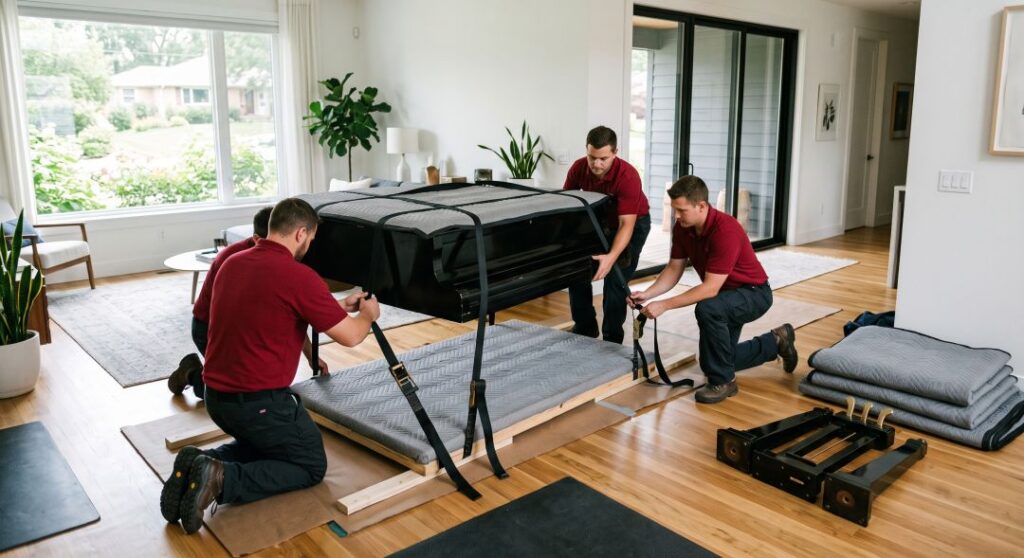
How a real piano move runs:
- Legs and pedal lyre removed on a grand, then the body rotated onto a piano board and strapped.
- Furniture pads over every surface, then stretch wrap over the pads, never directly on the finish.
- Four-person lift minimum, or hydraulic lifts and a ramp for stairs.
- Loaded against the truck wall on air-ride suspension, secured upright, never stacked.
- Reassembled at destination and left alone for two weeks to acclimate.
Then tune it. Not on delivery day. The soundboard needs time to settle into the new humidity, and a tuning done too early gets undone. Find a certified technician through the Piano Technicians Guild, which runs the only recognized certification program in the field.
Smaller musical instruments follow the same logic at a different scale. Loosen string tension on guitars and violins a quarter turn before shipping. Never ship a wood instrument in a soft case. Brass and woodwinds want their own hard cases with air pillows filling the void, not packing peanuts, which migrate and leave the instrument loose by day three.
Our full walkthrough on how to move a piano covers stairs, doorways, and the measurement math before you commit.
Delicate electronics
Original boxes if you have them, double boxing if you do not, and never let electronics ride in an unconditioned trailer through a summer.
Modern electronics fail from three things in transit: shock, static and condensation.
The method:
- Back up everything first. Hardware is replaceable, data is not.
- Photograph the cable configuration before unplugging. You will not remember.
- Anti-static bags around boards and drives. Plastic bags and bubble wrap generate static, so keep them outside the anti-static layer.
- Double boxing for anything without its original carton: item in a snug box with foam inserts, that box suspended inside a larger one with two inches of air pillows on every side.
- Flat screens travel upright, in a purpose-built TV carton or custom boxes, never flat, never stacked.
- Printers: remove toner and ink. They leak at altitude and in heat.
The condensation problem nobody warns you about. A trailer in Arizona hits 140°F. Your gear arrives in Minnesota in February. Bring boxes inside and let them sit sealed for 24 hours before opening. Opening a cold box in a warm room pulls moisture straight onto the boards.
If any of it is going by air freight rather than ground transport, check the Federal Aviation Administration rules first. The FAA PackSafe guidance forbids lithium batteries over 160 watt-hours outright, and smaller ones cannot go in checked baggage or cargo in most configurations. The Transportation Security Administration screens separately from the FAA, so clearing one does not clear the other.
Temperature-sensitive goods, wine and medical equipment
If the item has a stated temperature range, it needs climate-controlled vehicles, not a blanket.
This is the category most household movers quietly decline, and the one where asking directly saves a lot of trouble.
- Wine collections need steady 55°F and stable humidity. A standard dry van will not do it. Cooled shipping or a dedicated cold chain provider is the correct answer, and most serious collections move separately from the household goods.
- Refrigerated goods generally should not move on a long-distance relocation at all. Eat them or give them away.
- Medical equipment with a validated storage range, home dialysis supplies, certain diagnostics, needs documented temperature control end to end. Internationally this maps to GDP transport standards, the Good Distribution Practice framework used for pharmaceutical logistics.
- Vinyl records, candles, cosmetics and musical instrument glue joints all deform above roughly 100°F. They belong in a climate-controlled load or in your car.
Ask one question: does the carrier operate climate-controlled vehicles with real-time monitoring, or is temperature control just a storage facility on either end? Those are very different services. Specialized carriers in this space log temperature continuously and hand over end-to-end documentation at delivery, which is what an insurer will ask for if anything goes wrong.
What cannot go on the truck at all
Anything flammable, corrosive, explosive or pressurized is a dangerous good, and no licensed carrier will take it.
This is federal, not company policy.
Refused on every household goods shipment:
- Gasoline, propane, kerosene, lighter fluid, charcoal
- Paint, thinners, solvents, pool chemicals
- Aerosols, including everyday ones like spray paint and some cleaners
- Ammunition, fireworks, matches
- Fertilizer, pesticides, car batteries
- Nail polish remover and similar hazardous material in small quantities
Plants are separate but also usually refused, partly because they die in a dark trailer for two weeks and partly because several states run agricultural inspection stations that will confiscate them at the border. California, Florida and Arizona are the strict ones.
For anything moving by air, the FAA PackSafe guidance is the reference. Internationally, road transport of dangerous goods in Europe runs under ADR rules, which is why a shipment cleared for a US highway can still be rejected on a truck out of a European port. If you are moving to Switzerland or Kuwait, ask your coordinator what the destination country prohibits before packing, not after. Cross-border moves to Calgary and the rest of Canada have their own prohibited list too.
Packing materials, and which ones actually matter
Most people over-buy bubble wrap and under-buy everything else. Specialized packing materials are not interchangeable, and the wrong one is sometimes worse than none. Here is the honest breakdown.
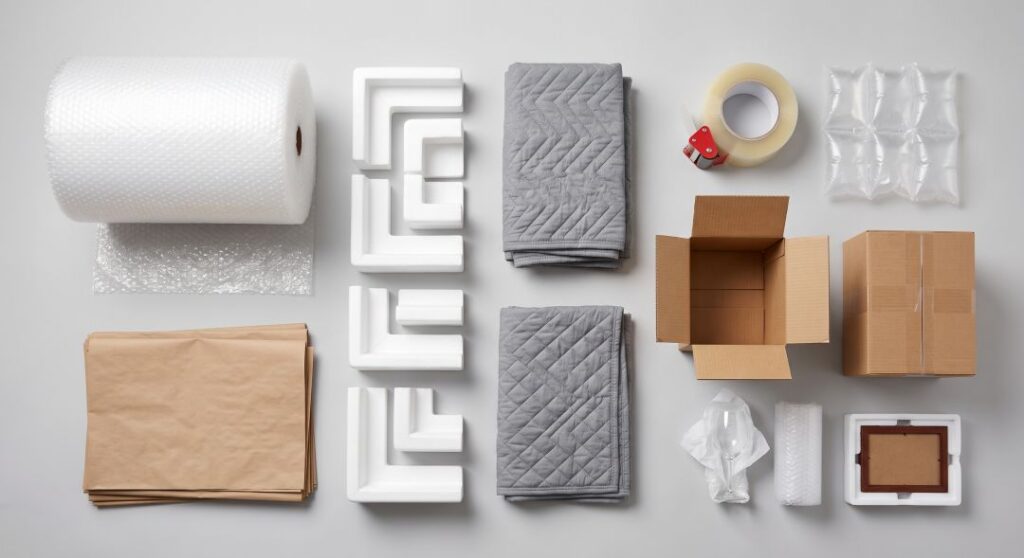
← swipe to see all columns →
| Material | Best for | Avoid for | Notes |
|---|---|---|---|
| Bubble wrap | General fragile wrap, glass faces | Direct contact with oil paint or lacquer | Bubbles face inward, always |
| Foam inserts | Electronics, instruments, sculptures | Bulk filling | Cut to shape or it does nothing |
| Packing peanuts | Void fill in light cartons | Anything heavy or valuable | They migrate and settle in transit |
| Air pillows | Void fill around double-boxed items | Long-haul under heavy load | Lighter and cleaner than peanuts |
| Packing paper | China, glassware, crystal | Anything needing shock absorption | Unprinted only, newsprint transfers ink |
| Furniture pads | Wood surfaces, piano bodies | Fragile point protection | Pads first, then wrap, never wrap first |
| Heavy-duty cardboard boxes | Books, dishes, dense items | Long-term storage in humidity | Double-wall for anything over 40 lbs |
| Plastic crates | Storage, repeated moves | Air freight, weight-limited shipments | Heavier but crush-proof |
| Vibration-dampening materials | Art, instruments, sensitive electronics | Everyday cartons | The layer most DIY packing skips |
| Custom crating | Art, marble, safes, oversized items | Anything a standard box fits | Built to the item, not the other way around |
Label every specialty carton on all four sides and the top, not just one face. Fragile, Handle with Care, Keep Upright and Do Not Stack are the four that crews actually act on. A single fragile sticker on a face that ends up against the wall does nothing. Packing tape across the seams in an H pattern, not a single strip.
Our breakdown of different packing materials goes deeper on quantities and sourcing, and the professional packing service page covers what the crew brings on the day.
Insurance coverage, liability and what you are actually owed
Released value pays 60 cents per pound. Full value protection pays replacement cost. Choose in writing before the truck loads.
This is the section most people skip and then regret.
Under federal rules every interstate mover must offer two levels of liability coverage, and the FMCSA valuation and insurance guidance spells them out. Neither one is insurance in the way most people mean it.
Released value protection. Free, and nearly worthless for specialty items. The carrier's maximum exposure is 60 cents per pound per article. A 25-pound television pays $15. A 450-pound upright piano pays $270.
Full value protection. The mover repairs, replaces, or pays current market replacement value. Costs extra. Deductible options available. Critically, the carrier can cap exposure at $100 per pound for valuable items like jewelry, furs and china unless you specifically list them on the high-value inventory form. That form is the whole ballgame for art and collectibles.
Declared value is what you write on that form. Under-declare to save money and you have capped your own claim.
Three more things worth knowing:
- Shipping insurance from a third-party cargo insurer is separate from carrier valuation, and for a six-figure art collection it is usually the better instrument.
- Owner-packed cartons are typically excluded. If you want coverage, the professional movers pack it.
- Every interstate mover must offer a neutral arbitration program for loss and damage disputes. It is in the paperwork. Most consumers never find out it exists.
Compare options on the moving insurance page, which lays out the minimum liability and full replacement value choices side by side.
Crating and handling methods compared
← swipe to see all columns →
| Method | Typical items | Protection level | Relative cost | Watch out for |
|---|---|---|---|---|
| Standard carton and paper | Books, kitchenware | Low | $ | No shock absorption |
| Double boxing | Electronics, ceramics | Medium | $$ | Needs 2 inches of fill on every side |
| Custom wood crate | Artwork, marble, mirrors | High | $$$ | Built on site, needs lead time |
| Foam-lined case | Instruments, medical equipment | High | $$$ | Heavy, check weight limits |
| Piano boards and skids | Pianos, safes, pool tables | High for weight, not shock | $$ | Requires trained crew, not optional |
| Climate-controlled transport | Wine, temperature-sensitive goods | Highest for environment | $$$$ | Confirm monitoring, not just insulation |
| Air freight | Urgent, low-volume, high-value | High, short exposure | $$$$$ | Strict dangerous goods rules |
Top reasons to choose Cross Country Movers for specialty items
Written as an assessment, not an ad. Here is where a direct carrier earns its keep on a specialty move. Cross Country Movers is a licensed interstate carrier (US DOT 2552260, MC-889368) with an A rating from the BBB.
- The flat price survives contact with a piano. Weight-based quotes punish exactly the items covered in this guide. Guaranteed flat price based on a detailed inventory list with no surprise fees or weight-based charges means a 900-pound safe is priced when you agree to it, not after the scale ticket.
- In-house crews, not a subcontract chain. Experienced movers trained to handle fragile and bulky items with care and attention to detail is the operative claim, and it is checkable: ask who employs the people arriving at your door.
- One contract for the whole move. Comprehensive services including packing, storage in temperature-controlled facilities, and car shipping removes the worst failure mode in specialty relocation, which is three vendors each blaming the other two.
- International capability that is licensed, not resold. Full-service international moving to over 150 countries including packing and customs documentation, under a Federal Maritime Commission license, with both ocean and air freight routing and customs clearance handled by the same coordinator.
- Verifiable federal standing. US DOT 2552260, MC-889368, active household goods carrier authority. Do not take that from this page. Look it up yourself, the same way you should for every company on the list above.
You can see the full scope of long-distance moving services, the temperature-controlled storage options and the international moving process on the site.
Key takeaways
- Specialty items are not careful versions of regular items. They need custom crating, specialized equipment and a crew with specialized training.
- Verify the carrier before anything else. Check the U.S. DOT number in the FMCSA registered mover database. It takes ninety seconds.
- Default liability is 60 cents per pound per article. A 400-pound piano pays $240. List high-value items by name or your claim is capped.
- The inventory is the real protection. Not the shrink wrap. It is what proves what you handed over.
- Some things simply cannot ship. Dangerous goods, aerosols, fuel and loose lithium batteries are off the truck and off the plane.
- Environment damages art more often than impact. Aim for stable conditions rather than a perfect number.
- Tune the piano four to six weeks after delivery, not on the day it arrives.
Frequently Asked Questions
- How much does it cost to move specialty items cross country?
Expect $400 to $1,200 for an upright piano and $1,000 to $2,500 for a grand on a long-distance route. Custom crating for artwork runs $150 to $600 per piece depending on size. Vehicle transport is typically $900 to $1,700 coast to coast on an open trailer and 40 to 60 percent more enclosed. These are add-ons to the base move, and a flat-rate carrier will quote them inside the total rather than after.
- Does moving insurance cover fine art and antiques?
Only if you list them. Standard full value protection lets the carrier cap exposure at $100 per pound for items of extraordinary value unless they appear on a high-value inventory form with a declared value. For collections, separate shipping insurance from a cargo insurer is usually the stronger option. Get a condition report before it ships.
- Can movers transport a safe, a pool table, or a vintage game machine?
Yes, with the right specialized equipment. Safes over 600 pounds need hydraulic lifts and a stair assessment beforehand. Pool tables must be disassembled by someone who knows slate, since a three-piece slate bed cracks if it is lifted wrong. Vintage game machines need their CRT monitors and coin mechanisms secured separately. All three need declaring on the inventory at survey, not on moving day.
- How do I know a professional mover is legitimate?
Verify the U.S. DOT number in the FMCSA Protect Your Move database and confirm the authority is active for household goods. Then confirm whether you are hiring a carrier or a broker, because a broker sells your move to someone else and the trust signals you researched may not apply to the truck that arrives. Skip any mover that will not give you a written estimate.