How to Plan a Cross Country Move on a Budget
Build a realistic moving budget, cut shipment weight, time your move right, and compare written estimates without falling for hidden fees or moving fraud. [...]<p><a class="btn btn-secondary understrap-read-more-link" href="https://crosscountrymovers.com/resources/how-to-plan-a-cross-country-move-on-a-budget/">Read More...</a></p>

Decide what you can spend before you call anyone. Then work backward.
A budget cross-country move comes down to four levers you actually control: how much stuff you ship, when you ship it, what service level you buy, and how carefully you read the estimate. Everything else is noise.
Most people do this in the wrong order. They collect moving quotes first, get sticker shock, and start hacking away at the one thing that feels cuttable, usually protection or professional help. That is how a cheap move turns expensive.
This guide is about how to build and allocate a moving budget for a long-distance move, not what the market charges. It covers the five budget buckets, how to cut shipment weight, when to book, how to compare a written estimate against a non-binding one, and the costs waiting for you on the other end.
Start With Your Number, Not With the Quote
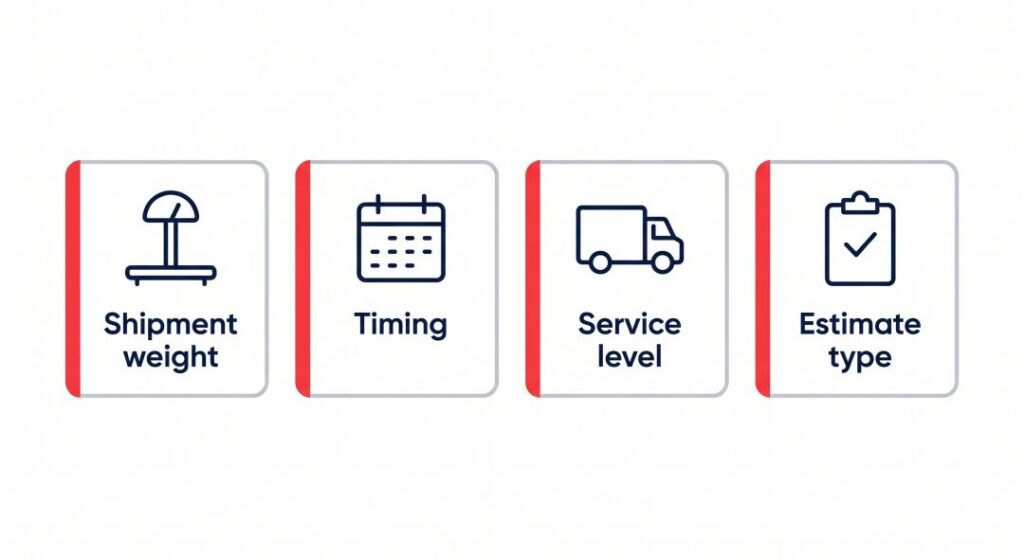
A moving budget is not a guess about what movers charge. It is a ceiling you set, then allocate.
Write down the total you can spend without touching your emergency savings. That number is your ceiling. Now split it into five buckets:
- Transport. The moving company, the moving truck rental, or the container. Usually 50 to 70 percent of the total.
- Packing supplies and labor. Boxes, materials, and any packing assistance or unloading assistance you buy.
- Travel expenses. Fuel costs, lodging, tolls and taxes, food on the road, pet transport.
- Landing costs. Security deposit, first month's rent, utility setup fees, temporary housing if the dates do not line up.
- Contingency fund. Ten to fifteen percent of the ceiling, carved out of it, not added on top.
That last one matters more than any coupon you will ever find. Moves go sideways. A delivery window slips, a couch does not fit through the door, the new place needs a locksmith. If the contingency fund lives inside your ceiling, a surprise is an inconvenience. If it lives outside, a surprise is a credit card balance.
One thing worth knowing before you trust the first budgeting article you find: interstate moves are rare. Census Bureau data shows 2.1 percent of Americans moved to a different state in 2024, down from 2.3 percent the year before, while 8.9 percent moved within their own state. Most moving advice online is written for that larger group. Local-move math does not survive 2,000 miles.
For dollar benchmarks by home size and distance, our breakdown of the average cost of moving across country has the current ranges. This guide is about allocating the money.
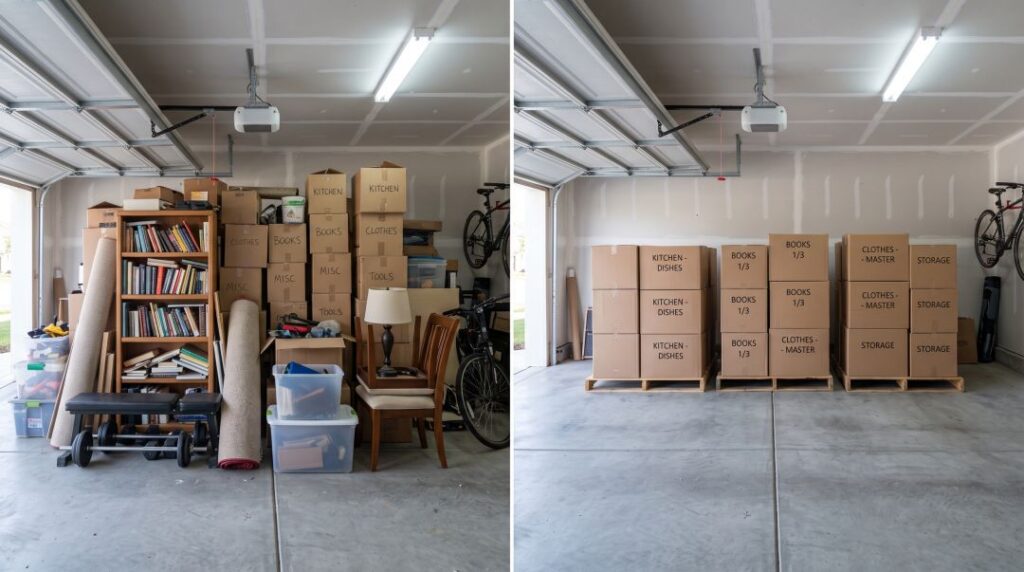
Cut Weight Before You Cut Service Level
Here is the part most budget advice buries: on a long-distance move, you are largely paying to haul mass across a continent. Shipment size drives price more than anything else you can influence in the last month.
So the cheapest thing you own is the thing you do not ship.
Declutter with a rule, not a mood. Room-by-room sorting works. Vague intentions do not. Pick a rule and apply it without negotiating with yourself:
- If it costs less to replace than to ship, replace it. Cheap bookshelves, mismatched dishware, the third set of sheets.
- If you have not used it in a year and it is not sentimental or seasonal, let it go.
- If it is heavy and you are ambivalent about it, that ambivalence is your answer.
Books, exercise equipment, garage tools, and old furniture are where the weight hides. A single wall of paperbacks can add real money to a coast-to-coast quote.
Downsize, donate, sell, in that order. Sell what has resale value while you still have six weeks. Donate the rest and keep the receipts. Do not let a maybe-I-will-sell-it pile sit in the garage until moving week, because on moving week everything in that pile gets loaded onto the truck.
Keep an inventory as you go. Inventory tracking sounds like busywork. It is not. A written or photographed inventory does three things at once: it gives professional movers the detail they need to price your move accurately, it gives you a claims record if something arrives damaged, and it stops the slow creep of we-will-just-add-this-too that quietly inflates a quote.
Time the Move Like a Plane Ticket
Moving is seasonal, and the pricing reflects it.
The bulk of American moves cluster between May and September. School calendars, lease cycles, and weather push everyone into the same window. Demand spikes, trucks fill, and rates follow.
If you have any flexibility at all:
- Move October to April. Off-peak times are where the real discounts live, not in negotiation.
- Pick weekdays over weekends. Weekends are the busiest slots inside every week, including in the off-season.
- Avoid the start and end of the month. Lease turnover clusters there.
- Ask for a flexible pickup window. A two or three day spread often prices better than a single locked date.
Summer months are not always avoidable. If you are moving a family and cannot pull kids out of school in March, book earlier instead. Eight to ten weeks out beats six weeks out on price, and it beats it by more in June than it does in November.
Choose the Right Service Level and Stop Comparing Apples to Oranges
This is where budgets get blown, usually by comparing two things that are not the same product.
Full-service movers handle loading, transport, and delivery, with packing available as an add-on. You are buying labor, equipment, liability, and a company that is accountable if something goes wrong. Highest sticker price, lowest personal risk, least of your own time.
Hybrid move. You pack, someone else drives. This category includes portable moving containers, freight trailer service where you load a section of a cargo trailer and pay for the linear feet you use, and hiring moving labor by the hour on either end. Companies like U-Pack and the container operators built their businesses here. It is genuinely cheaper than full service and genuinely more work.
DIY move. You rent a moving truck from an operator like U-Haul, load it, drive it, unload it. On paper it is the cheapest option. In practice, the mileage, fuel costs, lodging on multi-day drives, equipment rental, and the tow setup for your car eat the gap fast. We ran the full comparison in our DIY truck rental versus long-distance movers analysis, and the honest answer is that a DIY move wins for small shipments and short hauls, and loses more often than people expect on true coast-to-coast moves.
← swipe to see all columns →
| Service level | What you do | What you pay for | Best fit |
|---|---|---|---|
| Full-service movers | Point at things | Labor, equipment, transport, accountability | Families, 3+ bedrooms, tight timelines, fragile items |
| Hybrid move (containers, freight trailer service, moving labor) | Pack and often load | Space used, transport, hourly help | Flexible timelines, 1 to 3 bedrooms, decent physical capacity |
| DIY move (moving truck) | Everything | Truck, mileage, fuel, equipment | Small shipments, shorter distances, helping hands available |
One thing to watch across all three: whether you get a dedicated truck or share space with other shipments. Shared loads cost less and deliver in a window. A dedicated truck costs more and delivers on a date. Neither is wrong. Just know which one you bought, because a shared load with a two-week window can mean two weeks of short-term rentals or an air mattress, and that is a budget line nobody plans for.
Large van line networks such as Mayflower Transit, Allied Van Lines, and National Van Lines operate through local agents, which means the crew that shows up may not be the company on the paperwork. Ask who is actually performing the move, and get the answer in writing.
Get Quotes You Can Actually Compare
Collect multiple quotes. Three is the number the FMCSA recommends, and it is the right number: two leaves you guessing, five turns into a research project.
But moving quotes are only comparable if the underlying assumptions match. Give every moving company the same inventory list, the same dates, the same services. A quote based on a video survey and a full inventory means something. A number someone gives you over the phone in four minutes means nothing.
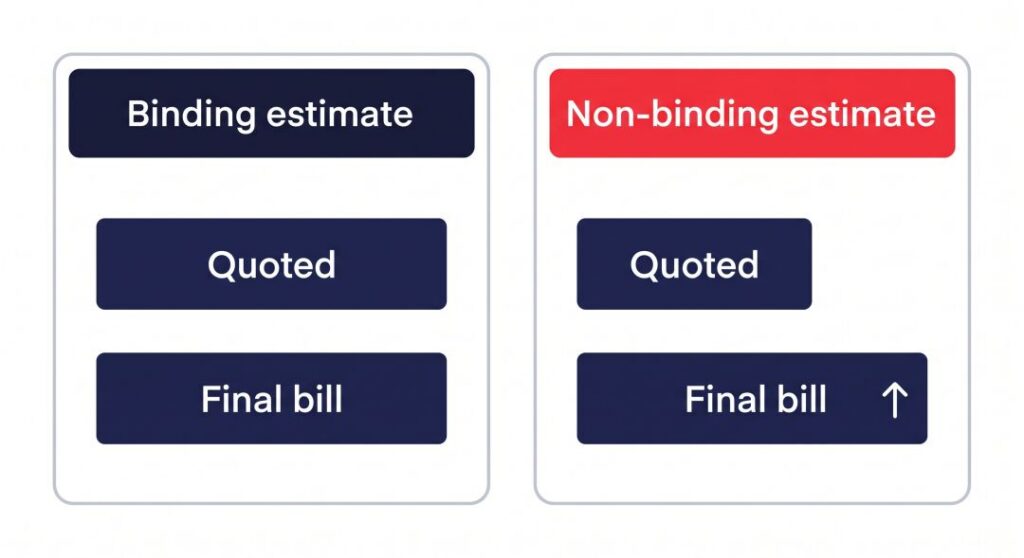
Know which kind of estimate you are holding. Interstate movers are required to give you a written estimate. There are two kinds and the difference is your whole budget:
- Binding estimate. The price is locked for the inventory and services listed. Add items later and the price changes, but the agreed scope does not drift.
- Non-binding estimate. An educated guess. The final bill is based on actual weight or volume and can legally land higher than the quote.
A low non-binding estimate is the single most common way a cheap move becomes an expensive one. Two companies can quote the same number and mean completely different things by it. That gap is where hidden fees and unexpected moving costs live.
Verify the U.S. DOT number before you talk price. Every interstate mover must be registered with the Federal Motor Carrier Safety Administration and display a U.S. DOT number. You can check any company's registration and complaint history through the FMCSA's Protect Your Move resources at protectyourmove.gov, which is also where the Ready to Move brochure and the Rights and Responsibilities handbook live. Both are free. Both take ten minutes to read.
Skip this step and you are not budgeting, you are gambling. Moving fraud usually starts with a quote that is too good, then escalates to a hostage load and a bill that has doubled by delivery day. Red flags worth walking away from:
- No U.S. DOT number in advertising or on the estimate
- A large deposit demanded up front
- An estimate given without any survey of your belongings
- No physical address, or a name that changes between calls
- A refusal to put anything in writing
Do not treat protection as the place to save. Basic released-value coverage is included by law and it is close to worthless: pennies per pound. A damaged television reimbursed by weight is not reimbursed. Full value protection and third-party moving insurance cost real money, and for a cross-country move with anything valuable in the load, insurance coverage is the last line in the budget to cut, not the first.
Packing Supplies: Where to Be Cheap and Where Not to Be
Packing supplies are a legitimate place to save. Fragile items are not.
Free packing materials that actually work:
- Liquor store boxes. Sturdy, small, divided, and built for glass.
- Grocery store produce boxes, asked for in the early morning.
- Buy Nothing groups and neighborhood apps, where somebody who moved last month is desperate to get cardboard boxes out of their garage.
- Towels, linens, and clothing as padding. You are shipping them anyway.
- Suitcases packed full. Free containers with wheels.
What is worth paying for:
- Packing paper for dishes and glassware. Newspaper ink transfers and you will regret it.
- Bubble wrap for electronics, framed art, and anything with a screen.
- Moving blankets for furniture corners and finished surfaces.
- Tie-down straps if you are loading a truck or trailer yourself. Load shift causes more damage on DIY moves than potholes do.
- Real dish barrels and wardrobe boxes if you have a lot of either.
Label boxes properly and build one essentials box. Label every box on two sides and the top, with the destination room and a one-line summary of contents. Not kitchen. Write kitchen, everyday plates and mugs.
Then pack one essentials box that travels with you, not on the truck: medications, chargers, a few days of clothes, toiletries, basic tools, coffee setup, paperwork, pet supplies. Every dollar you spend on takeout and drugstore replacements because you cannot find anything is a budget line that did not have to exist.
If your time is worth more than the savings, partial professional packing services for just the kitchen and fragile items is a reasonable middle ground. The same logic runs in reverse on arrival: paying for unpacking or unloading assistance for a few hours often costs less than a second night in temporary housing. Our guide to the best order to pack for a move walks through the sequence that keeps this from becoming chaos.
Budget the Trip, Not Just the Truck
The moving quote is not the moving cost. People forget the road.
For a multi-day drive, plan for:
- Fuel costs based on actual mileage and the vehicle you are driving, not an optimistic estimate. A loaded rental truck gets far worse mileage than your car.
- Lodging for every night on the road, booked in advance, because roadside availability is expensive.
- Tolls and taxes, which on some eastern routes add up faster than people expect.
- Meals for everyone, including the day you arrive with no kitchen.
- Pet transport, whether that is a pet-friendly hotel surcharge, a crate, or a specialized service.
Then there is the second vehicle. If your household has two cars and one driver making the trip, car shipping is often cheaper than the fuel, lodging, and extra days of a second driver making the same drive. Run both numbers before assuming driving is the frugal choice.
The Costs Waiting on the Other End
Budgets tend to stop at the front door of the new place. The expenses do not.
- Security deposit and first month's rent, sometimes plus last month's.
- Utility setup fees and deposits. Several providers charge activation fees, and some require deposits without local credit history.
- Temporary housing or short-term rentals if your delivery window and your lease do not align.
- A storage unit. If you close on one end before the other, self storage from an operator like Extra Space Storage bridges the gap. For loads already in transit, temperature-controlled storage through your mover usually costs less than renting a separate unit and paying for a second handling.
- Replacements. The bookshelf you sold, the mattress that did not survive, the things that do not fit the new floor plan.
If you are buying rather than renting, closing costs and lender fees dwarf everything on this page. Resources from major lenders such as Rocket Mortgage are worth reading before you finalize the moving budget, because those two budgets compete for the same money.
The admin you can do cheaply. File your USPS Change of Address at usps.com/move. The official USPS mail forwarding page charges a small identity verification fee, currently $1.25, and it is free in person at a Post Office. Third-party sites charge $40 or more for exactly the same service. That is not a moving expense, that is a scam with a shopping cart.
For documents and small valuables you do not want on a truck, shipping a few boxes through FedEx or UPS is worth pricing out. For two or three boxes it is often cheaper than adding them to a long-distance shipment, and you get tracking.
The Tax Question Most Budget Guides Still Get Wrong
Moving expenses are not deductible for most Americans, and that is now permanent.
The Tax Cuts and Jobs Act suspended the deduction starting in 2018, and legislation signed in July 2025 made the elimination permanent for civilian taxpayers. The only people who can still deduct moving costs are active-duty members of the Armed Forces moving under military orders for a permanent change of station, who file under IRS rules for Form 3903.
If you are in that group, keep every receipt: transportation, storage within 30 days, lodging on the drive, and mileage. If you are not, do not build a phantom tax refund into your budget. A surprising number of moving guides published this year still tell people they can.
A Budget-Focused Moving Checklist
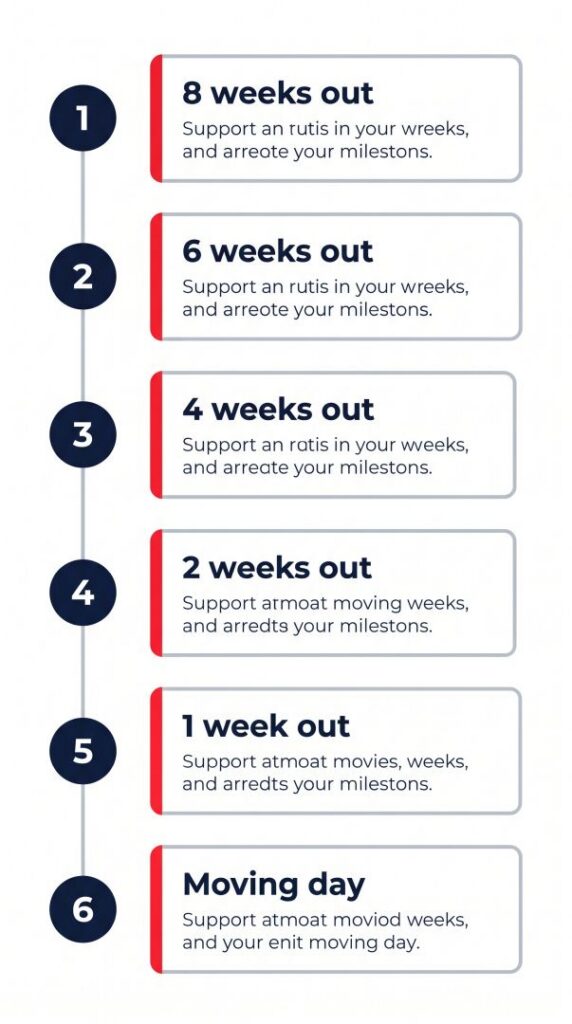
Eight weeks is the sweet spot. Six is workable. Three is expensive. Use this moving checklist as the budget version of a countdown.
- 18 weeks out. Set your ceiling and split it into buckets. Start the declutter. Research companies and verify U.S. DOT numbers.
- 26 weeks out. Request multiple quotes with an identical inventory. Book the mover. Start collecting free packing materials.
- 34 weeks out. Finish selling and donating. Begin packing non-essentials. Book travel and lodging. Arrange car shipping or pet transport if needed.
- 42 weeks out. File your USPS Change of Address. Schedule utility transfers. Confirm the estimate in writing and re-read the service level.
- 51 week out. Pack the essentials box. Label boxes room by room. Confirm the pickup window. Withdraw cash for tips.
- 6Moving day. Check the inventory against the load before signing anything. Note damage before the truck leaves.
Our guide on what to look for when hiring a long-distance moving company covers the vetting steps in more detail.
Why Cross Country Movers Works for Budget-Conscious Moves
Cross Country Movers is a licensed direct interstate carrier based in Tarzana, California, operating under USDOT 2552260 and MC-889368 as Trico Long Distance Transportation LLC, with a BBB A+ rating. Direct carrier matters on a budget: you are not paying a broker's margin, and the company that quotes your move is the company that performs it.
What that looks like in practice:
- Guaranteed flat price based on a detailed inventory list with no surprise fees or weight-based charges
- Experienced movers trained to handle fragile and bulky items with care and attention to detail
- Timely pick-up and drop-off respecting clients' schedules for all moves, local or cross-country
- Comprehensive services including packing, storage in temperature-controlled facilities, and car shipping
- Full-service international moving to over 150 countries including packing and customs documentation
The flat price is the part that matters most for budgeting. A guaranteed price built from a detailed inventory removes the mechanism that turns a non-binding estimate into unexpected moving costs at delivery. You know the number before the truck leaves.
Whether you are heading from California to Texas or crossing the country in the other direction, you can compare our long-distance moving services against the numbers you build using this guide. If the move is taking you out of the country instead, our international moving service covers packing and customs documentation under one quote.
Putting It All Together
A budget cross-country move is not about finding the cheapest moving company. It is about controlling the four things that set your price: what you ship, when you ship it, what service level you buy, and how carefully you read the paperwork.
Do the decluttering. Move off-peak if you can. Get three comparable written estimates and check the U.S. DOT number on every one. Build the contingency fund into your ceiling instead of hoping you will not need it.
The people who overspend on a long-distance move are rarely the ones who paid too much per pound. They are the ones who never wrote down a number in the first place.
Key Takeaways
- Set your ceiling first, then allocate. Split it into transport, supplies, travel expenses, landing costs, and a contingency fund of 10 to 15 percent taken from inside the ceiling.
- Weight is the main lever. Declutter, downsize, and donate before you request moving quotes. The cheapest item is the one you do not ship.
- Time it. October to April and weekdays are meaningfully cheaper than peak summer months and weekends.
- Compare like with like. Same inventory, same dates, same services, and always check whether the written estimate is binding or non-binding.
- Verify credentials. Check the U.S. DOT number at protectyourmove.gov and read the FMCSA Ready to Move brochure before signing anything.
- Budget the whole move. Fuel costs, lodging, tolls and taxes, pet transport, security deposit, utility setup fees, and a possible storage unit all belong in the plan.
- Do not build in a tax deduction. Moving expenses are no longer deductible for civilian taxpayers.
Frequently Asked Questions
- What is the cheapest way to move cross country?
For small shipments, renting a moving truck and driving it yourself is usually cheapest. For anything above roughly two bedrooms, a hybrid move using portable moving containers or freight trailer service typically beats a DIY move once you add fuel costs, lodging, mileage, and equipment. Full-service movers cost the most and save the most time.
- How far in advance should I book a cross-country move on a budget?
Eight to ten weeks. Booking early gives you room to compare multiple quotes, choose off-peak times, and declutter properly. Last-minute moves pay a premium in every season, and the premium is steepest in the summer months.
- Is a binding estimate always better than a non-binding estimate?
For budgeting, yes. A binding estimate locks the price for the listed inventory and services, so your number does not move. A non-binding estimate can legally come in higher based on actual weight. If two quotes look similar, check the estimate type before you compare them.
- How do I avoid moving fraud and hidden fees?
Verify the company's U.S. DOT number through the FMCSA at protectyourmove.gov, insist on a written estimate after an actual survey, refuse large upfront deposits, and read the Ready to Move brochure. Legitimate movers put everything in writing and are registered with the FMCSA.