Long-Distance Moving Companies With Packing, Car Shipping, and Storage Under One Roof
A practical guide to long-distance moving companies that run white-glove packing, vehicle shipping and storage under one roof. Compare five carriers, check valuation coverage, and get a binding quote. [...]<p><a class="btn btn-secondary understrap-read-more-link" href="https://crosscountrymovers.com/resources/long-distance-moving-companies-packing-car-shipping-storage/">Read More...</a></p>

Ask anyone who has moved across the country in the last twenty years and you will hear the same story. They hired a mover. Then they hired somebody else to haul the car. Then, when the closing slipped two weeks, they scrambled for a storage unit in a city they had never been to. Three contracts, three dispatchers, and three people to call when something went sideways.
That model is finally breaking up. The better long-distance moving companies in North America now run packing services, vehicle shipping, and storage off the same operation, which means one bill of lading, one set of delivery dates, and one person on the hook when a box shows up crushed. It sounds like a small thing. It is not. Most of the misery in a cross-country move comes from the seams between vendors, not from the driving.
This guide covers the five carriers worth evaluating, what each service tier actually includes, how to verify operating authority and valuation coverage before you pay a deposit, and why a direct carrier has a structural advantage over a broker or an agent network on a long-distance move.
Key Takeaways (TL;DR)
- Bundling kills the scheduling gap. Separate car shipping rarely lands the same day as the moving van, which leaves households renting a car or paying for parking while the truck catches up.
- One chain of custody means one claims process. A single bill of lading removes the argument over whether the packer, the driver, or the warehouse caused the damage.
- Real white-glove service is specific. Custom packing and on-site crating, enclosed transport for high-value vehicles, and climate controlled vaults, not just extra blankets.
- Verify authority before you pay. Confirm active operating authority on the FMCSA SAFER system and check the USDOT number.
- Get the price as a binding quote. Under 49 CFR 375.401, an interstate mover must perform a physical or virtual home survey before issuing one.

Five Carriers That Actually Do All Three
The companies below are grouped by the kind of long-distance move each tends to handle well, based on publicly available information. This is editorial guidance, not a ranking of service quality, and listing a company is not an endorsement. Re-verify operating authority, valuation coverage, and complaint history on FMCSA SAFER before you book.
Cross Country MoversStrong for Full-Service Moves
Direct Carrier30 Days Free StorageFlat-Rate PricingUSDOT 2552260 / MC-889368
Based in Tarzana, California, Cross Country Movers runs as a direct interstate motor carrier rather than a broker. Own trucks, own crews, own dispatch. The full-service moving side covers custom packing, room-by-room professional packing, furniture disassembly and assembly, unpacking, and debris removal on the way out. Its stated value propositions include a guaranteed flat price based on a detailed inventory list with no surprise fees or weight-based charges, and experienced movers trained to handle fragile and bulky items with care and attention to detail. Comprehensive services include packing, storage in temperature-controlled facilities, and car shipping on open or enclosed carriers for sedans, EVs, and collector cars. Every interstate move includes 30 days of complimentary climate-controlled storage, tracking runs through a customer portal with real-time GPS tracking, and clients get dedicated account management and dedicated support rather than whoever picks up the phone. Worth knowing: because the fleet is in-house rather than brokered, summer dates fill early, so ask about priority scheduling.
May suit: households that want flat-rate pricing, one coordinator, and a storage cushion in case the closing slips.
Allied Van LinesWorth a Look for Nationwide Reach
Agent-Based Van LineSince 1928Storage-in-TransitVerify Local Agent
Allied has been around since 1928 and the network shows it. Huge fleet, agents in most markets, and enough volume to find you a truck. Professional packing comes in tiers, so you can take fragile-only packing, partial packing for the kitchen and the art, or hand over the whole house, with custom wooden crating available for marble tops and chandeliers. Car shipping runs open or enclosed carriers. Storage-in-Transit sits in agent warehouses nationwide, vaulted and climate monitored, typically up to 90 days. The catch is structural, and it is the same one you will find at Mayflower or Atlas: Allied works through independent regional agents, so the crew that loads you is not the crew that unloads you, and equipment age and crew training vary by territory.
May suit: large households that value nationwide coverage and are willing to vet the specific local agent.
JK Moving ServicesWorth a Look for Luxury and Executive Moves
Company-Owned FleetAir-Ride SuspensionSecure WarehousingMid-Atlantic Base
JK built its reputation on luxury residential, executive relocation, and government work. Company-owned fleet, air-ride suspension, GPS on every truck, and an internal training facility where crews practice in mock rooms before they touch a customer’s house. White-glove packing here means cataloged inventory, floor runners going in before the first box comes out, and museum-grade crates for high-value art. The company operates its own vehicle shipping division, including climate-regulated enclosed trailers for exotic vehicles and collector cars, and its secure warehousing carries 24-hour video, fire suppression, and tight climate control. Service quality is consistently high, pricing sits at the premium end, and the direct footprint for local moves is concentrated in the mid-Atlantic.
May suit: high-value households and employer-managed relocations, for buyers who accept premium pricing.
North American Van LinesWorth a Look for Documentation and Paper Trail
Agent-Based Van LineAntiques and WineBoats and MotorcyclesVerify Auto Leg
NAVL handles long-distance and international transportation through a wide agent network, and it is known for documentation. Claims paperwork, contract detail, inventory records. Packing scales from a box delivery for DIY packers to full-service packing with unpacking and debris removal at destination. The company handles antiques and wine collections in climate controlled transit and will coordinate cars, motorcycles, and boats into the same moving contract. Storage-in-Transit and long-term vault storage run through regional agent warehouses. One thing to check: vehicle shipping is often executed by third-party freight partners, so ask about carrier vetting, ask who is physically driving your car, and ask whether supplemental insurance is available on the auto leg.
May suit: detail-oriented shippers who want a thorough paper trail and will confirm the auto handoff.
International Van LinesWorth a Look for Domestic Plus Overseas
Broker + Carrier150+ CountriesBinding EstimatesConfirm the Performing Carrier
IVL operates as both a licensed carrier and a household goods broker, which gives it reach: full-service international moving to over 150 countries including packing and customs documentation, plus domestic coverage in all fifty states. Packing services cover disassembly, pad wrapping, custom wooden crating, and unpacking. Vehicle transport goes door to door on open or enclosed carriers for standard cars, luxury vehicles, and heavy motorcycles. Qualified cross-country routes come with up to 30 days of free storage, and every move gets a binding estimate that caps the budget. The brokerage side is the tradeoff: on some long-haul corridors IVL uses partner carriers, so confirm before dispatch who is showing up and what protection coverage applies once the shipment changes hands.
May suit: price comparison shoppers, and households combining a domestic move with an overseas leg.
Other Names You Will Come Across
Listing a company here is not an endorsement. Verify authority and insurance coverage before booking any of them.
- National van lines: Mayflower and Atlas run the same agent-based model as Allied and North American Van Lines, with the same variability between territories.
- Dedicated auto brokers: RoadRunner Auto Transport can move a car on its own perfectly well. The problem is that it has no idea when your furniture is arriving, and no particular reason to care.
- Specialty crating and freight: Navis Pack & Ship is the benchmark for specialty items with odd dimensions, from industrial equipment to sculpture, and mainstream household movers are increasingly matching that capability in-house.
- Regional and mountain-market movers: RPM Moves knows the access problems in Aspen, Edwards, and Eagle Valley better than any national carrier will. Regional specialists earn their place on local moves and tight mountain corridors in Western Colorado.
Quick Comparison Table
| Company | Often Chosen For | White-Glove Packing | Vehicle Shipping | Storage | Verify Before Booking |
|---|---|---|---|---|---|
| Cross Country Movers | Full-service, flat-rate | In-house, custom on-site crating | Direct open and enclosed | 30 days free, climate controlled | Peak-season availability |
| Allied Van Lines | Nationwide reach | Tiered, via local agent | Open and enclosed via partners | Storage-in-Transit, agent facilities | The specific local agent |
| JK Moving Services | Luxury and executive | Museum-grade art handling | In-house, climate-regulated | Private vaults, 24/7 monitored | Coverage outside the mid-Atlantic |
| North American Van Lines | Documentation and claims | Full packing, wine and antiques | Cars, boats, motorcycles via partners | SIT and long-term vaults | Who performs the auto leg |
| International Van Lines | Domestic plus overseas | Full packing, fragile crating, rigging | Nationwide open and enclosed | Up to 30 days free, qualified routes | Broker vs. carrier on your route |
Services, pricing, and authority change. Confirm details directly with each carrier and on the FMCSA database before booking.
What You Are Actually Buying: Packing, Vehicle Shipping, and Storage
Understanding what sits behind each service tier is how you read a moving estimate accurately instead of comparing two numbers that describe different jobs.
Packing Tiers
Standard professional packing mostly means large furniture. Quilted pads on the sofa, bed frames broken down, your boxes loaded. Everything you did not pack yourself stays unpacked.
White glove delivery is the whole house. Technicians bring heavy-duty cartons, dish-pack cells for plates, unprinted newsprint for glassware, and they build custom crates on site for artwork, glass tables, and stone. At the other end the crew handles reassembly, places items in the room of choice, and takes the packing debris with them. Some carriers extend this to installation and de-installation services for gym equipment, safes, and wall-mounted gear, plus pre and post-site inspections on complex jobs.
- Partial packing and fragile-only packing exist for a reason. Box the books and linens yourself, pay the crew to handle the designer furniture, the antiques, and the china.
- Labor-only services cover the opposite case, where you have rented the truck and just need muscle and specialized equipment for a day.
- Specialty items with odd dimensions, industrial equipment, medical devices, sculpture, need custom packing and professional handling rather than a bigger box.
Vehicle Shipping
Open carriers haul eight to ten cars on a two-tier trailer. Cheapest option, structurally sound, and your car eats road grit, weather, and highway soot for two thousand miles.
Enclosed carriers use sealed trailers with hydraulic loading systems and soft strap securing, so the wheels take the tension instead of the frame. Enclosed transport is what you want for classic and vintage cars, luxury car transport, exotic vehicles, and modern EVs with low clearance. White-glove auto transport adds photographic condition reports at pickup and delivery, often as digital inspection reports in an online tracking portal, and on the higher end you will see AIAG-compliant inspections and AIAG-compliant documentation carried over from automotive logistics. Showroom-ready delivery, where the car arrives detailed and ready to drive off, is a real service tier, not marketing. What you are paying for is professional handling at both ends and real-time tracking so you know where the vehicle is.
Storage
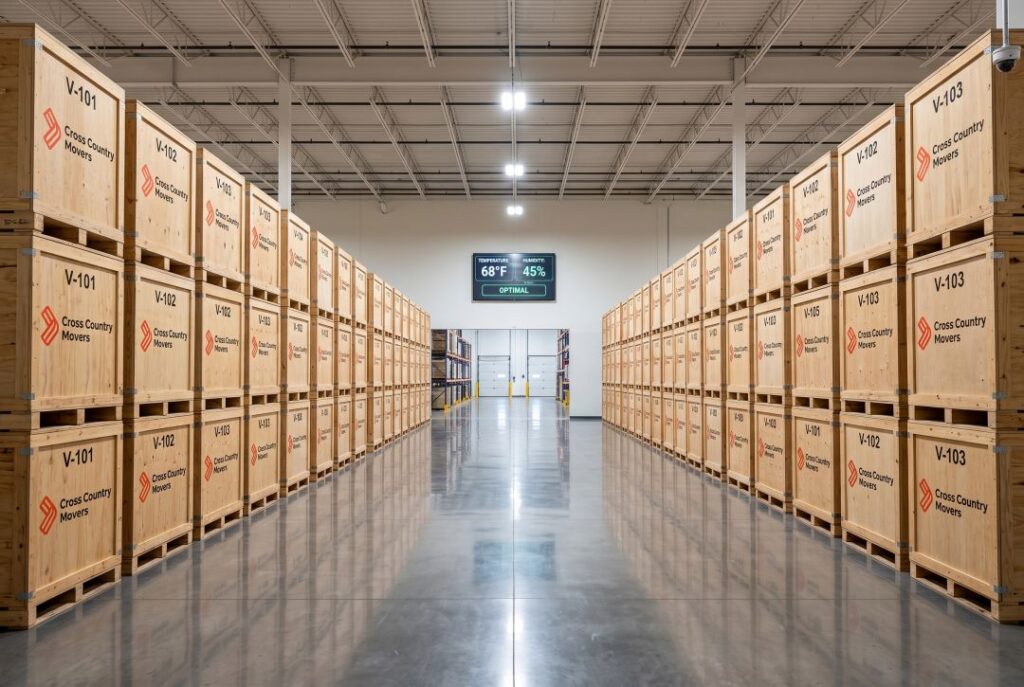
Storage-in-Transit is the short version, usually 30 to 90 days while the house gets ready. Goods stay sealed in palletized wooden vaults, called lift vans, so nothing gets handled twice. Long-term secure storage lives in climate controlled warehouses held between 55°F and 80°F with humidity regulated. That climate control is what keeps wood from warping, glue joints from failing, and leather from drying out.
Portable storage containers are the cheaper alternative and they are fine for durable goods. They are not fine for a piano, a painting, or anything veneered. There is no climate control in a metal box sitting in a lot.

What to Check Before You Sign
Start with the federal registration. Every company moving household goods across a state line has to hold active operating authority from the FMCSA and carry a USDOT number. You can look up authority, safety rating, and complaint history in the SAFER system in about two minutes. Do it. An unregistered operator with your furniture is a problem with no good ending.
Then read the liability terms, because there are two and they are not close.
- Released Value Protection is the statutory baseline. It costs nothing and it pays $0.60 per pound per article. A 50-pound television worth $1,500 gets you thirty dollars. That is the entire settlement.
- Full Value Protection makes the carrier liable for replacement value. They can repair the item, replace it with something equivalent, or pay current replacement cost. It costs more and it is worth it on anything you would be upset to lose.
Federal household goods valuation coverage does not extend to motor vehicles. Your car needs its own automotive freight insurance coverage, and if the declared value is high, ask about supplemental insurance before the truck leaves. You can compare protection levels on the moving insurance page.
Last, look hard at the moving estimate itself. A non-binding estimate is a guess, and final invoices move with scale weight and accessorial charges. A binding quote locks the price to the inventory list. A binding not-to-exceed estimate is better still: you pay less if the shipment weighs less, and never more than the ceiling. The BBB guidance on hiring reputable movers is worth ten minutes, mostly for the warning signs, and the biggest one is a large cash deposit demanded upfront.
Why One Carrier Beats Three
The scheduling problem is the obvious one. Independent car shipping rarely lines up with a moving van’s delivery window. Your vehicle lands Tuesday, the truck arrives Friday, and you are renting a car or paying for parking in between. A single carrier assigns one move coordinator and aligns both.
The liability problem is the expensive one. When separate companies pack, haul, park, and store your things, a damaged item turns into a round of finger-pointing where nobody’s insurance goes first. One carrier, one bill of lading, one claims coordinator. You file once.
Billing gets simpler too. Shuttle fees, long-carry charges, and vehicle staging costs show up as surprises when three vendors each add their own. Bundled into one contract, they are either included or disclosed before you sign.
And when the closing slips, which it does, an integrated carrier just routes the shipment and the car into its own storage network. No emergency hunt for a self-storage unit and commercial parking in a city you have never lived in.
The Federal Rules Nobody Reads
Interstate moving is heavily regulated, and most of the rules exist because somebody got burned first.
Before you sign a contract, the carrier has to hand you two documents: the Your Rights and Responsibilities When You Move handbook and the Ready to Move brochure. If they do not, that tells you something.
You have the right to inspect the carrier’s published tariff, which lists base rates, operating rules, and every accessorial fee that can attach to your shipment. Interstate carriers must also participate in a neutral third-party arbitration program, so cargo loss and billing disputes have a path that does not start with a lawsuit. And the Bill of Lading must be issued before loading starts. That document is the contract. It establishes receipt, delivery terms, and liability limits, and a verbal promise that contradicts it is worth nothing.
Two scams to know by name:
- The hostage load. An unrealistically low quote, your goods on their truck, then a demand for thousands in cash before anything comes off.
- The broker-carrier switch. An online marketing outfit takes your deposit, then sells the job to whichever independent trucker bids lowest, often one with no packing crew and no auto-hauling equipment at all.
One rule is worth memorizing. Under 49 CFR 375.401, an interstate mover must perform a physical or virtual visual survey before issuing a binding estimate. If a company gives you a guaranteed binding quote over the phone without ever looking at your house, it is breaking federal regulations. Hang up.
Why Direct Carriers Have the Structural Edge
Booking a direct motor carrier changes a few things that do not show up on a quote sheet.
- No broker commission, because there is no broker. The company owns the trucks, runs the dispatch, and operates the warehouses. You talk to the people actually moving your things, not a call center that forwards messages.
- Consistency across the route. Agent networks mean different crews, different training, and different packing habits at origin and destination. A direct carrier runs one set of procedures, so how your things get wrapped in California is how they get unwrapped in Georgia.
- Accountable vehicle shipping. Brokers post loads to public boards and take a bid. Direct carriers dispatch their own drivers, run pre-trip condition inspections with photo documentation, and keep the chain of custody unbroken from driveway to driveway.
- Owned storage along the corridors. The long west-to-east runs out of San Diego, CA and the Southern California basin especially. Owning the warehouses is what makes 30 days of free climate-controlled storage possible in the first place. A broker cannot offer that, because a broker does not own anything.
Regional specialists still have their place. But the moment a move crosses state lines with a car and a storage gap attached, the integrated national carrier is the simpler machine. The 2026 best long-distance and cross-country movers guide offers a broader comparison, and the international moving services overview covers the overseas version of the same problem.
Conclusion
Moving a household, a car, and a storage gap across the country is a logistics problem, and splitting it across three vendors is how the problem gets worse. Every seam you add is another schedule to coordinate, another invoice to reconcile, and another company that can point at someone else when something breaks.
Verify USDOT authority. Insist on a real home survey, in person or virtual. Take Full Value Protection on the household goods and separate coverage on the vehicle. Get the price in writing as a binding quote tied to an inventory list. Then put packing, vehicle shipping, and storage with one direct carrier and let them own the whole thing start to finish.
About the Author
This guide was prepared by the Cross Country Movers editorial team, drawing on experience in long-distance household relocation, white-glove packing, auto transport, and climate-controlled warehousing. Regulatory details cited here reflect publicly available information at the time of writing and should be re-verified on the FMCSA database. Competitor names are listed for buyer research only and are not endorsements. Content is reviewed and refreshed regularly.
Primary sources: FMCSA and SAFER; 49 CFR Part 375; Better Business Bureau. Last reviewed: September 2026.
Frequently Asked Questions
- Can my car ride in the same trailer as my furniture?
Generally no. Federal safety standards and basic load physics keep passenger vehicles out of household goods trailers. Cars need wheel chocks, deck-level tie-downs, and weight distribution a furniture van is not built for, and parking a vehicle next to your couch invites fluid leaks, tire rub, and shifting loads. Integrated movers run the vehicle on a dedicated auto carrier and time both routes so everything lands in the same delivery window.
- What actually separates white-glove packing from standard service?
Standard packing wraps your furniture and loads the boxes you packed. White-glove packing means trained technicians pack the entire residence with commercial-grade materials, build custom crates on site for art, chandeliers, and stone tops, label every box by room, then unpack everything at destination and take the debris with them.
- How are my things protected in storage-in-transit?
Belongings go into sealed wooden lift vans, which keeps them away from dust, light, and repeat handling. Those vans sit in climate controlled warehouses held between 55°F and 80°F with regulated humidity. That is what protects antique wood, fine art, instruments, and electronics from swelling, mold, and glue failure.
- How does Full Value Protection differ from Released Value Protection?
Released Value is the free statutory minimum and it pays $0.60 per pound per article, so a 50-pound TV worth $1,500 settles for $30. Full Value Protection makes the carrier responsible for actual replacement value: repair it, replace it with an equivalent, or pay current replacement cost. On a long-distance move with anything valuable in the load, the upgrade is not optional in any practical sense.
- Is one company for packing, car shipping, and storage actually cheaper?
Not always cheaper on the headline number, but usually cheaper in total. Bundling removes duplicate shuttle fees, vehicle staging costs, and emergency self-storage rentals when a closing slips, and it removes the rental car you would otherwise need while the truck catches up to the vehicle.