
Relocating to Phoenix: Surviving the Heat and Thriving in the Silicon Desert
Posted in City Guides on July 24, 2026
Phoenix has grown far beyond the quiet retirement town it once was, and today the Valley of the Sun ranks among the fastest-growing metros in the country. Moving here from out of state can be one of the best decisions you make, though it takes real preparation and a genuine shift in your daily habits. Think of this as your practical reality check before you pack a single box.
The 115°F Reality Check: What Really Changes When You Move to Phoenix
Phoenix summers are intense, and there is no point pretending otherwise. From June through late September, daytime temperatures regularly climb past 100 degrees, often reaching 110°F to 115°F. If you are arriving from a mild or cold climate, you will need to adapt quickly.
Here is what daily life looks like at the peak of summer:
- The schedule shift: Your routine changes completely. Dog walks, morning runs, and outdoor errands happen before 7:00 AM or well after sunset. The middle of the day belongs indoors.
- Air conditioning as a necessity: Central AC is not a luxury here, it is essential. Your home, your car, and your workplace all need reliable cooling. Bills climb during peak months, so it helps to have a trusted HVAC technician you can call.
- The hot-car effect: You will learn to park in the shade, crack your windows, and keep a good windshield sunshade in the car. Locals joke about needing oven mitts for the steering wheel in August, and they are only half kidding.
- Staying hydrated: A large insulated water bottle becomes part of your everyday kit. Dry heat pulls moisture from you faster than you expect.
So why do people put up with all of this? Because from late October through May, Phoenix offers some of the best weather anywhere. While much of the country scrapes ice off windshields, you will be enjoying sunny 72°F days. It is a great climate for hiking Camelback Mountain, eating on outdoor patios, and playing golf in January.
Ready to move with us?
Get A Free Quote
Jobs and the Economy: Welcome to the Silicon Desert
Hundreds of thousands of people keep arriving in the Valley despite the summer heat, and the reason is straightforward. The career opportunities and steady economic growth here are hard to match. Over the past few years, the region around Phoenix has earned the nickname the Silicon Desert, and large investments from major tech companies have reshaped the local economy.
A Growing Semiconductor Hub
Major manufacturing plants from companies like TSMC (Taiwan Semiconductor Manufacturing Company) and Intel have turned the Valley into a serious center for microchip production. These facilities bring thousands of skilled jobs and support a wide network of suppliers, contractors, and service businesses across the metro area.
Tech, Startups, and Steady Industries
The growth is not limited to hardware. Software companies, green energy startups, and autonomous vehicle firms are opening offices here, drawn away from the high taxes and steep operating costs of Silicon Valley. Beyond tech, the healthcare sector (Banner Health, Mayo Clinic) and financial services (Wells Fargo, American Express) give the local economy a stable foundation.
For young professionals, engineers, and mid-career managers, Phoenix offers plenty of room to grow. Best of all, you can earn a competitive tech salary without paying San Francisco or New York rent.

Preparing for job interviews in your new city is a key step toward establishing your career after a move.
Everyday Costs and the 2026 Housing Market
Phoenix is no longer the cheap desert secret it was twenty years ago. Even so, it stays competitive next to most coastal cities, and your money still goes further here than it would in California or the Northeast.
Housing Costs in the Valley
The real estate market has settled into a steady, predictable rhythm. Whether you want to rent a modern downtown loft or buy a four-bedroom house with a pool in the suburbs, there are options across a range of budgets.
- Renting: Expect to pay more for newer apartment complexes with resort-style amenities like pools, large gyms, and shared workspaces.
- Buying: The median home price sits above the national average but stays well below California, Seattle, or New York. A home with a private pool costs more to maintain, though many owners find it worth the expense.
Utilities and Daily Spending
Budgeting in Arizona works a little differently. Your winter heating bill will be almost nothing, but your summer electricity bill can reach a few hundred dollars a month thanks to constant AC use. Water bills run higher if you keep a grass lawn, which is why many Phoenix homes use xeriscaping, a style of desert landscaping built around rocks, cacti, and drought-resistant plants. Gas prices tend to track the national average, while groceries and dining out stay reasonably affordable.

Choosing Where to Live: Best Neighborhoods in Phoenix
Phoenix is large. The metro spreads across hundreds of square miles on a wide grid, so where you settle will shape your daily life more than almost anything else. Because the Valley is so spread out, it pays to live reasonably close to work. A 20-mile commute across town during rush hour can easily cost you an hour each way.
Here is a quick look at the areas newcomers tend to favor:
| Area | Vibe and Lifestyle | Best Suited For |
|---|---|---|
| Scottsdale | Upscale shopping, resort-style living, fine dining, and well-kept golf courses | High-income professionals, retirees, and anyone after a bit of luxury |
| Downtown Phoenix | Urban, walkable, and artsy, with rooftop bars and frequent events | Millennials, young professionals, and creatives |
| Chandler and Gilbert | Top-rated schools, tech employers, master-planned communities, and strong safety records | Tech workers, young families, and mid-career professionals |
| Tempe | A lively college town home to Arizona State University, energetic and walkable | Students, recent graduates, and startup types |
| Glendale and Peoria | West Valley growth, easy access to sports stadiums, and more affordable housing | First-time buyers, sports fans, and families |
Getting Around: The Reality of Valley Traffic
You will need a car in Phoenix. There is a light rail line connecting parts of Downtown, Tempe, and Mesa, but it does not reach most of the suburban sprawl.
The Grid System
The upside is that Phoenix is easy to navigate. Major streets follow a clean grid, usually spaced about one mile apart. Miss a turn and you can simply go around the block and try again.
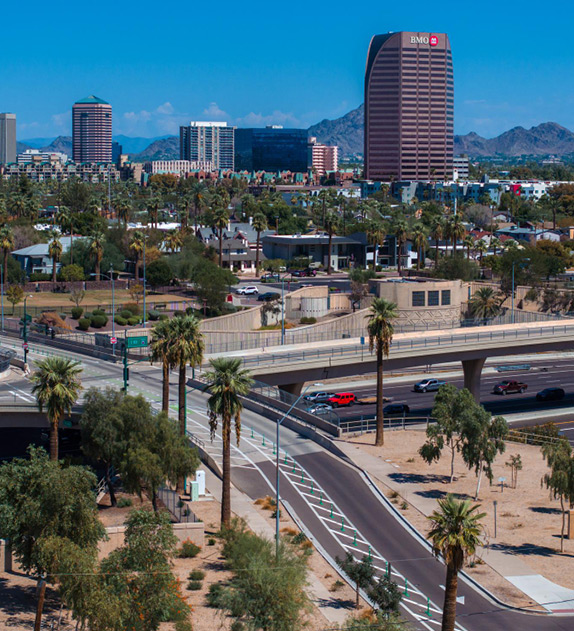
Relocating to Phoenix offers abundant sunshine, growing job markets, and a unique desert lifestyle.
Freeways and Commutes
The Valley is linked by a large network of well-maintained freeways, including the I-10, the 101, the 202, and the 51. Traffic gets heavy around 8:00 AM and 5:00 PM, but it rarely locks up the way it does in Los Angeles or Chicago. Since you will need a vehicle from day one, shipping your car during the move is a smart choice. You can fly into town rested and have your car delivered to your new driveway instead of driving thousands of miles across the country.
Life in the Valley Beyond Work
Phoenix is more than jobs and weather. During the cooler months, the outdoor scene becomes one of the region’s biggest draws. Trails at Camelback Mountain, Piestewa Peak, and South Mountain fill with hikers chasing sunrise views, golf courses stay busy all winter, and weekend trips to Sedona or the Grand Canyon sit within easy reach.
The food and culture scene has grown quickly too. Downtown and the surrounding neighborhoods now hold a strong mix of restaurants, craft breweries, coffee roasters, and local markets. Sports fans are well covered, with baseball, basketball, football, and hockey all in the metro area. For families, the many master-planned communities include parks, pools, and community events built right in.
Planning Your Move: Why a DIY Summer Relocation Is Risky
This may be the most useful advice in the whole guide: avoid a do-it-yourself move to Phoenix during the warmer months.

Involving the whole family in the packing process makes preparing for a cross-country move faster and more enjoyable.
Driving a rental truck without air conditioning across the desert, then unloading heavy furniture in 115°F heat, puts both your health and your belongings at risk.
- The physical toll: Heat exhaustion and heatstroke are serious medical events. Carrying a heavy sofa up a flight of stairs in August can send even a fit person to the hospital.
- The heat inside the truck: Many people do not realize how hot a cargo trailer gets. Temperatures inside a moving truck parked in the Arizona sun can climb past 150°F. If you hit traffic or park overnight, your belongings sit in that heat for hours.
- Items that can be damaged: Candles turn to liquid wax and ruin whatever they touch. Vinyl records warp for good. Sensitive electronics like TVs and desktop computers can suffer heat damage, and leather furniture can dry out and crack if it is not handled quickly.
There is no reason to gamble with your health or your valuables just to save a little money on a DIY move.
How Professional Movers Take the Pressure Off
A cross-country move is stressful enough without adding extreme heat to the mix. Working with an experienced long-distance company like Cross Country Movers removes much of that pressure. A trained crew knows how to load and unload efficiently, which keeps your sensitive items out of the heat for as little time as possible. Electronics, artwork, and delicate furniture get carried into your cooled home first.
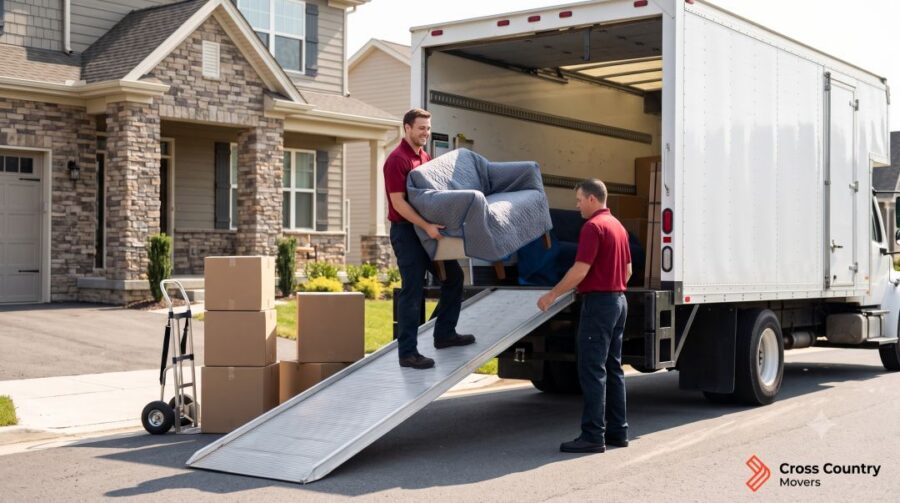
Relying on a professional moving crew simplifies the loading process and ensures your belongings are safely transported.
Professional packing is another way to save yourself weeks of frustration. Instead of living out of boxes, you can have your whole home wrapped, padded, and secured for the long trip. Many people also choose to ship their vehicle rather than drive it, arriving by plane and finding the car waiting for them in Arizona. And if your new place in Chandler or Scottsdale is not quite ready, climate-controlled storage keeps your belongings safe until you have the keys in hand.
Common Moving Routes to Phoenix
People relocate to Phoenix from every corner of the country. A few routes come up again and again:
- California to Phoenix: The most common move by far. Many Californians trade high taxes and steep home prices for larger houses, lower costs, and the growing tech scene.
- New York or Chicago to Phoenix: Escaping long, freezing winters is the main driver here. Moving from the Midwest or East Coast means swapping snow shovels for pool floats.
- The Pacific Northwest (Seattle and Portland): Plenty of newcomers leave the constant rain and gray skies behind for the 300 plus days of sunshine Phoenix sees each year.
Wherever you start, a cross-country route takes careful timing and coordination, and that is exactly what experienced dispatchers handle every day.
Ready to move with us?
Get A Free Quote
Final Thoughts: Is Phoenix the Right Move for You?
Phoenix rewards people who come prepared. The summers ask a lot of you, but the payoff is a long stretch of near-perfect weather, a fast-growing job market, and more house for your money than most coastal cities can offer. If you plan around the heat, pick a neighborhood that fits your commute, and count on needing a car, the Valley of the Sun can start to feel like home surprisingly fast.
The move itself is the one part you do not want to leave to chance. A long-distance relocation across the desert calls for careful timing and a crew that knows how to protect your belongings from the heat. With an experienced team like Cross Country Movers handling the heavy lifting, you can focus on settling in and enjoying your first sunny 72°F winter afternoon.
FAQ
How much should I save before moving to Phoenix?
Aim to have three to six months of living expenses set aside before a long-distance move. Phoenix costs less than most coastal tech hubs, but you will still need money for a housing deposit (or a down payment), utility setup fees, and your moving costs. Having $7,000 to $10,000 in savings makes the whole transition far smoother.
Will my belongings melt in the moving truck?
They can if you are not careful. Candles, crayons, vinyl records, some plastics, and cheap adhesives may warp or melt inside a truck that sits in summer heat for days. A good mover will tell you which items should travel with you in the car or on the plane, and will work to unload the truck quickly on arrival.
Do I really need a car in Phoenix?
Yes. While Downtown Phoenix and parts of Tempe are walkable and served by the Valley Metro Rail, most of the metro area calls for a vehicle. Everything is spread out, and walking long distances in summer heat is not realistic. Shipping your car during the move is one of the smarter decisions you can make.
How much does it cost to hire out-of-state movers to Phoenix?
The cost depends on the distance, the total weight or volume of your belongings, and any add-on services like full packing or car shipping. Because every home is different, the flat estimates you see online are rarely accurate. The best way to get a real number is a personalized quote based on your actual inventory.
When is the best time of year to move to Arizona?
From a weather standpoint, moving between late October and April is ideal. Temperatures are cool and heavy lifting is easy. This is also the busiest season for tourism and winter residents, so it can cost a bit more. A summer move is still possible and sometimes cheaper on the real estate side, though you should hire professional movers to handle the labor safely.