

Manhattan vs. Brooklyn vs. Queens: Where Should You Move? The Ultimate Out-of-State Relocation Guide
Posted in City Guides,Uncategorized on June 25, 2026
Moving to New York City from another state is one of the most exciting decisions you can make. The city is made up of five distinct boroughs, each with its own personality, price range, and pace of life. For out-of-state newcomers, choosing where to settle is the most consequential part of the entire process.
This guide breaks down the three most popular options for transplants: Manhattan, Brooklyn, and Queens. By the end, you will know exactly which borough fits your lifestyle, budget, and long-term goals in 2026.

Relocating to New York City for growth and success
Understanding the Interstate Reality Before You Arrive
Your starting point matters more than most people realize. Whether you are leaving a suburban home in Texas, a condo in Los Angeles, or a beachside apartment in Miami, the transition to New York requires a genuine shift in how you think about daily life. Most newcomers are used to driving everywhere, having generous closet space, and navigating straightforward lease agreements. In New York, those expectations change quickly.
The most common long-distance routes to New York include California to New York, Florida to New York, and Chicago to New York. Each carries its own logistical challenges, from weather patterns across multiple state lines to the strict moving-hour policies that many New York buildings enforce. Getting familiar with the scale of an interstate move is the first and most important step toward a smooth arrival.
Ready to move with us?
Get A Free Quote
Manhattan: The Center of It All
Manhattan is the version of New York City most people picture before they ever visit. The skyline, the energy, the density of opportunity on every block. It appeals to professionals who want to eliminate long commutes, culture enthusiasts who want Broadway and world-class museums within walking distance, and anyone who wants to feel fully immersed in city life from the moment they step outside.
The Housing Market in Manhattan
Space is the trade-off, and it is a significant one. In Manhattan, you will pay top-of-market prices for apartments that are considerably smaller than what you are accustomed to back home. Many older buildings feature studio layouts with limited storage, narrow floor plans, and no built-in closets. Luxury high-rises in areas like Hudson Yards and the Financial District offer modern amenities such as fitness centers and concierge services, but the monthly costs reflect that. You are consciously choosing location over square footage, and most longtime Manhattan residents will tell you it was worth it.
Cost of Living in Manhattan
Manhattan consistently ranks among the most expensive urban areas in the world. Rent is the largest expense, but it does not stop there. Groceries carry a noticeable premium, dining out adds up faster than expected, and New York City residents pay a local income tax on top of state taxes. That is a detail many out-of-state movers overlook until their first paycheck arrives. Build this into your budget before you sign a lease.
Neighborhoods Worth Knowing
Manhattan offers remarkable variety within a relatively compact area. A few neighborhoods that consistently attract out-of-state transplants:
- The Upper West Side: A quieter, residential stretch between Central Park and Riverside Park. Popular with families and professionals who want access to the city without being in the middle of it.
- East Village and Lower East Side: Dense with restaurants, independent shops, and nightlife. A great fit for anyone who wants an urban edge and a creative atmosphere.
- Murray Hill and Kips Bay: More accessible entry-level rental prices than many other Manhattan neighborhoods, popular with corporate professionals early in their careers.
Practical note for Manhattan-bound movers: Many historic buildings are walk-ups, sometimes five floors with no elevator. Make sure your moving crew has experience navigating narrow stairwells and tight hallways. It is a detail that separates a smooth move from a frustrating one.
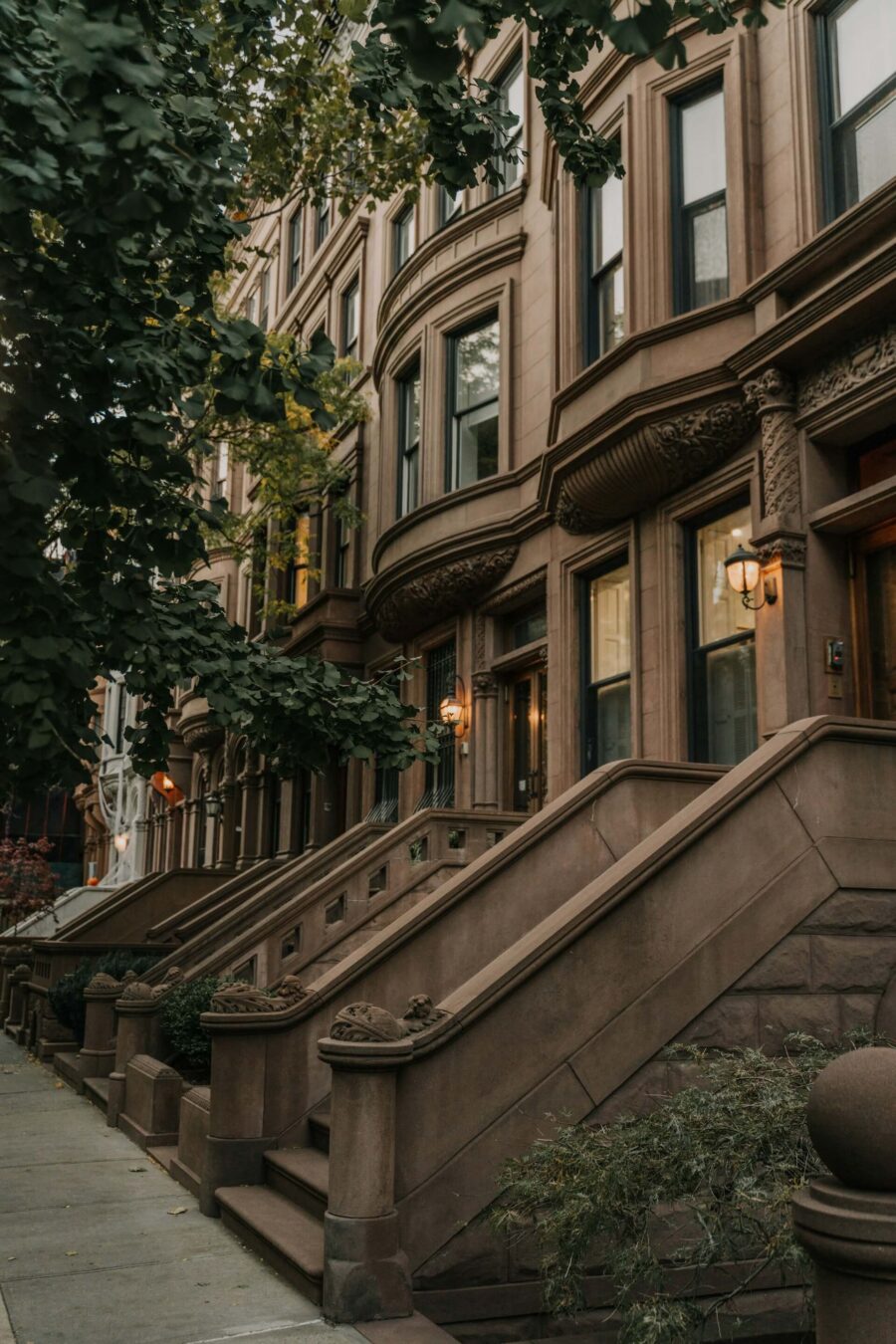
Scenic Manhattan residential street with a brown brick building.
Brooklyn: Community, Character, and More Space
Brooklyn has evolved into something genuinely unique over the past two decades. It is no longer simply an alternative to Manhattan. It is a destination in its own right, recognized globally for its creative energy, diverse architecture, and strong neighborhood identity. Brooklyn draws creative professionals, growing families, remote workers, and anyone who wants a vibrant social life with a bit more room to breathe.
The Housing Market in Brooklyn
Parts of Brooklyn now rival Manhattan in price, particularly along the waterfront. But the borough as a whole offers considerably more variety in both housing type and cost. You will find historic brownstones in Cobble Hill, industrial loft conversions in DUMBO, and modern high-rises in Williamsburg. Crucially, Brooklyn apartments tend to offer more livable space, better storage, and a higher chance of finding a private outdoor area, shared backyard, or in-unit laundry. For families and those who need more than one room, Brooklyn often makes the most practical sense.
Cost of Living in Brooklyn
Brooklyn is not cheap, but it offers more economic flexibility than Manhattan if you are willing to explore beyond the waterfront neighborhoods. Grocery stores are larger and generally more reasonably priced. While trendy spots in Williamsburg and Greenpoint command premium prices, the borough is full of neighborhood diners, local markets, and free community events, particularly around Prospect Park, that balance out the monthly budget.
Best Neighborhoods for Out-of-State Movers
Brooklyn’s greatest strength is its neighborhood-level identity. People do not just say they live in Brooklyn. They say they live in Bushwick or Park Slope or Crown Heights. That specificity reflects a genuine community feel that is harder to find in Manhattan.
- Williamsburg and Greenpoint: Trendy, lively, and expensive. Excellent food, independent boutiques, and waterfront dining with skyline views. A strong choice for younger professionals.
- Park Slope and Carroll Gardens: Tree-lined, family-friendly, and architecturally beautiful. Close to Prospect Park with access to some of the best public schools in the borough.
- Bushwick: A creative neighborhood built around its street art scene and independent music venues. More affordable than the waterfront, with a fiercely local community.

Iconic Brooklyn Bridge in New York City during daytime.
Queens: The Underrated Best Move You Can Make
If you ask experienced New Yorkers where the city’s most authentic version of itself lives, most will point to Queens without hesitation. It is one of the most ethnically diverse urban areas on the planet, and that diversity is reflected in everything from the food to the architecture to the community fabric. For budget-conscious families, pragmatic professionals, and anyone who prioritizes quality of life over status, Queens consistently delivers.
The Housing Market in Queens
Queens is where your dollar stretches the furthest among the three boroughs. The range of housing is wide: sleek luxury towers in Long Island City, classic pre-war brick buildings in Astoria, and fully detached single-family homes with lawns and driveways in areas like Forest Hills. Transplants from Ohio, Florida, or Pennsylvania are often surprised by how familiar the layouts feel compared to what they are used to at home. More space, more storage, and more breathing room at a fraction of the Manhattan price.
Cost of Living in Queens
For anyone relocating to New York on a realistic budget, choosing Queens is often the single smartest financial decision. Daily goods, household services, and utilities are noticeably more affordable than across the East River. Because the borough runs on a working-class and immigrant economy, you can find world-class food at genuinely reasonable prices. A full meal at an authentic restaurant in Jackson Heights or Flushing costs a fraction of what the same quality would run in Midtown.
Queens Neighborhoods That Deserve More Attention
The vibe in Queens is unpretentious and welcoming. It lacks the self-conscious trendiness of some Brooklyn neighborhoods and the constant forward motion of Manhattan. Instead, it offers multi-generational communities, real cultural immersion, and a pace of life that many transplants find deeply refreshing.
- Astoria: Legendary food scene, safe streets, and one of the most straightforward subway commutes into Midtown Manhattan. A perennial favorite for good reason.
- Long Island City: Waterfront views, luxury apartments, contemporary art spaces, and a short commute to Midtown. A rapidly growing neighborhood for young professionals.
- Forest Hills: Quiet, beautifully maintained, and distinctly suburban in feel despite being fully within city limits. Tudor-style architecture, strong school districts, and a sense of calm that is hard to find elsewhere in New York.

Iconic cityscape view of Queens borough in New York City.
What Actually Changes When You Move to New York
The practical shifts go beyond the apartment. Your entire daily rhythm transforms. New York runs on walking, subway cards, and backpacks instead of parking lots and car keys. You will find yourself covering thousands of steps a day, learning the geometry of the subway, and relying on neighborhood delis and corner shops instead of big-box stores.
The city’s economy has also diversified significantly. Finance, media, and fashion remain pillars, but technology, healthcare, education, and a strong startup sector now create professional opportunities across all five boroughs. Wherever you settle, there are industries hiring and communities forming.
The trade-off is real: New York demands a lot. But for those who commit to it, the city rewards that effort with access, opportunity, and a kind of daily variety that is difficult to find anywhere else.



Why an Interstate NYC Move Requires Professional Help
Executing a long-distance move into New York City on your own is a significant undertaking. Driving a large rental truck through the congested, narrow streets of Manhattan or Brooklyn is not a simple task. Low-clearance bridges, commercial vehicle restrictions, aggressive traffic patterns, and the near-total absence of legal curbside parking create a set of challenges that experienced movers handle every day and that first-timers rarely anticipate.
Cross Country Movers specializes in exactly this kind of move. Whether it is maneuvering heavy furniture up a fifth-floor walk-up or ensuring fragile belongings are packed and protected across a thousand-mile haul, the team brings the experience and equipment to handle it without the chaos.
The COI Requirement: A Common Surprise
One of the most frequently overlooked parts of an NYC move is the Certificate of Insurance (COI). The majority of apartment buildings, co-ops, and high-rise developments require this document before allowing any moving activity on the premises. The COI verifies that the moving company carries adequate liability coverage to protect the building’s hallways, elevators, and common areas from damage. Without a properly formatted COI naming your specific building as an additional insured party, your move can be stopped at the door.
Cross Country Movers handles this process directly, coordinating with your building management ahead of time so that the paperwork is in place long before the trucks arrive.
Full-Service Packing and Vehicle Transport
A complete interstate relocation involves more than boxes. Many clients need specialized packing for artwork, electronics, or fragile items that cannot simply be wrapped in moving blankets. Others need to think carefully about their vehicle. Bringing a car into Manhattan, in particular, is a genuine cost consideration given garage rates that often run between $400 and $800 per month. For those settling in more residential parts of Queens, keeping a car may make practical sense.
If you decide to bring your vehicle but want to avoid the wear of a cross-country drive, professional auto transport is the most sensible option. Your car is loaded onto a specialized carrier and delivered to your destination while you fly directly. It saves time, mileage, and the stress of coordinating a multi-day road trip on top of everything else a major move already involves.
Ready to move with us?
Get A Free Quote
Your Borough, Your Decision
New York City does not offer one right answer. It offers three very different ones, and the best choice depends entirely on what you are actually looking for.
Manhattan suits those who want to be at the center of everything, accept the trade-off on space, and thrive in a high-energy environment. Brooklyn is the right fit for people who want character, community, and more room to live without fully stepping away from urban life. Queens is the practical, often overlooked choice that delivers genuine quality of life, remarkable cultural richness, and the most value for your money.
What all three have in common is this: getting there from another state takes real planning. The paperwork, the building requirements, the physical logistics of moving into a New York apartment building are not things to figure out on moving day. Working with a team that has done this hundreds of times makes a measurable difference.
Cross Country Movers handles long-distance relocations into New York City with the experience and preparation that an NYC move specifically demands, from COI coordination to vehicle transport to full-service packing. Wherever you land, the goal is the same: getting you there without the chaos.
FAQ
What is a COI, and why does my building require it?
A Certificate of Insurance is a legal document confirming that your moving company carries adequate liability coverage. New York buildings require this to protect their property during the move. If your movers cannot provide a properly issued COI that names your building as an additional insured party, you will not be permitted to move in on that day.
Should I ship my car when moving to New York City?
It depends on where you are settling. In Manhattan and much of Brooklyn, a car is more liability than asset due to parking scarcity and high garage costs. In residential Queens or Forest Hills, a vehicle can be genuinely useful. If you are keeping your car, professional auto transport protects it from the wear of a long interstate drive.
How much money should I save before moving to New York?
Beyond first and last month’s rent plus a security deposit, you may also encounter a broker’s fee ranging from 12% to 15% of annual rent if you work with a rental agent. Combined with moving costs, a savings cushion of $8,000 to $12,000 is a realistic minimum for a secure transition.
How far in advance should I book a moving company for an NYC move?
For an interstate relocation into New York, booking 6 to 8 weeks in advance is strongly recommended. This gives your movers enough time to coordinate the COI with your building, secure your preferred dates, and lock in the most competitive rates before the schedule fills up.