How to Move to Los Angeles & From Los Angeles to Other States: A Practical 2026 Relocation Guide
An expert-backed guide to interstate moving into and out of America's most complex housing market. Explore budgeting, neighborhood guides, and verification checklists.
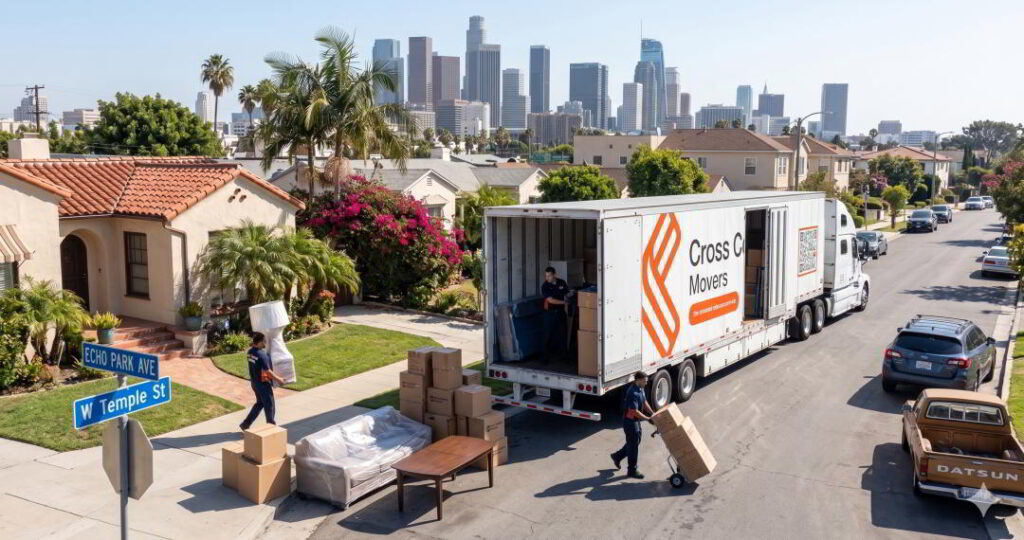
About 8.2 million Americans moved across state lines in a recent year, and a large share of that traffic flows into and out of Los Angeles. Whether you’re chasing a job, lower housing prices, or a different pace of life, the real challenge of moving to Los Angeles or leaving Los Angeles for another state isn’t the mileage. It’s the dozens of decisions tied to budget, housing, job market, travel, and timing.
Key Takeaways
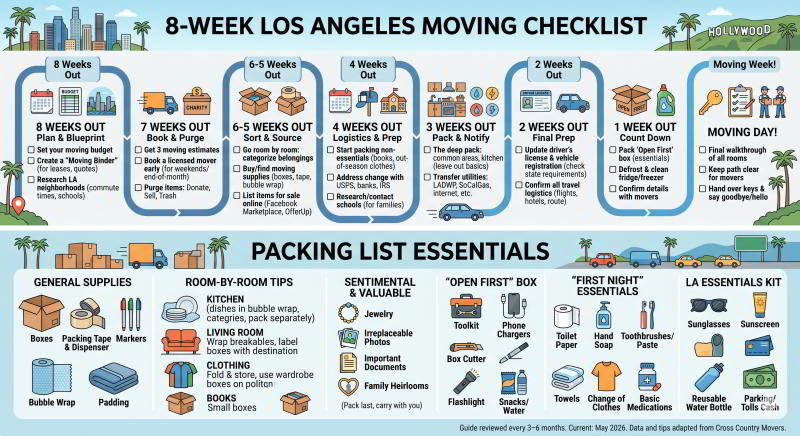
- Start your moving timeline 8+ weeks ahead for any cross-country move.
- Verify moving companies through USDOT records, the FMCSA database, and the Better Business Bureau before signing.
- Budget the full move, not just the truck boxes, bubble wrap, tape, gas, tolls, hotels, pet fees, furniture, and utility setup add up fast.
- Match neighborhoods to your industry, commute, schools, and weather, not just rent.
- Update your driver's license, vehicle registration, and address in your new state to avoid fines and insurance gaps.
Why a Los Angeles Move Is Different
Los Angeles isn't just another large city. Its geography, traffic, weather, and housing market shape almost every moving decision you'll make, turning a move into LA or out of LA into a transportation and cost-of-living calculation before it's a packing project.
Interstate moving triggers federal oversight. The Federal Motor Carrier Safety Administration (FMCSA) requires every interstate carrier to hold a USDOT number, which lets you review safety data and complaint history before trusting a company with your household goods.
Los Angeles Job Market and Industries
LA has one of the most diverse job markets in the country, which is why neighborhood choice should follow your industry. Major sectors include:
- Aerospace and defense (Boeing, Northrop Grumman, SpaceX, RTX) clustered in El Segundo and the South Bay.
- Technology and digital media Silicon Beach, Culver City, Pasadena.
- Entertainment, fashion, design, and publishing long-standing creative anchors across the Westside and Burbank.
- Marketing, advertising, and PR heavy concentration of agencies and brand HQs.
- Bioscience and clean tech growing clusters around UCLA, Caltech, and the South Bay.
- Global trade and logistics anchored by the ports of LA and Long Beach.
- Hospitality and tourism year-round driver of service-economy employment.
Start your job search and networking before you arrive. Many entertainment, fashion, marketing, and design roles rely on personal connections more than online applications.
Build Your Budget Before You Pick a Moving Date
Your moving date is a financial decision. Truck rental rates, housing prices, and moving labor rates all rise during peak demand, so flexibility usually saves more than aggressive comparison shopping.
Group your budget into four buckets:
- Moving service or DIY truck rental moving company fees, moving container options, and moving insurance.
- Packing supplies boxes, bubble wrap, tape, and specialty materials.
- Travel costs gas, tolls, hotels, meals, flights, and pet fees.
- Housing costs and setup deposits, furniture, storage, parking permits, building access fees, and utility connections.
A drive from Los Angeles to another state may look cheaper than flights, but fuel, tolls, hotel stops, and meals erase the savings quickly.
If you're moving to Los Angeles, budget for the first 90 days, not just move-in day. Rent, parking, and furniture costs hit fast, and LA's cost of living punishes thin reserves more than most markets.
If you're leaving Los Angeles, compare your monthly burn with the destination. Lower housing prices don't always mean lower total cost you may gain a second car or longer driving distances, while saving on California's high state income tax.
Pick Neighborhoods by Commute, Weather, and Lifestyle
In Los Angeles, your neighborhood determines daily quality of life more than square footage does. Commute time affects sleep, childcare, fuel spending, and stress. Weather varies by 15–20°F between the coast and the Valley. Schools, entertainment options, and walkability shift block by block.
Common neighborhood archetypes:
- Santa Monica & Venice - coastal weather, walkable, high rent, entertainment-rich.
- Silver Lake & Echo Park - creative Eastside, restaurant- and nightlife-dense.
- Pasadena - defined downtown, strong schools, family-friendly neighborhoods.
- San Fernando Valley - more space, more affordable, hotter summers, car-dependent.
- Long Beach & South Bay - beach access, quieter, better rent value, family-friendly.
Public transportation works in selected corridors but won't replace a car for most lifestyles. Test your commute during actual rush hours before signing a lease.
Apartment Hunting in Los Angeles
Apartment hunting in LA rewards flexibility. Listings often move within 48–72 hours. Month-to-month leases give you lease flexibility useful lease logic if your first guess on a home or apartment misses on commute, schools, or weather.
For families, school district quality varies sharply - research LAUSD attendance zones, charter options, and private school proximity before signing.

How to Vet Moving Companies and Avoid Moving Scams
Verify before you trust. Moving scams cluster around interstate moving because customers can't easily compare carriers once goods are in transit.
A simple verification checklist:
- USDOT number - look it up on FMCSA's "Protect Your Move" tool.
- Better Business Bureau - check rating and complaint pattern, not just stars.
- Three written, binding estimates based on a detailed inventory.
- Moving reviews - read for patterns rather than headline averages.
Major nationwide names you'll encounter include United Van Lines, Mayflower Transit, Allied Van Lines, North American Van Lines, and U-Haul for DIY truck rental or moving container service.
Moving Options Compared
← swipe to see all columns →
| Option | Best For | Typical LA → TX Cost | Effort |
|---|---|---|---|
| Full-service van lines (United, Mayflower, Allied, North American) | Busy households | $4,500–$9,000 | Low |
| Moving container (PODS, U-Pack) | 1–3 bedrooms | $2,500–$5,000 | Medium |
| U-Haul DIY truck rental | Tight budgets | $1,500–$3,500 | High |
| Flat-rate long-distance specialist (e.g., Cross Country Movers) | Predictable pricing | Quote-based | Low |
For a full breakdown of options, compare long-distance moving services at Cross Country Movers.
Declutter, Then Pack for the Route
Declutter before you buy packing supplies. Every item you eliminate lowers handling time, truck space, and the chance you pay to move things you no longer want.
A simple sort:
- Keep what you use weekly or genuinely value.
- Donate or sell what's useful but unnecessary.
- Recycle or discard broken, expired, or duplicate items.
Packing Tips and Packing List Essentials
Build a packing plan and packing list that matches material to item books in small boxes, dishes wrapped in bubble wrap and sealed with sturdy tape, linens as padding for fragile pieces.
Treat sentimental items separately: pack them last, label them clearly, and carry irreplaceable photos, jewelry, or heirlooms with you rather than loading them on the truck.
Label every box by room and function ("Kitchen open first") so packing and loading translates into a fast unpack on arrival.
Storage Between Moves
If your timeline has overlapping rent or a gap between move-out and move-in, a storage unit can bridge it. When choosing self storage, evaluate three things:
- Climate control - essential for electronics, wood furniture, and documents in LA heat.
- Unit size - pay for what you need, not what's available.
- Access & security - 24/7 access, gated entry, cameras, and unit-level alarms.
Travel Logistics and Legal Updates
Build travel into the move plan from day one. Choose between driving and flights based on distance, pets, kids, and whether you need your vehicle on arrival.
Map realistic gas, toll, and hotel stops if you're driving. Long drives create fatigue, and rushed schedules often produce last-minute booking premiums that wipe out the savings versus flying.
Handle administrative tasks on a deadline:
- Changing your address with USPS, banks, employers, and the IRS.
- Driver's license transfer - most states require it within 30–90 days; some require a driver's test for out-of-state applicants.
- Vehicle registration - emissions rules and fees vary sharply by state.
- Utility setup and utility connections - activate the day before move-in.
- Insurance updates - auto, renter's, and health.
International Moves From Los Angeles
Leaving LA for another country adds layers: visa application status, work visa documentation, customs forms, and shipping insurance. Many international moves stall on paperwork rather than logistics, so confirm your visa application is approved and your work visa permits your destination's residency length before booking a container.
Cross Country Movers handles full-service international moving to over 150 countries, including packing and customs documentation, which consolidates several vendors into one moving timeline.
Top Reasons to Choose Cross Country Movers for Your LA Relocation
For interstate moving and any cross-country move in or out of Los Angeles, Cross Country Movers positions itself around five commitments worth weighing against the major van lines:
- Guaranteed flat price based on a detailed inventory list with no surprise fees or weight-based charges - making moving costs predictable from the start.
- Timely pick-up and drop-off respecting clients' schedules for all moves, local or cross-country - protecting your moving day logistics and limiting overlapping rent on both ends.
- Experienced movers trained to handle fragile and bulky items with care and attention to detail - reducing damage risk during packing and loading.
- Full-service international moving to over 150 countries including packing and customs documentation - useful for households leaving LA for overseas relocations.
- Comprehensive services including packing, storage in temperature-controlled facilities, and car shipping - consolidating multiple vendors into one timeline.
For more moving tips and relocation resources, visit Cross Country Movers.

Frequently Asked Questions
How far in advance should I plan a move to or from Los Angeles?
Start at least eight weeks ahead for any long-distance moving job. Add more time if your moving date lands in summer or end-of-month lease cycles.
Is it cheaper to move myself or hire moving companies?
A DIY truck rental can be cheaper on short routes, but interstate moving often becomes more expensive than expected once you add fuel, tolls, hotels, moving labor rates, and pet fees. Compare total moving costs, not just the base rental.
What should I look for in moving reviews?
Look for repeated themes - punctuality, damage, billing disputes, communication - across many reviews. Patterns predict your experience better than star averages.
What are the biggest hidden moving costs in Los Angeles?
Parking permits, building access fees, rent deposits, furniture, utility setup, and updated insurance often surprise newcomers. Cost of living typically feels highest in the first three months.
Do I need a car in Los Angeles?
Most residents do. Neighborhoods and jobs are spread out, and while public transportation works in selected corridors, it won't replace a car for every lifestyle.
How do I avoid moving scams?
Verify the USDOT number on the FMCSA database, check Better Business Bureau records, require written binding estimates, and read moving reviews for patterns before paying any deposit.
Make the Move Fit Your Life
A successful Los Angeles move aligns housing, commute, job market, travel, and budget before you seal the first box. Whether you're moving into LA or leaving for another state or another country the strongest strategy is early research, careful packing, verified movers, and a realistic moving checklist.
Moving is rarely about speed alone. It's about making fewer avoidable mistakes and in a city as complex as Los Angeles, that discipline is worth more than any discount.
This guide is reviewed every 3–6 months to reflect current pricing, regulations, and migration trends. Last updated: May 2026.